

RBCuZn-C Material Compatibility: What Metals Can You Braze Successfully?
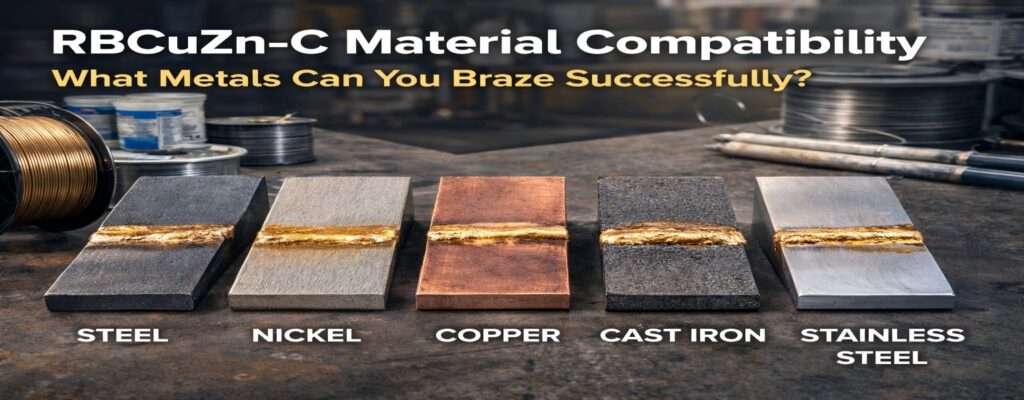
When engineers, buyers, and fabrication teams search for a versatile low fuming bronze filler metal, one of the first questions they ask is simple: what metals is RBCuZn-C actually compatible with? That question matters because material compatibility affects joint strength, wetting behavior, service life, and production consistency. Public product data sheets and supplier references consistently describe RBCuZn-C as a general-purpose copper-base brazing filler metal used on steel, copper and copper alloys, cast iron, stainless steel, and nickel alloys. It is commonly positioned for torch brazing and, in some references, for furnace and induction brazing as well.
RBCuZn-C is widely known as low fuming bronze, a classification under AWS A5.8. Across supplier and datasheet sources, it is associated with UNS C68100 and described as a practical choice when users want a filler metal that offers broad usability, good ductility, and machinable deposits for many shop and repair applications.
What Is RBCuZn-C?
RBCuZn-C is a copper-zinc based brazing filler metal with additional alloying elements that help support flow, usability, and reduced fume behavior compared with traditional brass-type fillers. Public manufacturer literature repeatedly describes it as a general-purpose low fuming bronze rod available in bare or flux-coated form. In real-world use, that means it is often selected not because it is the most exotic alloy on the shelf, but because it works across a broad range of common fabrication and maintenance jobs.
For buyers researching RBCuZn-C material compatibility, the main advantage is flexibility. Instead of stocking multiple niche filler metals for every routine repair or joining task, many shops use RBCuZn-C where a dependable, general-purpose brazing alloy is needed for mixed production environments. That is one reason the keyword often attracts practical commercial intent rather than purely academic traffic.
What Metals Is RBCuZn-C Compatible With?
1. Carbon Steel and Low Alloy Steel
Carbon steel is one of the most commonly listed compatible base materials for RBCuZn-C. Multiple supplier references identify the alloy as suitable for brazing steel, and some also specifically mention carbon steel and low alloy steel in their application descriptions. For many shops, this makes RBCuZn-C attractive for general maintenance, sheet metal work, and repair jobs where a bronze brazed joint is preferred over fusion welding.
In practice, RBCuZn-C is often chosen on steel when users want easier gap bridging, a lower working temperature than fusion welding, or reduced distortion on thinner components. It is also valued when appearance, leak tightness, or machinability matter after joining. Some datasheets specifically note non-porous deposits and leak-proof joints for water, oil, and gas line applications.
2. Copper and Copper Alloys
RBCuZn-C is also commonly recommended for copper and copper alloy applications. Public technical literature repeatedly lists copper alloys among its intended base metals, which supports its use in fabrication and repair environments where brass, bronze, or related copper-based materials are involved.
This compatibility is one reason the alloy is often considered for maintenance work involving nonferrous assemblies. When a shop needs one filler for both steel-side and copper-alloy-side repair work, RBCuZn-C is often viewed as a practical option. That said, final suitability should still be checked against service conditions such as corrosion exposure, mechanical loading, and fit-up requirements.
3. Cast Iron
Cast iron appears consistently in public RBCuZn-C product descriptions, and that matters because cast iron repair is one of the most common problem-solving searches behind this alloy. Suppliers describe RBCuZn-C as being used on cast iron and, in one case, malleable iron as well.
Why does this matter? Because cast iron repair often benefits from joining methods that reduce thermal shock and cracking risk compared with high-heat fusion processes. A bronze brazing approach can be attractive when preserving base metal integrity is more important than matching the original cast structure exactly. For cracked housings, brackets, pump bodies, and older machinery parts, RBCuZn-C is frequently considered as a repair option.
4. Stainless Steel
Another important part of RBCuZn-C material compatibility is stainless steel. Several public datasheets and supplier listings explicitly name stainless steel as a suitable material.
This does not mean every stainless application should automatically use RBCuZn-C. Service environment, corrosion demands, joint design, and temperature exposure still matter. But from a search and selection standpoint, stainless steel compatibility is one reason this alloy gets attention from users who need a general-purpose filler for diverse maintenance inventories rather than a highly specialized alloy for a single engineered system.
5. Nickel and Nickel Alloys
Public references also identify nickel and nickel alloys as compatible with RBCuZn-C. That broadens its usefulness in repair and mixed-metal brazing work, especially where a shop may encounter older equipment or multi-alloy assemblies.
For SEO purposes, this is a valuable point because many buyers search not only “what is RBCuZn-C” but also “can RBCuZn-C braze nickel alloys” or “RBCuZn-C for dissimilar metals.” Including this compatibility clearly in your page helps capture that practical search intent.
Can RBCuZn-C Join Dissimilar Metals?
Yes, in many cases RBCuZn-C is used where different compatible metals need to be joined. Public descriptions mention its use for a range of ferrous and nonferrous metals, and one supplier specifically notes that the alloy can be used to braze combinations of those metals in applications where very high corrosion resistance is not the main requirement.
That makes RBCuZn-C especially relevant for repair shops, agricultural equipment maintenance, HVAC-related fabrication, general industrial service, and legacy equipment support. If your operation regularly handles assemblies made from steel plus copper alloy, or cast iron plus steel, a broad-compatibility filler can simplify purchasing and shorten job setup time.
Where RBCuZn-C Works Best
RBCuZn-C tends to work best in applications where the goal is reliable general-purpose brazing, not maximum corrosion resistance or highly engineered high-temperature service. Public references repeatedly frame it as a practical, general-purpose alloy with good mechanical properties, good ductility, and low fuming characteristics. Some also note its usefulness for sheet metal work and machinable deposits.
That profile makes it a strong candidate for:
maintenance and repair work,
general fabrication,
leak-tight joints,
mixed-material shop environments,
brazing tasks where easy finishing and machinability are important.
Process Considerations That Affect Compatibility
Material compatibility is never just about the alloy name on the label. Process control still matters. Public product pages note that RBCuZn-C is used in gas brazing, and some manufacturers also reference torch, furnace, and induction brazing processes. Bare rod products generally require an appropriate brazing flux unless the rod is flux-coated. Some sources also note that preheating may be recommended depending on the job.
So, if you want better results with RBCuZn-C, do not stop at checking the base metal list. Also confirm joint clearance, cleanliness, flux selection, heating method, and service requirements. In production, real compatibility is the combination of filler metal, process, and application—not just the chemistry class.
Is RBCuZn-C the Right Choice for Your Project?
If your project involves steel, copper alloys, cast iron, stainless steel, or nickel alloys, RBCuZn-C is one of the most broadly referenced low fuming bronze options in public brazing literature.
It is often the right choice when you need:
one versatile filler for multiple materials,
dependable general-purpose brazing performance,
lower fume behavior,
good machinability after joining,
practical repair and maintenance usability.
However, if your application has unusual corrosion demands, strict code requirements, or severe service conditions, it is wise to validate the selection with procedure testing before full production release. That is not a weakness of RBCuZn-C; it is simply good engineering practice.
Final Thoughts
The reason so many users search RBCuZn-C material compatibility is because they are not looking for theory alone. They want a clear answer: what can this alloy join, and where does it make sense to use it? Based on consistent public product data, the answer is straightforward. RBCuZn-C is widely used with carbon steel, low alloy steel, copper and copper alloys, cast iron, stainless steel, and nickel alloys, making it one of the most practical low fuming bronze filler metals for general-purpose brazing and repair work.
If your goal is to simplify filler metal inventory while still covering a broad range of routine fabrication and maintenance jobs, RBCuZn-C deserves serious consideration.