

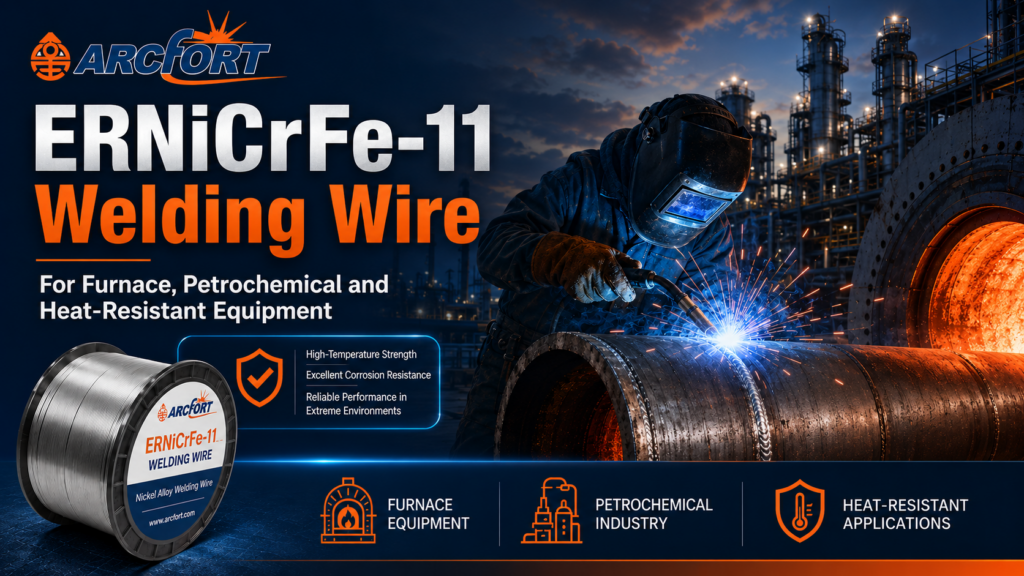
ERNiCrFe-11 Welding Wire for Furnace, Petrochemical and Heat-Resistant Equipment
Introduction
ERNiCrFe-11 welding wire is a nickel-chromium-iron filler metal designed for welding heat-resistant nickel alloys, especially materials used in high-temperature and corrosive service environments. It is commonly associated with welding applications involving Alloy 601 and similar nickel-based alloys that require excellent oxidation resistance, stable weld performance and reliable strength at elevated temperatures.
For industries such as furnace manufacturing, petrochemical processing, heat treatment equipment, power generation and chemical production, choosing the correct welding wire is critical. A wrong filler metal may lead to cracking, poor corrosion resistance, reduced service life or failure under thermal cycling. ERNiCrFe-11 welding wire is selected when the welded joint must perform under high heat, oxidation and demanding industrial conditions.
What Is ERNiCrFe-11 Welding Wire?
ERNiCrFe-11 is a nickel-based welding wire classified for welding nickel-chromium-iron alloys. Its chemical composition is designed to provide strong resistance to oxidation and high-temperature corrosion. The wire contains a high level of nickel, chromium and iron, which helps the deposited weld metal maintain stability in severe service environments.
This welding wire is widely used for TIG welding, MIG welding and other processes depending on the application and wire form. It is suitable for welding similar nickel alloys and can also be used in certain dissimilar metal welding applications where high-temperature resistance is required.
Key Features of ERNiCrFe-11 Welding Wire
ERNiCrFe-11 welding wire offers several important advantages for industrial welding applications:
Excellent oxidation resistance
The chromium content helps the weld metal resist oxidation in high-temperature atmospheres.Good high-temperature strength
It maintains mechanical stability in equipment exposed to continuous heat.Reliable corrosion resistance
The nickel-based composition provides resistance to many corrosive industrial environments.Stable weldability
ERNiCrFe-11 provides smooth arc performance, good bead appearance and consistent weld deposits when used with proper welding parameters.Suitable for thermal cycling conditions
It is often chosen for equipment that experiences repeated heating and cooling during operation.
Why ERNiCrFe-11 Is Used for Furnace Equipment
Furnace equipment is exposed to extreme temperatures, oxidation, thermal expansion and repeated heating cycles. Components such as furnace tubes, radiant tubes, muffles, baskets, trays and heat treatment fixtures require welds that can withstand long-term high-temperature service.
ERNiCrFe-11 welding wire is a strong choice for furnace applications because it helps provide oxidation-resistant weld metal. In furnace manufacturing and repair, weld quality directly affects equipment service life. A filler metal with poor heat resistance may suffer from scaling, cracking or premature failure.
Common furnace-related applications include:
Industrial furnace tubes
Heat treatment fixtures
Radiant tubes
Furnace trays and baskets
Muffle furnace components
High-temperature ducting
Thermal processing equipment
For these applications, ERNiCrFe-11 welding wire helps support stable performance in oxidizing and heat-intensive environments.
ERNiCrFe-11 for Petrochemical Equipment
Petrochemical plants operate under complex conditions involving heat, pressure, corrosive media and continuous production cycles. Welding materials used in this industry must offer both corrosion resistance and thermal stability.
ERNiCrFe-11 welding wire can be used in petrochemical equipment where nickel-chromium-iron alloys are required for oxidation resistance and high-temperature corrosion resistance. It is suitable for fabricating and repairing components exposed to aggressive operating conditions.
Typical petrochemical applications include:
Process heaters
Heat exchangers
Reforming equipment
Furnace parts in refinery units
High-temperature piping components
Chemical processing vessels
Thermal cracking equipment
In petrochemical service, stable weld metal is essential because downtime can be costly. ERNiCrFe-11 helps improve weld reliability when used with compatible base metals and correct welding procedures.
Applications in Heat-Resistant Equipment
Heat-resistant equipment often requires materials that can perform under long-term exposure to elevated temperatures. ERNiCrFe-11 welding wire is used when weld joints need to resist oxidation, scaling and thermal fatigue.
It is commonly selected for:
Heat-resistant alloy fabrication
High-temperature industrial parts
Power plant components
Chemical processing equipment
Heat treatment production lines
Kiln and furnace accessories
Exhaust and thermal processing systems
For equipment manufacturers, ERNiCrFe-11 provides a dependable filler metal option when welding nickel-based alloys used in demanding heat-resistant structures.
Welding Performance of ERNiCrFe-11
ERNiCrFe-11 welding wire generally provides good arc stability and smooth weld bead formation when proper welding conditions are used. Clean base metal, correct shielding gas, suitable current settings and proper heat input control are important for achieving high-quality results.
For TIG welding, ERNiCrFe-11 welding rod is often used where precision, clean welds and controlled heat input are required. For MIG welding, ERNiCrFe-11 welding wire can improve productivity in suitable fabrication conditions.
Important welding considerations include:
Clean the base metal before welding
Remove oil, oxide, moisture and contamination
Use proper shielding gas coverage
Control heat input to reduce cracking risk
Select suitable welding parameters
Follow qualified welding procedures
Match the filler metal with the base material and service environment
Nickel alloy welding requires careful preparation. Even high-quality welding wire cannot compensate for poor surface cleaning or incorrect welding technique.
ERNiCrFe-11 Chemical Composition and Performance
The performance of ERNiCrFe-11 comes from its nickel-chromium-iron alloy system. Nickel provides corrosion resistance and toughness. Chromium improves oxidation resistance. Iron supports alloy balance and compatibility with nickel-chromium-iron base metals.
This combination makes ERNiCrFe-11 suitable for welds exposed to:
High-temperature oxidation
Heat cycling
Industrial furnace atmospheres
Petrochemical processing environments
Heat-resistant alloy fabrication
Corrosive and thermal stress conditions
The exact chemical composition should always be checked according to the applicable standard, project specification and material certificate.
How to Select ERNiCrFe-11 Welding Wire
When choosing ERNiCrFe-11 welding wire, buyers should consider several factors:
1. Base Metal Compatibility
The filler metal must match the base metal and service requirements. ERNiCrFe-11 is commonly used for welding Alloy 601 and similar nickel-chromium-iron alloys.
2. Welding Process
Select the correct form depending on the welding process:
TIG welding rod
MIG welding wire
Straight length wire
Spool wire
3. Operating Environment
Consider whether the welded component will face oxidation, corrosion, high heat, pressure or thermal cycling.
4. Certification Requirements
Industrial buyers should request material certificates, chemical composition reports and quality control documents when required.
5. Packaging and Storage
Nickel alloy welding wire should be packed and stored properly to prevent contamination, moisture and surface damage.
Advantages for Industrial Buyers
For manufacturers, fabricators, distributors and maintenance companies, ERNiCrFe-11 welding wire offers practical advantages:
Suitable for high-value industrial equipment
Helps improve weld reliability in severe environments
Supports furnace and petrochemical equipment fabrication
Useful for both new production and repair welding
Suitable for heat-resistant nickel alloy applications
Helps reduce premature weld failure when correctly applied
Because furnace and petrochemical equipment often operate continuously, welding material quality is very important. A stable filler metal helps reduce rework, maintenance cost and unexpected shutdowns.
Common Industries Using ERNiCrFe-11 Welding Wire
ERNiCrFe-11 welding wire is used across industries where high-temperature and corrosion-resistant welding is required, including:
Furnace manufacturing
Petrochemical industry
Chemical processing
Heat treatment industry
Power generation
Refinery maintenance
Industrial equipment fabrication
High-temperature alloy repair
Thermal processing systems
These industries require welding consumables that can support long-term service under demanding conditions.
Conclusion
ERNiCrFe-11 welding wire is an important nickel alloy filler metal for furnace, petrochemical and heat-resistant equipment. Its oxidation resistance, high-temperature stability and corrosion-resistant weld performance make it suitable for demanding industrial applications.
For welding Alloy 601 and similar nickel-chromium-iron alloys, ERNiCrFe-11 provides a reliable solution for equipment exposed to heat, oxidation and harsh operating environments. Whether used for furnace components, petrochemical process equipment or heat-resistant industrial parts, proper filler metal selection and correct welding procedures are essential for achieving durable welds.
For buyers looking for nickel alloy welding wire, ERNiCrFe-11 is a strong option when high-temperature performance, weld stability and long service life are required.