

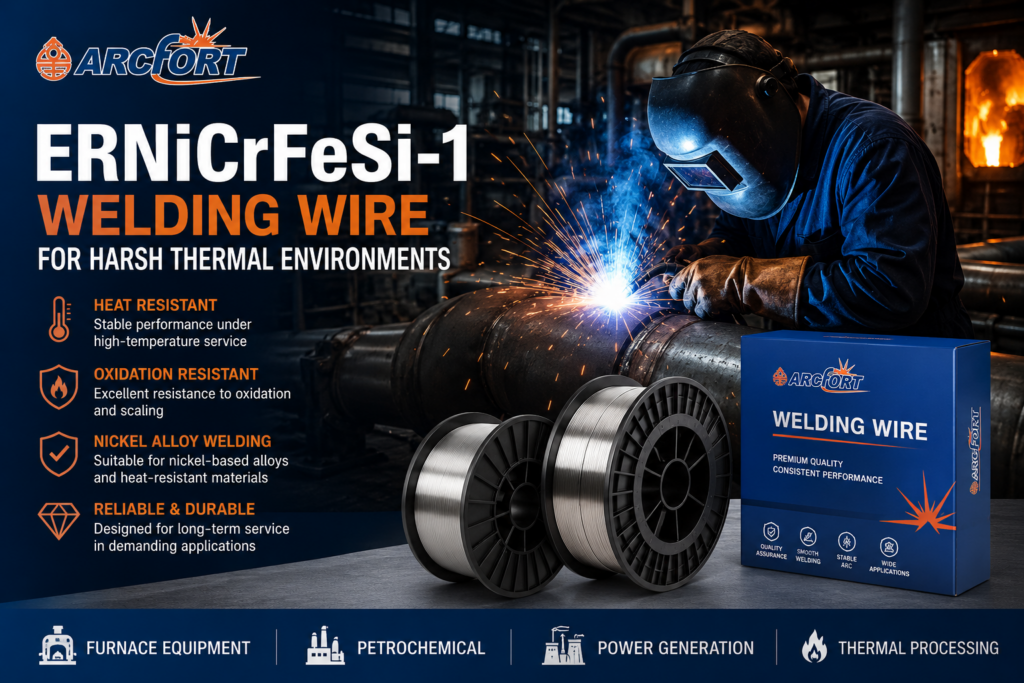
ERNiCrFeSi-1 Welding Wire for Harsh Thermal Environments
Industrial equipment used in high-temperature service must withstand more than normal mechanical stress. Furnaces, heat treatment systems, petrochemical units, power equipment, thermal processing lines, and high-temperature piping are exposed to heat, oxidation, thermal cycling, and corrosive gases for long operating periods.ERNiCrFeSi-1
In these environments, welded joints are often one of the most critical areas. If the wrong welding consumable is selected, the weld may suffer oxidation, cracking, loss of strength, or premature failure. ERNiCrFeSi-1 welding wire is used for heat-resistant nickel alloy welding applications where reliable weld performance is required under harsh thermal conditions.
What Is ERNiCrFeSi-1 Welding Wire?
ERNiCrFeSi-1 is a nickel-chromium-iron-silicon welding wire designed for selected high-temperature and heat-resistant welding applications. It is used when the weld metal must provide stable performance in environments involving elevated temperature, oxidation, and thermal stress.
The nickel-based alloy system helps support high-temperature stability, while chromium contributes to oxidation resistance. Silicon can help improve resistance in specific thermal and oxidizing service conditions. This makes ERNiCrFeSi-1 suitable for demanding industrial welding where ordinary welding wires may not provide enough long-term reliability.
Why ERNiCrFeSi-1 Is Used in Harsh Thermal Environments
Harsh thermal environments can damage welded joints through repeated heating, cooling, expansion, contraction, oxidation, and exposure to industrial gases. Even when the base material is heat-resistant, the weld zone may become a weak point if the filler metal is not properly matched.
ERNiCrFeSi-1 welding wire helps support weld performance in applications where heat resistance and oxidation resistance are important. It is commonly considered for thermal processing equipment, furnace parts, petrochemical systems, power equipment, and industrial repair work involving heat-resistant alloys.
For engineers, fabricators, and buyers, ERNiCrFeSi-1 is not only a welding wire. It is part of the material solution for long-term thermal reliability.
Main Applications of ERNiCrFeSi-1 Welding Wire
Furnace and Heat Treatment Equipment
Industrial furnaces and heat treatment systems operate under continuous high-temperature conditions. Welded parts may face direct heat, oxidizing atmosphere, and repeated thermal cycles.
ERNiCrFeSi-1 welding wire can be used for selected furnace-related welding applications, including:
Furnace components
Heat treatment fixtures
Thermal processing equipment
High-temperature supports
Heat-resistant alloy parts
Repair welding of worn thermal components
In these applications, weld stability under heat is a key requirement.
Petrochemical and Refinery Equipment
Petrochemical and refinery equipment often operates under high temperature, process gases, and corrosive service conditions. ERNiCrFeSi-1 can be used for selected nickel alloy welding applications where both heat resistance and oxidation resistance are required.
Typical applications may include process piping, furnace-related components, reactor-related equipment, and high-temperature maintenance work.
Power Generation Equipment
Power generation systems involve heat, steam, pressure, and long service cycles. ERNiCrFeSi-1 welding wire may be used for selected welding applications in energy equipment where heat-resistant weld metal is needed.
It can support maintenance and fabrication work involving high-temperature components, thermal systems, and nickel alloy materials.
Thermal Processing Lines
Many industrial production lines use heating systems, drying systems, kilns, burners, and thermal processing equipment. These components may experience temperature fluctuation and oxidation during operation.
ERNiCrFeSi-1 is suitable for selected applications where weld metal must maintain reliability in high-temperature industrial service.
Industrial Repair and Maintenance
High-temperature equipment is often expensive to replace. Repair welding is commonly used to extend service life and restore component performance. ERNiCrFeSi-1 can be considered for repair applications where the weld area must resist heat, oxidation, and thermal stress.
For maintenance teams, using the correct welding wire helps reduce repeated repairs and unplanned downtime.
Key Benefits of ERNiCrFeSi-1 Welding Wire
1. Suitable for Heat-Resistant Welding
ERNiCrFeSi-1 is designed for applications where weld metal must perform under elevated temperature. It supports reliable welding in selected harsh thermal environments.
2. Supports Oxidation Resistance
High-temperature equipment often fails because of oxidation and surface degradation. ERNiCrFeSi-1 helps provide weld metal suitable for oxidizing thermal service conditions.
3. Useful for Nickel Alloy Welding
Nickel alloy materials are often used in high-temperature industrial equipment. ERNiCrFeSi-1 supports selected nickel alloy welding applications where thermal performance is important.
4. Helps Improve Long-Term Weld Reliability
Correct welding wire selection can reduce the risk of premature weld damage, cracking, oxidation, leakage, and repeated maintenance.
5. Suitable for Critical Thermal Components
Furnaces, petrochemical units, power systems, and thermal processing equipment often rely on welded components that must remain stable during long service. ERNiCrFeSi-1 can help support these demanding requirements when applied correctly.
ERNiCrFeSi-1 vs Ordinary Welding Wire
Ordinary carbon steel or standard stainless steel welding wires may be suitable for general fabrication, but they may not perform well in harsh thermal environments.
ERNiCrFeSi-1 is used when the application requires better compatibility with heat-resistant nickel alloy materials and improved performance under high-temperature service. In severe thermal applications, filler metal selection should be based on the base material, operating temperature, atmosphere, inspection requirements, and expected service life.
Choosing a lower-grade or unsuitable welding wire may cause weld oxidation, cracking, reduced service life, or costly repair work.
Important Factors When Selecting ERNiCrFeSi-1
Before choosing ERNiCrFeSi-1 welding wire, engineers and procurement teams should review the actual welding and service conditions.
Key factors include:
Base material grade
Operating temperature
Thermal cycling conditions
Oxidizing or reducing atmosphere
Process gas exposure
Mechanical stress
Welding process
Joint design
Heat input control
Inspection requirements
Required certificates
Batch traceability
Welding procedure qualification
For critical high-temperature components, technical confirmation and welding procedure testing are strongly recommended before production welding.
Welding Quality Control for ERNiCrFeSi-1
Heat-resistant welding requires strict process control. Even a suitable welding wire cannot provide good results if welding preparation and parameters are not properly managed.
Recommended quality control practices include:
Clean the base material before welding
Remove oil, moisture, oxide, rust, and surface contamination
Avoid cross-contamination from unsuitable tools
Use suitable shielding gas and welding parameters
Control heat input carefully
Follow approved welding procedures
Keep welding wire clean and dry
Check certificates and batch numbers before use
Inspect weld appearance and required performance after welding
Good welding control helps ERNiCrFeSi-1 deliver stable performance in demanding thermal service.
Who Uses ERNiCrFeSi-1 Welding Wire?
ERNiCrFeSi-1 is suitable for companies and projects involving high-temperature industrial welding and heat-resistant alloy fabrication.
Typical users include:
Furnace equipment manufacturers
Heat treatment equipment producers
Petrochemical equipment fabricators
Refinery maintenance contractors
Power plant maintenance teams
Thermal processing equipment manufacturers
Chemical equipment fabricators
Industrial repair workshops
Nickel alloy fabrication companies
High-temperature component suppliers
These users need welding consumables that support long-term performance, not only basic weld appearance.
Why Buyers Should Care About ERNiCrFeSi-1 Quality
For buyers and distributors, ERNiCrFeSi-1 is a technical welding material. Product consistency, documentation, and supply stability are important because end users often apply it in demanding high-temperature service.
Important purchasing points include:
Stable chemical composition
Consistent wire diameter
Clean wire surface
Smooth feeding performance
Reliable packaging
Clear product labeling
Complete certificates
Batch traceability
Technical communication before order confirmation
Stable supply capability
In high-temperature welding, small quality differences can create large performance risks. Reliable welding wire helps improve customer confidence and project stability.
Conclusion
ERNiCrFeSi-1 welding wire is used for harsh thermal environments where welds must resist heat, oxidation, and thermal stress. It is suitable for selected applications in furnace equipment, heat treatment systems, petrochemical units, power generation, thermal processing, and industrial repair.
For projects involving heat-resistant nickel alloy welding, ERNiCrFeSi-1 helps support weld reliability, oxidation resistance, and long-term service performance.
Choosing ERNiCrFeSi-1 is not only about completing the weld. It is about improving thermal reliability, reducing maintenance risk, and protecting critical industrial equipment.