

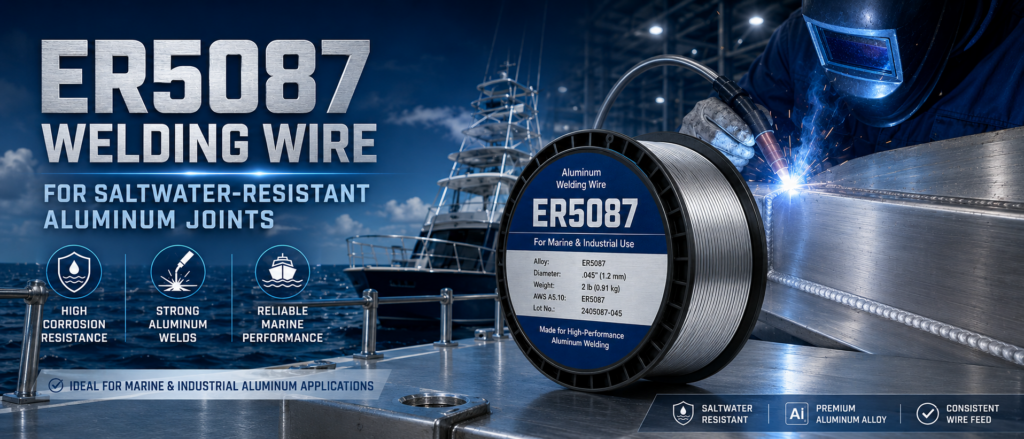
ER5087 Welding Wire for Saltwater-Resistant Aluminum Joints
ER5087 welding wire is a high-performance aluminum filler metal designed for strong, durable, and saltwater-resistant aluminum joints. It is widely used in demanding welding applications where strength, corrosion resistance, and long-term reliability are essential.
For marine structures, offshore components, transportation equipment, and heavy aluminum fabrication, welded joints must resist harsh environments, moisture, vibration, and saltwater exposure. ER5087 aluminum welding wire offers a practical solution for these applications by providing excellent weld strength and reliable corrosion resistance.
What Is ER5087 Welding Wire?
ER5087 is an aluminum-magnesium welding wire with added alloying elements that help improve weld strength, toughness, and resistance to cracking. It is mainly used for welding aluminum-magnesium base metals, especially 5xxx series aluminum alloys.
This welding wire is suitable for both MIG and TIG welding processes. It provides stable arc performance, smooth weld formation, and strong mechanical properties when used with proper welding parameters and clean base materials.
Because of its high-strength aluminum-magnesium composition, ER5087 is often selected for applications exposed to seawater, coastal air, and other corrosive environments.
Why ER5087 Is Ideal for Saltwater-Resistant Aluminum Joints
Saltwater is one of the most challenging environments for welded aluminum structures. Chloride exposure can accelerate corrosion, especially when the wrong filler metal is used. 5087 welding wire is designed to support aluminum joints that need better corrosion resistance in marine and coastal conditions.
Its aluminum-magnesium alloy system helps the weld metal maintain strong resistance against seawater corrosion. This makes ER5087 a valuable choice for shipbuilding, boat manufacturing, offshore structures, marine equipment, and coastal engineering projects.
For aluminum structures that must remain strong after long-term exposure to moisture and salt, ER5087 welding wire provides a reliable welding solution.
Main Benefits of ER5087 Aluminum Welding Wire
ER5087 welding wire offers multiple advantages for industrial aluminum welding:
Strong saltwater corrosion resistance
High weld strength
Good crack resistance
Stable arc performance
Smooth weld bead appearance
Suitable for MIG and TIG welding
Good performance on 5xxx series aluminum alloys
Reliable results in marine and offshore applications
Excellent choice for heavy-duty aluminum fabrication
These benefits make ER5087 suitable for manufacturers that need strong and durable aluminum joints in harsh working environments.
Applications of ER5087 Welding Wire
ER5087 welding wire is commonly used in industries that require high-strength and corrosion-resistant aluminum welds. Typical applications include:
Marine aluminum structures
Shipbuilding and boat fabrication
Offshore platforms and equipment
Coastal engineering components
Aluminum storage tanks
Railway and transportation parts
Heavy aluminum frames
Pressure vessels and structural components
Aluminum-magnesium alloy welding
Industrial equipment exposed to moisture and corrosion
Its excellent performance in saltwater environments makes ER5087 especially suitable for projects where ordinary aluminum welding wires may not provide enough durability.
ER5087 for Marine Aluminum Welding
Marine welding requires filler metals that can handle saltwater exposure, repeated stress, and changing temperatures. ER5087 welding wire is well suited for this type of work because it combines strong mechanical performance with good corrosion resistance.
When welding marine aluminum parts, the joint must not only look clean but also perform reliably over time. ER5087 helps create welds that can withstand demanding service conditions, making it a strong option for hull structures, decks, frames, ladders, ramps, tanks, and marine accessories.
For boat builders and marine fabricators, 5087 aluminum welding wire can help improve weld quality and reduce the risk of early joint failure.
ER5087 vs General Aluminum Welding Wire
General aluminum welding wires may be suitable for simple fabrication, repair work, or light-duty applications. However, saltwater-resistant aluminum joints require a filler metal with stronger corrosion resistance and better mechanical properties.
ER5087 is designed for more demanding applications. Compared with common aluminum filler wires, it offers better performance potential in marine and heavy-duty environments. It is especially useful when the welded part will be exposed to seawater, coastal air, industrial moisture, or long-term outdoor service.
For projects where strength and corrosion resistance are both important, ER5087 is often a better choice than standard aluminum welding wire.
Welding Performance and Processing Tips
To achieve the best results with ER5087 welding wire, proper welding preparation is essential. Aluminum surfaces should be cleaned before welding to remove oxide, oil, water, dust, and other contaminants. A clean surface helps reduce porosity and improves weld quality.
For MIG welding, wire feeding should be smooth and stable. The welding machine, liner, drive rolls, and contact tip should be suitable for aluminum wire. Proper shielding gas flow is also important to protect the weld pool from contamination.
For TIG welding, operators should control heat input carefully and maintain a clean weld area. Excessive heat may cause distortion or reduce joint quality, while insufficient heat may lead to poor fusion.
Good welding practice helps ER5087 deliver strong, clean, and corrosion-resistant welds.
How to Select ER5087 Welding Wire
When choosing ER5087 welding wire, buyers should consider the base material, welding process, wire diameter, joint design, working environment, and required mechanical performance.
For saltwater-resistant aluminum joints, ER5087 is especially suitable when the base metal is a compatible aluminum-magnesium alloy and the finished part will be used in marine or coastal conditions.
Common selection factors include:
Base alloy grade
MIG or TIG welding process
Material thickness
Welding position
Strength requirements
Corrosion resistance requirements
Surface finish requirements
Production efficiency
Selecting the correct wire diameter and welding parameters can help improve productivity and reduce welding defects.
Storage and Handling
ER5087 aluminum welding wire should be stored in a dry, clean, and sealed environment. Moisture and contamination can affect welding performance and may cause porosity in the weld.
Before welding, the wire should be protected from dust, oil, and humidity. Opened packages should be properly covered when not in use. Good storage and handling practices help maintain stable welding quality and reduce production problems.
Conclusion
ER5087 welding wire is an excellent choice for saltwater-resistant aluminum joints. With strong corrosion resistance, high weld strength, good crack resistance, and stable welding performance, it is suitable for marine fabrication, offshore structures, transportation equipment, and heavy-duty aluminum welding.
For manufacturers and fabricators working with aluminum components exposed to seawater or harsh environments, ER5087 aluminum welding wire provides a dependable solution for strong, clean, and durable welds.
By using proper surface preparation, correct welding parameters, and suitable handling methods, ER5087 can help produce high-quality aluminum joints built for long-term performance.