
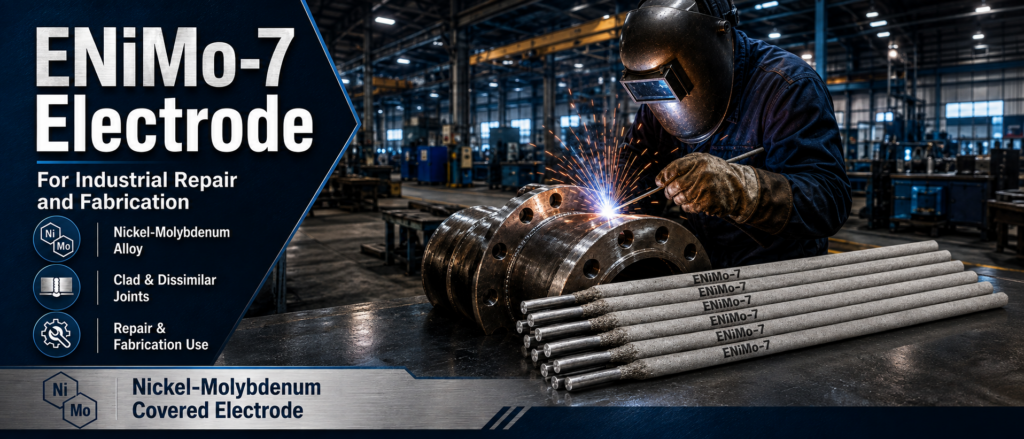
ENiMo-7 Electrode for Industrial Repair and Fabrication
Industrial equipment often operates under a combination of corrosive media, mechanical stress, thermal cycling, and demanding production conditions. When nickel-molybdenum alloy components require fabrication or repair, the welding consumable must provide suitable metallurgical compatibility while supporting a sound and dependable joint.ENiMo-7
The ENiMo-7 electrode is a nickel-molybdenum covered electrode developed for shielded metal arc welding. It is commonly considered for joining nickel-molybdenum alloys, welding the alloy side of clad steel, and completing selected dissimilar-metal joints involving steel or other nickel-based materials. These capabilities make it useful for specialized industrial repair and fabrication work.
This guide explains the applications, advantages, preparation methods, welding practices, inspection requirements, and selection factors associated with the ENiMo-7 welding electrode.
What Is an ENiMo-7 Electrode?
ENiMo-7 is a flux-covered nickel-molybdenum welding electrode used with the shielded metal arc welding process, also known as SMAW or stick welding.
Its deposited weld metal is primarily based on nickel and molybdenum, with controlled amounts of other elements. The classification is intended for applications that require compatibility with nickel-molybdenum base metals and selected combinations of dissimilar alloys.
The current specification for nickel and nickel-alloy covered electrodes establishes requirements related to weld-metal composition, dimensions, soundness, properties, testing, identification, manufacturing, and packaging.
Because ENiMo-7 is a specialized electrode, it should not be treated as a general-purpose nickel welding rod. Base-metal grades, service conditions, joint design, and applicable fabrication requirements must be evaluated before welding begins.
Why ENiMo-7 Is Valuable for Industrial Repair
Industrial repair welding is often more complicated than new fabrication. The welder may be working with aged material, contaminated surfaces, restricted access, unknown thermal history, or components that cannot easily be removed from service.
ENiMo-7 can provide several practical advantages in these situations.
ENiMo-7 Compatibility with Nickel-Molybdenum Alloys
Repair weld metal should be compatible with the original component. ENiMo-7 is designed for nickel-molybdenum alloy welding and can help maintain a suitable alloy transition in repaired areas.
Suitability for Clad Equipment
Many industrial vessels and process components use a structural steel backing with a corrosion-resistant nickel-alloy cladding layer.
During repair, the structural portion and the corrosion-resistant surface may require different welding consumables. ENiMo-7 can be used for restoring the nickel-molybdenum alloy side of selected clad-steel joints.
Use in Selected Dissimilar-Metal Joints
ENiMo-7 may be used for joining nickel-molybdenum alloys to steel or to other compatible nickel-based alloys. Such joints require careful dilution control because excessive mixing with the steel side can alter the intended weld-metal chemistry.
Practical Manual Welding Process
Stick welding equipment is relatively portable and adaptable. It can be useful for maintenance areas, field repairs, restricted spaces, and low-volume fabrication where automated wire processes may not be practical.
Common Applications of ENiMo-7 Electrodes
The ENiMo-7 electrode is associated with specialized fabrication and maintenance rather than ordinary structural welding.
Typical applications may include:
Nickel-molybdenum alloy equipment
Corrosion-resistant process vessels
Alloy piping and fittings
Clad-steel components
Chemical processing equipment
Heat-transfer equipment
Industrial tanks and reactors
Pumps, valves, and internal components
Dissimilar joints between nickel alloys and steel
Repair of worn or damaged alloy surfaces
The electrode is commonly connected with nickel-molybdenum base materials carrying the UNS N10665 designation. It may also be considered for the alloy side of clad joints and compatible dissimilar-metal combinations.
Actual suitability depends on the complete service environment. A consumable that performs well in one chemical solution may not provide the same result under different concentration, temperature, pressure, or contamination conditions.
ENiMo-7 for Corrosion-Resistant Equipment Repair
Corrosion-resistant equipment can fail through localized attack, cracking, erosion, mechanical impact, or damage created during previous maintenance.
A successful repair must restore more than the visible shape of the component. It should also preserve the function of the corrosion-resistant surface.
Localized Corrosion Repair
Areas affected by localized metal loss may be excavated to sound material and rebuilt using a qualified procedure. The repair area should be inspected carefully to confirm that all cracks and contaminated material have been removed.
ENiMo-7 Cladding Restoration
When the corrosion-resistant cladding of a vessel or pipe is damaged, ENiMo-7 may be used to restore the nickel-molybdenum alloy surface after the structural backing has been repaired with the appropriate consumable.
The cladding layer should provide adequate coverage while limiting dilution from the steel substrate.
Weld-Defect Repair
ENiMo-7 can be considered when removing and repairing defects such as:
Lack of fusion
Slag inclusions
Surface cracking
Incomplete filling
Local porosity
Damage from machining or handling
The cause of the original defect should be identified before repair. Repeating the same welding conditions without correcting the root cause can produce another failure.
Replacement of Damaged Sections
When localized repair is not practical, a damaged section may be removed and replaced. The replacement material, filler metal, joint geometry, and welding sequence should be controlled through an approved repair plan.
Main Benefits of ENiMo-7 in Fabrication
Nickel-Molybdenum Weld Deposit
The nickel-molybdenum deposit offers metallurgical compatibility for selected nickel-molybdenum alloy joints and repair areas.
Support for Dissimilar-Material Fabrication
ENiMo-7 can be used in certain joints connecting nickel-molybdenum materials to steel or other nickel-based alloys.
Application to Alloy-Clad Steel
It is useful for welding or restoring the nickel-molybdenum alloy side of compatible clad-steel components.
Controlled Manual Deposition
SMAW allows the welder to deposit relatively small, controlled beads. This can be beneficial when repairing localized damage or working around complex geometry.
Field and Maintenance Flexibility
The process does not require a separate shielding-gas supply, making it practical for some repair locations where access and equipment availability are limited.
ENiMo-7 Reliable Industrial Versatility
ENiMo-7 can support new fabrication, component modification, cladding restoration, weld repair, and maintenance of selected corrosion-resistant equipment.
Preparing the Joint Before Welding
Preparation is critical in nickel-alloy welding. Even a suitable electrode cannot compensate for poor cleaning, hidden cracking, or an incorrect joint design.
Confirm the Base Metal
Identify the exact grade of every material in the joint. Do not rely only on appearance, equipment age, or a general description such as “nickel alloy.”
Material identification may involve:
Original material certificates
Equipment records
Positive material identification
Chemical analysis
Review of previous repair documentation
Remove Contamination
The joint area should be free from:
Oil
Grease
Paint
Moisture
Dirt
Oxides
Sulfur-containing substances
Cutting fluids
Embedded carbon-steel particles
Use clean tools reserved for nickel-alloy work where possible. Contaminated brushes, grinding wheels, or work surfaces can introduce unwanted particles into the joint.
ENiMo-7 Remove Defective Material Completely
Cracks and damaged metal should be removed to sound material. Liquid penetrant testing may be used after excavation to confirm that surface-breaking defects have been eliminated.
Prepare a Suitable Groove
The groove should allow adequate electrode access and slag removal. Narrow or irregular grooves can increase the risk of incomplete fusion and slag entrapment.
ENiMo-7 Keep the Joint Dry
Moisture on the workpiece or electrode coating can contribute to porosity and unstable welding performance. Components should be dry before welding begins.
Recommended Welding Practices
Exact current, polarity, electrode diameter, preheat, and interpass temperature must come from the product data sheet and qualified welding procedure.
The following general practices can improve consistency.
Maintain a Short Arc
A short, controlled arc helps reduce atmospheric exposure and improves control of the molten weld pool. Excessive arc length may contribute to spatter, oxidation, irregular bead shape, or porosity.
Use Controlled Stringer Beads
Narrow stringer beads are generally preferred to excessive weaving. They help manage heat input, penetration, and dilution.
ENiMo-7 Limit Heat Input
Excessive heat can increase the size of the heat-affected zone, produce unnecessary distortion, and change the amount of base metal entering the weld pool.
Heat input should be controlled through:
Suitable amperage
Stable travel speed
Narrow beads
Appropriate electrode diameter
Controlled interpass temperature
Planned welding sequence
Clean Every Pass
Slag must be removed thoroughly before the next pass is deposited. Inspect each layer for irregularities, incomplete fusion, trapped slag, or surface defects.
Avoid Unnecessary Restarts
Frequent arc stops and starts can create local defects. When a restart is necessary, clean and reshape the crater area before continuing.
Follow Position Limitations
ENiMo-7 electrodes are generally associated with flat-position welding. The permitted positions must be confirmed from the specific product documentation and qualified procedure.
Controlling Dilution in Dissimilar-Metal Repairs
Dilution refers to the amount of base metal that melts and mixes with the filler metal.
It is especially important when welding nickel-molybdenum alloy to steel. Excessive iron pickup can change the composition and performance of the final weld deposit.
Dilution can be controlled by:
Using the lowest practical heat input
Avoiding excessive penetration
Depositing narrow beads
Selecting an appropriate joint design
Controlling electrode angle
Using multiple layers when necessary
Applying a buttering layer before final assembly
Keeping the arc directed toward the intended weld pool area
A buttering layer can create a controlled alloy transition before the final joint is completed. Its use should be included in the qualified welding procedure.
Repair Welding Workflow
A structured workflow helps reduce errors and improves traceability.
1. Evaluate the Damage
Determine whether the problem was caused by corrosion, cracking, erosion, mechanical overload, poor welding, thermal stress, or an unsuitable previous repair.
2. Identify the Materials
Confirm the base-metal grades, cladding material, and any previous weld deposits.
3. Define the Repair Boundary
Mark the complete damaged area and allow sufficient space to remove all affected material.
4. Excavate to Sound Metal
Use a suitable mechanical method that does not introduce harmful contamination.
5. Inspect the Excavated Area
Confirm that cracks and unacceptable defects have been removed.
6. Prepare and Clean the Joint
Create an accessible groove and clean the surface immediately before welding.
7. Verify the Electrode Condition
Check the classification, diameter, batch identification, packaging condition, and storage history.
8. Deposit Controlled Weld Beads
Follow the approved parameters, sequence, heat-input limits, and interpass cleaning requirements.
9. Perform Intermediate Inspection
Inspect each stage before the repair area becomes covered by additional weld metal.
10. Complete Final Examination
Conduct the required visual and nondestructive testing after welding.
11. Record the Repair
Document the materials, electrode batch, welder identification, parameters, inspections, and final acceptance.
Electrode Storage and Handling
Covered electrodes can absorb moisture or become physically damaged when stored incorrectly.
Recommended practices include:
Keep unopened packages in a clean, dry area
Protect electrodes from water and condensation
Store opened electrodes under controlled conditions
Follow the specified holding and redrying instructions
Avoid using electrodes with cracked or damaged coatings
Do not mix electrode classifications
Maintain batch traceability
Return unused electrodes to suitable storage promptly
Redrying should never be based on a generic temperature chosen for another electrode type. Excessive temperature or holding time can damage the coating and affect welding behavior.
Inspection and Quality Control
The required inspection program depends on the component, governing code, service conditions, and repair specification.
Visual Inspection
Visual examination can identify:
Undercut
Incomplete filling
Excessive reinforcement
Arc strikes
Surface porosity
Irregular bead shape
Visible cracking
Liquid Penetrant Testing
Liquid penetrant testing is frequently useful for detecting surface-breaking defects in nonmagnetic nickel-alloy welds.
Radiographic Testing
Radiography can help identify internal porosity, slag inclusions, incomplete penetration, and selected fusion defects.
ENiMo-7 Ultrasonic Testing
Ultrasonic examination may be used when the joint geometry, material structure, and approved procedure support reliable interpretation.
ENiMo-7 Chemical or Corrosion Testing
For critical equipment, additional testing may be required to evaluate weld-metal chemistry or performance in the expected process environment.
Mechanical Testing
Procedure qualification may include tensile, bend, or other mechanical tests depending on the applicable fabrication requirements.
ENiMo-7 Common Welding Mistakes to Avoid
Selecting the Electrode by Name Alone
The classification should be checked against the exact base metals, service environment, and project requirements.
Welding Over Contamination
Nickel-alloy welds require thorough cleaning. Welding over grease, oxides, paint, or process residue can cause serious defects.
Using Excessive Heat
High current and slow travel can increase dilution, distortion, and the risk of weld-quality problems.
ENiMo-7 Applying Wide Weaving Beads
Excessive weaving increases heat input and may make slag control more difficult.
ENiMo-7 Ignoring Electrode Moisture
Moisture-damaged electrodes may produce unstable operation, porosity, and inconsistent deposits.
ENiMo-7 Failing to Clean Between Passes
Slag left between layers can become trapped in the completed weld.
ENiMo-7 Repairing Without Identifying the Failure Cause
A technically sound weld may fail again when the underlying corrosion, loading, or design problem remains unresolved.
ENiMo-7 Using Unqualified Parameters
Critical industrial repairs should be completed according to a documented and qualified welding procedure.
How to Select an ENiMo-7 Electrode
Before purchasing or approving an ENiMo-7 welding electrode, verify the following details.
ENiMo-7 Classification
Confirm that the electrode is supplied under the required ENiMo-7 classification.
ENiMo-7 Applicable Specification
Check the specification edition required by the contract, code, or engineering document.
Electrode Diameter
Select a diameter appropriate for the component thickness, joint access, welding position, and desired heat input.
Operating Characteristics
Review recommended polarity, current range, deposition behavior, and position limitations.
Documentation
For controlled projects, request the required inspection certificate, batch analysis, conformity documents, and traceability records.
Packaging
Packaging should protect the electrode coating from moisture and physical damage during transportation and storage.
ENiMo-7 Procedure Compatibility
Confirm that the selected diameter and product are covered by the approved welding procedure.
ENiMo-7 Conclusion
The ENiMo-7 electrode is a specialized nickel-molybdenum welding consumable for demanding industrial repair and fabrication. Its principal applications include welding compatible nickel-molybdenum alloys, restoring alloy-clad surfaces, and producing selected dissimilar joints involving steel and nickel-based materials.
Reliable results depend on accurate material identification, complete defect removal, careful cleaning, controlled heat input, limited dilution, proper electrode storage, and qualified welding parameters.
When ENiMo-7 is selected for the correct materials and applied through a controlled repair procedure, it can provide an effective solution for corrosion-resistant process equipment, alloy piping, vessels, clad components, and other specialized industrial assemblies.