
ENiMo-3 Electrode for Nickel, Cobalt and Iron-Based Alloys: Applications, Benefits and Welding Guide
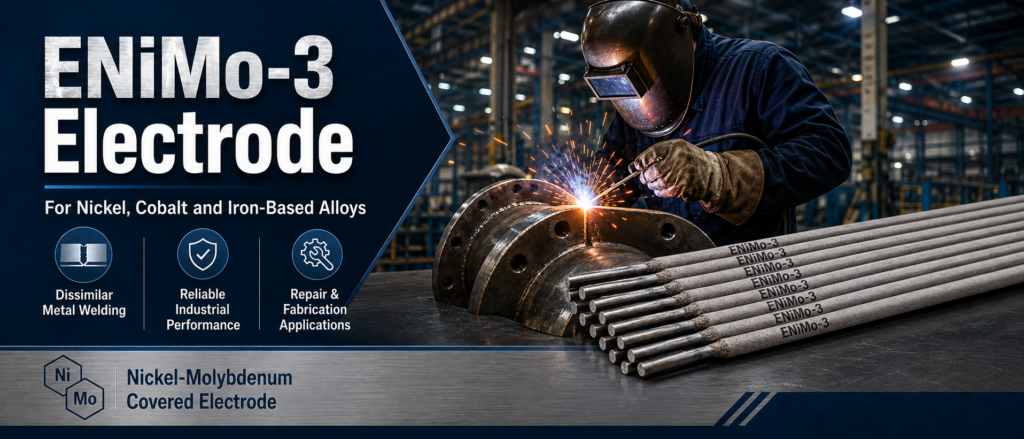
ENiMo-3 is a nickel-molybdenum covered electrode developed for shielded metal arc welding of demanding alloy combinations. It is especially useful when a fabrication project requires the joining of nickel-based, cobalt-based and iron-based materials that may have significantly different chemical compositions and thermal characteristics.
The electrode is commonly selected for dissimilar-metal joints, repair welding, industrial equipment fabrication and specialized components exposed to demanding service conditions. Its nickel-rich weld deposit helps create a metallurgical transition between different base metals, while its high molybdenum content supports strength and performance in challenging environments.
This guide explains the characteristics, applications, benefits and recommended welding practices of the ENiMo-3 electrode.
What Is an ENiMo-3 Electrode?
ENiMo-3 is a nickel-molybdenum alloy welding electrode classified for shielded metal arc welding, also known as SMAW or stick welding. It belongs to the group of covered electrodes in which nickel is the principal element in the deposited weld metal.
The nominal weld-metal composition is approximately:
63% nickel
25% molybdenum
5.5% iron
4% chromium
The exact composition may vary within the limits of the applicable specification and the certified batch analysis.
ENiMo-3 electrodes are primarily intended for welding dissimilar combinations of nickel-based, cobalt-based and iron-based alloys. They are normally used in the flat welding position unless the product data sheet and approved welding procedure specify otherwise. (studylib.net)
Why ENiMo-3 Is Suitable for Dissimilar-Metal Welding
Dissimilar-metal welding is more complex than joining two identical materials. Different alloys may have different melting behavior, thermal expansion rates, strength levels and responses to heat.
An unsuitable filler metal can contribute to:
Excessive weld dilution
Brittle phases in the weld metal
Hot cracking
Loss of ductility
Reduced high-temperature performance
Premature joint failure
The nickel-rich structure of ENiMo-3 provides a relatively accommodating weld-metal matrix. This can help manage the metallurgical differences between nickel, cobalt and iron-based materials.
Molybdenum contributes to the strength and alloy stability of the deposited metal, while controlled chromium and iron additions help balance the weld-metal chemistry. This makes ENiMo-3 a practical option for specialized transition joints where ordinary carbon-steel or stainless-steel electrodes may not provide suitable compatibility.
Main Applications of ENiMo-3 Electrodes
Joining Nickel-Based Alloys
ENiMo-3 can be used in fabrication and repair work involving selected nickel-based alloys. Its nickel-molybdenum deposit is suitable for joints where compatibility with a highly alloyed nickel base material is required.
Typical components may include:
Process equipment
High-temperature fixtures
Industrial furnace parts
Alloy piping
Heat-resistant assemblies
Specialized pressure-containing components
The base-metal grade, service temperature and corrosion environment must always be evaluated before the electrode is selected.
Welding Cobalt-Based Alloys
Cobalt-based alloys are often used for components requiring heat resistance, wear resistance or strength under demanding operating conditions.
ENiMo-3 may be considered for selected joints between cobalt-based alloys and compatible nickel- or iron-based materials. It can provide a more suitable transition deposit than a conventional steel electrode.
Possible applications include:
High-temperature equipment
Repair of alloy components
Industrial tooling
Furnace hardware
Specialized mechanical assemblies
The finished weld should be qualified for the actual service conditions because cobalt-based materials can vary considerably in composition.
Joining Iron-Based Alloys to Nickel or Cobalt Alloys
One of the most valuable uses of ENiMo-3 is the joining of iron-based materials to nickel- or cobalt-based alloys.
Typical examples include:
Steel-to-nickel-alloy transition joints
Alloy attachments welded to steel structures
Repair of multi-alloy industrial components
Clad or overlaid equipment
High-temperature steel assemblies
Dissimilar piping connections
When welding an iron-based material to a nickel-rich alloy, controlling dilution is important. Excessive mixing with the steel side can change the deposited-metal chemistry and reduce the intended weld properties.
Key Benefits of ENiMo-3
Strong Dissimilar-Alloy Compatibility
ENiMo-3 is designed for combinations of nickel, cobalt and iron-based alloys. This specialized purpose gives it an advantage over general-purpose electrodes in complex alloy fabrication.
Nickel-Molybdenum Weld Deposit
The nickel-molybdenum deposit provides a useful balance of strength, ductility and metallurgical stability for selected demanding joints.
Reduced Risk of Incompatible Weld Chemistry
A properly selected ENiMo-3 electrode can help avoid unfavorable weld-metal structures that may form when an unsuitable filler material is used between dissimilar alloys.
Suitable for Repair and Maintenance
Industrial maintenance often involves equipment made from more than one alloy. ENiMo-3 can be useful when the original component composition requires a nickel-rich transition weld.
Reliable Manual Welding Process
Because ENiMo-3 is a covered stick electrode, it can be used where wire-feeding equipment is inconvenient. This makes it practical for field repairs, limited-access areas and low-volume specialized fabrication.
Welding Characteristics
ENiMo-3 is generally used with shielded metal arc welding equipment. Many products are designed for direct current electrode-positive operation, although the exact polarity must be confirmed from the product data sheet.
The electrode is normally recommended for flat-position welding. Welders should not assume that it is suitable for vertical or overhead welding unless this is specifically permitted by the electrode manufacturer and the approved welding procedure.
The arc should be kept controlled and stable. Excessive weaving, high heat input or unnecessary arc length can increase oxidation, dilution and weld-pool instability.
Recommended Welding Practices
Clean the Base Metal Thoroughly
Nickel-based welds are sensitive to contamination. Before welding, remove:
Oil
Grease
Paint
Moisture
Dirt
Oxides
Cutting-fluid residue
Sulfur-containing marking materials
Contamination from sulfur, lead or other low-melting substances can increase the risk of weld cracking.
Use clean tools dedicated to nickel-alloy preparation whenever possible. Carbon-steel grinding dust and embedded particles should not be allowed to contaminate the joint.
Control Dilution
Dilution is especially important when welding dissimilar metals. Excessive penetration into the iron-based side may significantly change the weld-metal composition.
Dilution can be managed by:
Using the lowest practical heat input
Avoiding excessive current
Depositing controlled stringer beads
Directing more arc energy toward the weld pool or nickel-alloy side
Applying a suitable buttering layer when required
Following the qualified joint design
A buttering layer may be deposited on one base metal before the final joint is completed. This can create a more controlled transition between incompatible materials.
Use a Short Arc
A short arc helps reduce atmospheric exposure and provides better control of the molten weld pool. Excessive arc length may cause spatter, oxidation and an irregular bead profile.
Use Stringer Beads
Narrow stringer beads are generally preferred to wide weaving. They help control heat input and reduce the time that the weld metal remains at elevated temperature.
Remove Slag Between Passes
Each weld pass should be thoroughly cleaned before the next pass is deposited. Remaining slag can produce inclusions and interfere with fusion.
Control Interpass Temperature
Excessive interpass temperature can affect the weld microstructure and increase distortion. The allowable range should be established by the qualified welding procedure.
Do not apply a generic temperature limit to every project. Base-metal grade, material thickness, restraint and service requirements must all be considered.
Electrode Storage and Handling
Covered electrodes can absorb moisture when stored incorrectly. Moisture may contribute to porosity, arc instability and weld defects.
Recommended storage practices include:
Keep unopened packages in a dry environment
Protect electrodes from rain and condensation
Store opened packages in a controlled holding oven when required
Follow the specified redrying instructions
Do not use electrodes with damaged or cracked coatings
Avoid repeated uncontrolled heating cycles
Redrying temperatures must come from the electrode data sheet. Excessive heating can damage the coating and change welding performance.
How to Select the Correct ENiMo-3 Electrode
Before ordering or approving an ENiMo-3 product, confirm the following information:
Base-Metal Grades
Identify both materials in the joint. General descriptions such as “nickel alloy” or “high-temperature steel” are not sufficient for critical applications.
Service Conditions
Consider:
Operating temperature
Corrosive media
Thermal cycling
Mechanical loading
Pressure
Oxidizing or reducing atmosphere
Required service life
Welding Position
ENiMo-3 is normally associated with flat-position welding. Confirm that the joint can be positioned correctly.
Required Certification
For industrial projects, request the appropriate inspection documents, batch analysis and classification certificates.
Mechanical and Corrosion Testing
The electrode classification alone does not prove performance in every corrosive or high-temperature environment. Project-specific testing may be required for corrosion resistance, oxidation resistance, elevated-temperature strength or other critical properties.
ENiMo-3 Electrode Sizes
Available diameters depend on production and project requirements. Common covered-electrode sizes may include:
2.5 mm
3.2 mm
4.0 mm
5.0 mm
Smaller diameters support lower-current welding and improved control on thinner components. Larger diameters can provide higher deposition rates but require greater heat input.
The welding current should be selected according to electrode diameter, joint design, material thickness and welding position.
Quality Control for ENiMo-3 Welds
Critical ENiMo-3 welds should be inspected according to the applicable fabrication code and project specification.
Inspection methods may include:
Visual inspection
Liquid penetrant testing
Radiographic testing
Ultrasonic testing
Tensile testing
Bend testing
Chemical analysis
Corrosion testing
High-temperature performance testing
The required inspection level depends on the component, service risk and governing code.
Conclusion
ENiMo-3 is a specialized nickel-molybdenum covered electrode for joining selected combinations of nickel, cobalt and iron-based alloys. Its nickel-rich deposit provides a practical metallurgical bridge between dissimilar materials, making it valuable for specialized fabrication, repair welding and industrial transition joints.
Successful ENiMo-3 welding depends on more than electrode classification. Proper base-metal identification, joint cleaning, dilution control, heat-input management, electrode storage and procedure qualification are essential.
When the electrode is matched to the correct materials and applied through a controlled welding procedure, ENiMo-3 can provide reliable performance in demanding multi-alloy assemblies.