

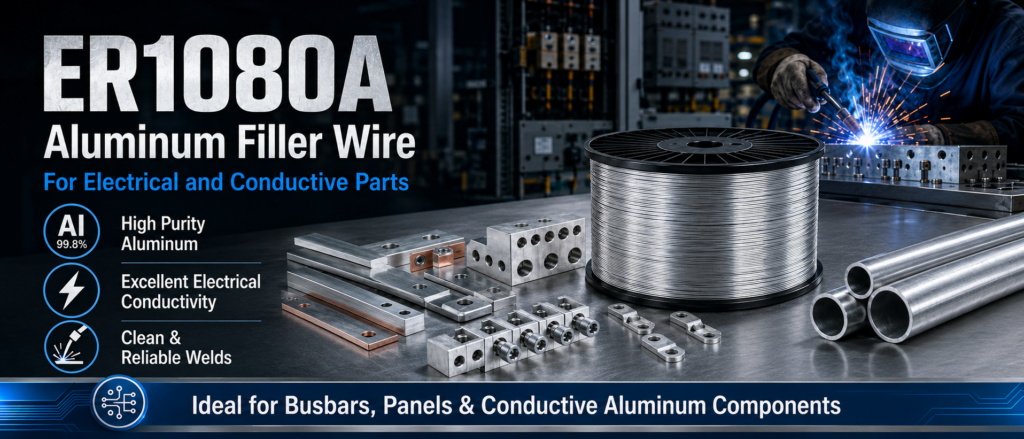
ER1080A Aluminum Filler Wire for Electrical and Conductive Parts
In electrical and conductive aluminum fabrication, the welding filler metal is not only used to join parts together. It can also influence conductivity, corrosion resistance, surface quality, and long-term performance. For manufacturers working with pure aluminum components, busbars, conductive panels, terminals, enclosures, and heat transfer parts, ER1080A aluminum filler wire is a practical option when high-purity aluminum welding is required.
ER1080A aluminum filler wire is designed for welding pure aluminum and compatible aluminum alloys. With its high aluminum content, it is often selected for applications where clean welds, stable conductivity, and reliable corrosion resistance are important. In electrical manufacturing, where every joint must support both mechanical integrity and functional performance, using the right aluminum filler wire can make a significant difference.
What Is ER1080A Aluminum Filler Wire?
ER1080A is a high-purity aluminum welding filler metal commonly used for MIG and TIG welding applications. It is associated with Al99.8 aluminum composition, making it suitable for joining similar pure aluminum base materials and selected 1000 series aluminum alloys.
This filler wire is commonly considered for aluminum parts where strength is not the only requirement. Instead, the main priorities may include electrical conductivity, corrosion resistance, clean appearance, weld consistency, and compatibility with high-purity aluminum materials.
Because ER1080A has a low level of alloying elements compared with many other aluminum filler metals, it can help maintain the desirable properties of pure aluminum in the welded area. This makes it valuable for electrical and conductive parts where excessive alloying content may not be preferred.
Why ER1080A Is Used for Electrical and Conductive Parts
Electrical aluminum components often require a combination of conductivity, lightweight structure, corrosion resistance, and dimensional stability. Aluminum is widely used in power distribution, electronics, transportation, energy equipment, and industrial assemblies because it offers a strong balance of low weight and good electrical performance.
However, when aluminum parts are welded, the filler metal becomes part of the conductive path. If the filler material is not suitable, the weld area may become a weak point in performance, appearance, or durability. ER1080A aluminum filler wire is often chosen because its high-purity aluminum composition is closer to the base materials used in many conductive aluminum parts.
For conductive applications, the goal is not only to make a strong weld. The weld should also support stable current flow, resist corrosion, and maintain a clean surface finish. ER1080A is suitable for this type of requirement when the base metal and project design are compatible.
Key Benefits of ER1080A Aluminum Filler Wire
High-Purity Aluminum Composition
One of the main advantages of ER1080A aluminum filler wire is its high aluminum content. This makes it suitable for welding pure aluminum and similar aluminum grades. In electrical applications, high-purity aluminum filler metal can help support the conductive characteristics expected from the welded assembly.
Good Electrical Conductivity
For busbars, conductive strips, terminals, and electrical panels, conductivity is a major concern. ER1080A is often selected when fabricators want a filler metal that is closer to pure aluminum rather than a heavily alloyed filler wire. This can be important for components where the welded joint is part of the electrical path.
Excellent Corrosion Resistance
Electrical parts may be exposed to humidity, temperature changes, industrial environments, or outdoor conditions. ER1080A aluminum filler wire offers good corrosion resistance when used with compatible base metals, helping the final assembly maintain performance and appearance over time.
Clean Weld Appearance
Many conductive aluminum components are visible in finished equipment. Clean bead appearance, low contamination, and smooth weld surfaces can reduce finishing work and improve the professional quality of the final product. With proper welding parameters and surface preparation, ER1080A can produce neat welds on suitable aluminum materials.
Suitable for MIG and TIG Welding
ER1080A aluminum filler wire can be used in different welding formats depending on the production process. MIG welding is often preferred for productivity and continuous production, while TIG welding may be selected for precision work, thin materials, or high-quality visible welds.
Common Applications of ER1080A Aluminum Filler Wire
ER1080A aluminum filler wire is used in many industries where conductive aluminum parts must be welded with clean and reliable results.
Common applications include:
Electrical busbars
Aluminum conductive strips
Battery connection components
Power distribution equipment
Electrical panels and cabinets
Transformer and switchgear parts
Electronic housings and enclosures
Pure aluminum sheet assemblies
Heat exchanger components
Aluminum cooling plates
Conductive frames and brackets
Industrial aluminum structures
These applications often require both functional performance and stable manufacturing quality. ER1080A is especially useful when the base material is pure aluminum or a compatible aluminum alloy with similar composition.
ER1080A for Aluminum Busbar Welding
Aluminum busbars are widely used in electrical systems because they are lightweight, conductive, and cost-effective. Welding may be required for joining sections, attaching tabs, connecting terminals, or producing custom current-carrying structures.
When welding aluminum busbars, filler metal selection should be handled carefully. The weld must provide a clean connection while minimizing unnecessary changes to the conductive path. ER1080A aluminum filler wire is a suitable option for compatible pure aluminum busbar materials because of its high-purity composition and good conductivity potential.
For best results, the base material should be properly cleaned before welding. Aluminum oxide, oil, moisture, and surface contamination can affect weld quality. Correct shielding gas, wire feeding, welding parameters, and post-weld inspection are also important for producing reliable conductive welds.
ER1080A for Electrical Enclosures and Panels
Electrical enclosures and aluminum panels require clean fabrication, corrosion resistance, and stable weld quality. Some enclosures are used in indoor electrical systems, while others must withstand industrial or outdoor environments. In both cases, weld quality can affect durability and appearance.
ER1080A aluminum filler wire can be used for compatible aluminum sheets, panels, and enclosure parts where high-purity aluminum weld metal is preferred. It can help create clean welds while supporting corrosion resistance and a professional surface finish.
For visible enclosure welds, TIG welding with ER1080A filler rod may be chosen for better control and appearance. For higher-volume production, MIG welding with ER1080A aluminum wire may improve efficiency while still providing good weld quality when the process is properly controlled.
ER1080A for Heat Transfer and Conductive Assemblies
Electrical parts often generate heat. Aluminum is commonly used in heat transfer components because of its thermal conductivity and light weight. Examples include cooling plates, heat exchanger parts, power electronics housings, and thermal management structures.
ER1080A aluminum filler wire can be considered for compatible aluminum heat transfer assemblies because it supports clean joining of high-purity aluminum materials. In these applications, weld consistency is important because poor welding may reduce thermal performance or create weak points in the structure.
A clean weld bead, controlled heat input, and proper joint design can help improve the final performance of aluminum heat transfer components.
ER1080A vs Other Aluminum Filler Wires
Different aluminum filler wires are designed for different priorities. Some are chosen for crack resistance, some for higher strength, and others for general-purpose welding. ER1080A is mainly selected when high-purity aluminum characteristics are important.
Compared with more alloyed aluminum filler wires, ER1080A is better suited for pure aluminum and similar base materials where conductivity, corrosion resistance, and clean weld appearance are major concerns. However, it may not be the best choice when the project requires high mechanical strength or welding of heavily alloyed aluminum materials.
For electrical and conductive parts, the best filler wire should be selected based on the base metal, required conductivity, joint design, service environment, and production method. ER1080A is a strong choice when the application calls for high-purity aluminum filler metal and compatible base materials.
Welding Tips for ER1080A Aluminum Filler Wire
To get stable performance from ER1080A aluminum filler wire, welding preparation and process control are essential.
First, clean the aluminum surface thoroughly before welding. Aluminum naturally forms an oxide layer, and contamination can affect weld penetration, bead appearance, and electrical performance.
Second, use proper shielding gas. High-purity argon is commonly used for aluminum welding, while helium or mixed shielding gases may be used for specific applications. Stable gas coverage helps protect the molten weld pool.
Third, control heat input. Excessive heat can cause distortion, burn-through, or poor bead shape, especially on thin aluminum parts. Proper parameter control helps create a clean and consistent weld.
Fourth, confirm base metal compatibility. ER1080A is most suitable for pure aluminum and compatible aluminum alloys. It should not be used as a universal filler wire for all aluminum grades.
Finally, test before mass production. For electrical or conductive parts, sample welding and electrical performance checks are recommended before large-scale manufacturing.
Why Choose ER1080A for Conductive Aluminum Welding?
ER1080A aluminum filler wire is a strong option for manufacturers who need clean welds on electrical and conductive aluminum parts. Its high-purity composition makes it suitable for pure aluminum applications where conductivity, corrosion resistance, and surface quality are important.
For busbars, panels, conductive frames, electrical enclosures, and heat transfer components, ER1080A provides a reliable solution when used with compatible base metals and proper welding procedures. It is especially useful when the welded part must maintain the advantages of aluminum, including light weight, conductivity, and corrosion resistance.
FAQ About ER1080A Aluminum Filler Wire
What is ER1080A aluminum filler wire used for?
ER1080A aluminum filler wire is used for welding pure aluminum and compatible aluminum alloys. It is suitable for electrical parts, conductive components, busbars, panels, enclosures, and heat transfer assemblies.
Is ER1080A good for electrical conductivity?
Yes. ER1080A is a high-purity aluminum filler wire, making it a suitable option for compatible conductive aluminum parts where electrical performance is important.
Can ER1080A be used for aluminum busbars?
Yes. ER1080A can be used for compatible aluminum busbar welding, especially when high-purity aluminum filler metal is preferred for conductive applications.
Is ER1080A suitable for MIG and TIG welding?
Yes. ER1080A can be supplied for MIG welding and TIG welding, depending on the production process and required weld quality.
What base metals are suitable for ER1080A?
ER1080A is mainly used with pure aluminum and compatible aluminum alloys, especially selected 1000 series aluminum materials. Base metal compatibility should always be checked before production.
Is ER1080A stronger than other aluminum filler wires?
ER1080A is not mainly selected for high strength. It is chosen for high purity, conductivity, corrosion resistance, and clean weld quality on compatible aluminum materials.
Conclusion
ER1080A aluminum filler wire is an excellent choice for electrical and conductive aluminum parts that require clean welds, good corrosion resistance, and high-purity aluminum performance. It is especially suitable for compatible pure aluminum and 1000 series aluminum applications such as busbars, panels, electrical enclosures, conductive frames, and heat transfer components.
For manufacturers who need stable welding quality and reliable conductive performance, ER1080A aluminum filler wire provides a practical and professional solution. With proper base metal selection, surface preparation, shielding gas, and welding parameters, ER1080A can help produce clean, consistent, and functional aluminum welds for demanding electrical applications.