

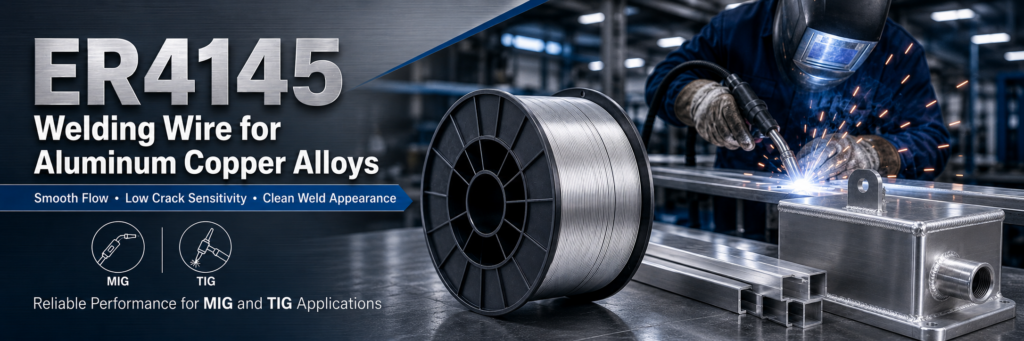
ER4145 Welding Wire for Aluminum Copper Alloys
ER4145 welding wire is a specialized aluminum filler metal designed for welding aluminum copper alloys and aluminum copper silicon castings. With its balanced silicon and copper content, ER4145 provides excellent weld pool fluidity, low melting characteristics, and reliable crack resistance in suitable applications. It is widely used when manufacturers need clean weld appearance, stable feeding performance, and dependable joining quality for aluminum alloy components.
For industries working with 2XXX series aluminum alloys, aluminum copper castings, and precision aluminum parts, choosing the right filler wire is essential. ER4145 aluminum welding wire offers a practical solution for applications where smooth weld formation, good wetting behavior, and reduced hot cracking tendency are important.
What Is ER4145 Welding Wire?
ER4145 is an aluminum silicon copper welding wire commonly used as a filler metal for aluminum copper alloy welding. It is suitable for both MIG welding and TIG welding processes, depending on product form, wire diameter, equipment setup, and welding requirements.
Compared with general-purpose aluminum filler wires, ER4145 is selected for more specific alloy-matching needs. Its composition helps create a fluid weld pool, making it useful for parts that require good bead appearance and controlled welding performance. In many applications, ER4145 is chosen when a cosmetic weld appearance is required and extremely high weld strength is not the primary requirement.
Why Use ER4145 for Aluminum Copper Alloys?
Aluminum copper alloys can be more sensitive to cracking than some other aluminum alloy groups. During welding, the filler metal must support proper fusion, reduce weld defects, and maintain stable performance under controlled welding conditions. ER4145 welding wire is designed to help meet these needs.
The main benefits of ER4145 welding wire include:
Smooth weld pool flow
Good wetting on suitable aluminum base metals
Low melting behavior
Reduced crack sensitivity in recommended applications
Clean and attractive weld bead appearance
Suitable performance for aluminum copper and aluminum copper silicon alloys
These characteristics make ER4145 aluminum welding wire a valuable option for manufacturers that require both technical reliability and visual weld quality.
Common Applications of ER4145 Aluminum Welding Wire
ER4145 welding wire is commonly used in aluminum alloy fabrication, repair, and production environments where aluminum copper alloys are involved. It can be applied to suitable wrought and cast aluminum materials, especially where smooth flow and low crack sensitivity are required.
Typical application areas include:
Aluminum copper alloy components
Aluminum copper silicon castings
Automotive aluminum parts
Aerospace-related aluminum fabrication
Machinery parts
Precision aluminum repair welding
Cast aluminum component welding
Industrial aluminum assemblies
Because aluminum alloy selection can strongly affect weld results, users should always confirm base metal compatibility, welding process, heat treatment requirements, and final mechanical performance before production welding.
ER4145 Welding Wire for MIG and TIG Welding
ER4145 aluminum welding wire can be supplied for different welding methods. For MIG welding, it is often used in spool form with proper aluminum feeding systems. For TIG welding, it may be supplied as straight filler rods for manual welding and precision repair work.
When used in MIG welding, stable wire feeding is important because aluminum wire is softer than steel wire. A clean liner, suitable drive rolls, correct contact tip size, and proper shielding gas can help improve feeding consistency and weld quality.
When used in TIG welding, ER4145 filler rod offers the welder better control over the weld pool. This is useful for precision work, repair welding, or applications where bead appearance and heat control are important.
Key Welding Advantages
1. Excellent Fluidity
ER4145 welding wire provides a smooth and fluid weld pool. Good fluidity helps improve bead shape, reduce irregular weld appearance, and support better wetting on suitable base metals.
2. Low Crack Sensitivity
Aluminum copper alloys can present welding challenges, especially when hot cracking is a concern. ER4145 is often selected because it offers low susceptibility to cracking in recommended alloy applications.
3. Clean Weld Appearance
For applications where appearance matters, ER4145 can help produce a smooth and cosmetic weld bead. This makes it useful for parts where both function and visual quality are important.
4. Suitable for Aluminum Copper Silicon Castings
Cast aluminum components often require filler metals with good flow and wetting behavior. ER4145 is suitable for many aluminum copper and aluminum copper silicon casting applications.
5. Stable Industrial Performance
With proper welding parameters, shielding gas, and surface preparation, ER4145 aluminum welding wire can provide consistent performance in industrial fabrication and repair work.
How to Get Better Results with ER4145 Welding Wire
To achieve good results with ER4145 welding wire, proper welding preparation is important. Aluminum surfaces should be clean and free from oil, moisture, oxide, and contamination before welding. The oxide layer on aluminum melts at a much higher temperature than the aluminum base metal, so cleaning is a critical step.
Recommended welding practices include:
Clean the base metal before welding
Use suitable shielding gas
Select the correct wire diameter
Adjust amperage and voltage according to material thickness
Use proper feeding equipment for aluminum MIG welding
Avoid excessive heat input
Store welding wire in a dry and clean environment
Test welding parameters before mass production
Good welding results depend not only on the filler wire, but also on base metal condition, joint design, equipment setup, operator skill, and welding procedure control.
ER4145 vs General Aluminum Welding Wire
General aluminum welding wires may work well for common aluminum alloys, but they may not be the best choice for aluminum copper alloys. ER4145 is more application-specific. It is often selected when welding aluminum copper or aluminum copper silicon materials that require good flow, low crack sensitivity, and a clean weld bead.
For projects involving 2XXX series aluminum alloys or aluminum copper castings, ER4145 can provide better matching performance than many general-purpose filler wires. However, if maximum strength, corrosion resistance, or post-weld heat treatment performance is required, the welding procedure should be carefully evaluated before final selection.
Choosing a Reliable ER4145 Welding Wire
When selecting ER4145 welding wire, buyers should pay attention to product consistency, surface finish, wire diameter tolerance, packaging quality, and compliance with relevant welding standards. A high-quality aluminum welding wire should feed smoothly, remain clean during storage, and support stable arc performance during welding.
Important selection factors include:
Correct alloy classification
Clean and smooth wire surface
Stable chemical composition
Proper spool winding
Moisture-resistant packaging
Available MIG and TIG sizes
Consistent batch quality
Technical support for welding parameters
For industrial users, consistent wire quality can reduce downtime, improve welding efficiency, and support more stable production results.
Conclusion
ER4145 welding wire is a practical filler metal for aluminum copper alloys and aluminum copper silicon castings. Its smooth weld pool flow, low melting characteristics, reduced crack sensitivity, and clean weld appearance make it suitable for many industrial aluminum welding applications.
For manufacturers, repair workshops, and aluminum fabrication projects, ER4145 aluminum welding wire offers a dependable option when working with suitable aluminum copper base metals. With proper surface preparation, correct welding parameters, and controlled welding procedures, ER4145 can help achieve clean, stable, and reliable welds.