

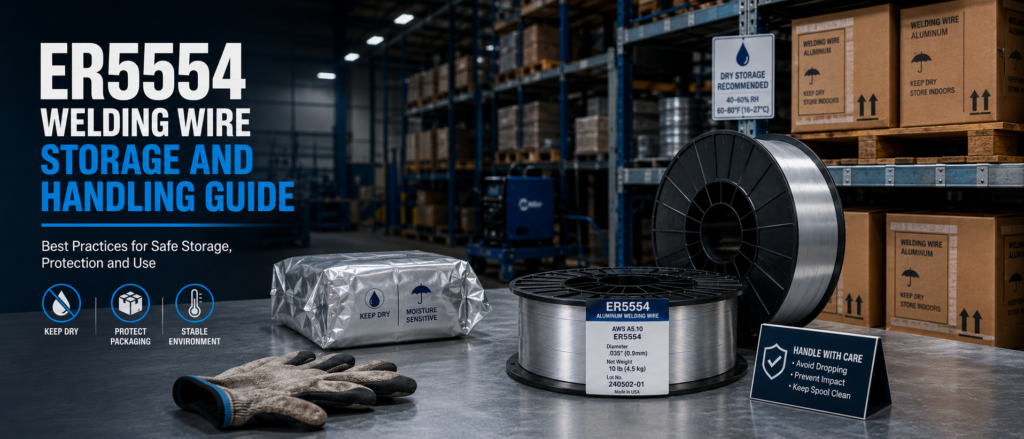
ER5554 Welding Wire Storage and Handling Guide
ER5554 welding wire is commonly selected for joining aluminum alloys that require dependable strength, good corrosion resistance, and stable performance at elevated service temperatures. However, even high-quality filler wire can produce inconsistent results when it is exposed to moisture, dust, oil, excessive heat, or improper handling.
Correct storage and handling help protect the wire surface, improve feeding performance, reduce weld porosity, and maintain consistent arc stability. This ER5554 welding wire storage and handling guide explains the best practices for receiving, storing, transporting, preparing, and using aluminum welding wire.
Why Proper ER5554 Welding Wire Storage Matters
Aluminum welding wire has a clean metallic surface that must remain protected before welding. When the wire is stored incorrectly, its surface may collect moisture, dust, grease, or other contaminants.
These contaminants can enter the weld pool during welding and cause problems such as:
Excessive weld porosity
Unstable arc performance
Poor wire feeding
Burnback at the contact tip
Irregular bead appearance
Increased spatter
Reduced weld quality
Premature liner or contact tip wear
ER5554 aluminum welding wire should therefore remain clean, dry, protected, and properly identified from the time it is received until it is loaded into the welding equipment.
Keep ER5554 Welding Wire in Its Original Packaging
Unopened ER5554 welding wire should remain in its original sealed packaging until it is required for production. The packaging protects the wire from airborne dust, moisture, handling damage, and workshop contamination.
Avoid opening multiple spools in advance. Open only the amount of wire needed for immediate or scheduled production. This reduces the time that the aluminum wire is exposed to the surrounding environment.
Before placing unopened packages into storage, inspect them for:
Tears or punctures
Water damage
Crushed corners
Broken seals
Loose labels
Visible contamination
Damaged spools
A damaged package should be separated and inspected before the welding wire is released for use.
Store ER5554 Welding Wire in a Clean, Dry Area
The ideal storage area for ER5554 welding wire should be indoors, dry, clean, and protected from rapid temperature changes. It should also be separated from grinding, cutting, painting, chemical processing, and other operations that generate dust or fumes.
A suitable welding wire storage area should have:
Controlled indoor conditions
Low and stable humidity
Minimal airborne dust
No direct contact with water
No exposure to oil or chemicals
Stable temperatures
Good ventilation
Clean storage racks or cabinets
Do not store ER5554 wire near open doors, leaking roofs, wet floors, wash stations, or areas where condensation frequently develops.
Recommended Temperature and Humidity Conditions
Stable environmental conditions are more important than maintaining one exact temperature. Rapid changes between cold and warm environments can cause condensation to form on the spool, wire surface, or inside the packaging.
As a general practice, store ER5554 welding wire at a moderate indoor temperature with controlled relative humidity. Avoid locations that experience freezing conditions, extreme heat, or sudden temperature fluctuations.
The storage room should remain warmer than the surrounding dew point so that moisture does not collect on the wire surface.
When wire is moved from a cold warehouse into a warm production area, allow the unopened package to reach room temperature before opening it. Opening a cold package immediately may allow humid air to condense on the wire.
Prevent Condensation Before Opening the Package
Condensation is one of the most common causes of moisture contamination. It may occur when a cold spool is brought into a warmer and more humid workshop.
To reduce this risk:
Move the sealed ER5554 wire package into the welding area.
Keep the package closed while it adjusts to room temperature.
Allow sufficient time for the spool and packaging to warm gradually.
Open the package only after the temperature has stabilized.
Check for visible moisture before loading the wire.
Never attempt to weld with wire that has visible condensation on its surface.
Store Spools Above the Floor
ER5554 welding wire should not be placed directly on concrete floors. Concrete can transfer moisture and may expose the packaging to dirt, water, oil, or physical damage.
Store welding wire on:
Clean metal shelving
Dry pallets
Enclosed storage cabinets
Raised racks
Dedicated filler metal storage systems
Leave enough space between the wire and exterior walls to allow air circulation and reduce the risk of moisture exposure.
Storage racks should be strong enough to support the spool weight without bending, collapsing, or creating unstable stacks.
Protect the Spool from Physical Damage
Aluminum welding wire is softer than many steel welding wires. Dropping, crushing, or striking a spool can damage the spool flange or disturb the winding pattern.
A damaged spool may cause:
Wire tangling
Irregular unwinding
Feeding resistance
Wire overlap
Birdnesting
Sudden arc interruptions
Always lift spools carefully with clean hands or gloves. Do not throw, roll, or drag them across the floor. Large packages should be moved using suitable material-handling equipment.
Before installing a spool, inspect the hub, flange, winding pattern, and outer wire layers for damage.
Avoid Oil, Grease, and Shop Contamination
The surface of ER5554 aluminum welding wire must remain free from hydrocarbons and other contaminants. Oil and grease can introduce hydrogen into the weld pool, increasing the risk of porosity.
Do not handle the wire with dirty gloves or bare hands covered in oil, sweat, cutting fluid, or workshop residue.
Keep ER5554 welding wire away from:
Lubricants
Hydraulic oil
Cutting fluids
Paint
Solvents
Cleaning chemicals
Steel grinding dust
Carbon particles
Moisture
Food and beverages
The spool cover, wire feeder, drive rolls, liner, and contact tip should also remain clean.
Use Clean Gloves When Handling ER5554 Wire
Clean, dry, lint-free gloves help protect the wire from fingerprints, oil, sweat, and dirt. Gloves used for handling welding wire should not also be used for grinding, maintenance, material handling, or machine repair.
When installing the spool:
Wear clean gloves.
Avoid touching the wire surface unnecessarily.
Hold the wire securely to prevent it from unwinding.
Cut the wire using a clean tool.
Do not allow the loose end to touch the floor.
Feed the wire into clean equipment immediately.
If the wire end becomes contaminated, remove the affected section before feeding it into the welding system.
Store Opened ER5554 Welding Wire Correctly
Opened spools require additional protection because the original packaging seal has already been broken. When a spool is not being used, remove it from the exposed production environment whenever practical.
Opened ER5554 welding wire should be:
Covered on the welding machine
Returned to clean protective packaging
Stored in a dry cabinet
Clearly identified
Protected from dust and moisture
Kept away from temperature extremes
A resealable moisture-resistant bag or clean storage container can help protect partially used spools.
Do not leave an uncovered spool on a welding machine overnight in a humid, dusty, or dirty workshop.
Use a Spool Cover During Welding
A spool cover protects ER5554 welding wire while it is installed on the machine. It helps reduce exposure to airborne dust, grinding particles, moisture, and accidental contact.
The cover should be clean, dry, and large enough to avoid rubbing against the spool. Inspect it regularly for cracks, contamination, and moisture accumulation.
A cover does not replace proper storage. It provides temporary protection during active production but should not be considered a long-term solution for unused wire.
Maintain Clear Product Identification
Every spool of ER5554 welding wire should remain traceable throughout storage and production. Keep the original label attached to the spool or package.
The identification should include relevant details such as:
Filler metal classification
Wire diameter
Batch or lot number
Package weight
Production information
Receiving date
Opening date
Do not transfer ER5554 wire onto an unidentified spool. Mixing different aluminum filler metals can lead to incorrect weld chemistry, reduced performance, or production errors.
If the original label becomes damaged, create a replacement identification label before moving the spool.
Follow a First-In, First-Out Inventory System
A first-in, first-out inventory system helps prevent older wire from remaining in storage for excessive periods.
Arrange ER5554 welding wire according to its receiving date and use the oldest acceptable stock first. New deliveries should be placed behind existing inventory unless a different production requirement applies.
Regular inventory checks should look for:
Aging stock
Damaged packaging
Missing labels
Opened spools
Incorrect storage locations
Moisture exposure
Physical spool damage
Good inventory control improves traceability and reduces waste.
Transport ER5554 Welding Wire Carefully
ER5554 wire should remain protected when it is moved between the warehouse, preparation area, and welding station.
During internal transportation:
Keep the package closed whenever possible.
Use clean carts or containers.
Prevent spools from falling or shifting.
Avoid contact with wet or dirty surfaces.
Protect labels from damage.
Separate aluminum wire from chemicals and contaminated tools.
Do not carry large spools by the outer flange if this could bend or crack the spool. Support the spool securely from the hub or use suitable handling equipment.
Inspect the Wire Before Welding
Before loading ER5554 welding wire into the feeder, inspect the spool and visible wire surface.
Look for:
White or dark surface deposits
Water stains
Oil or grease
Dust accumulation
Scratches or deformation
Loose or crossed wire
Damaged spool flanges
Corrosion
Missing identification
Clean aluminum welding wire should have a consistent metallic appearance. Wire showing visible corrosion, heavy contamination, or severe winding damage should not be used until it has been properly evaluated.
Wiping the wire is not always enough to restore contaminated filler metal. Surface contamination may remain trapped between wire layers or inside the feeding system.
Prepare the Wire Feeding System
Proper ER5554 wire storage must be supported by a clean and correctly configured feeding system. Contamination inside the feeder can quickly transfer to a clean spool.
Before installing ER5554 wire, inspect and maintain:
Drive rolls
Wire guides
Inlet and outlet guides
Gun liner
Contact tip
Feeder housing
Spool hub
Tension system
Use feeding components suitable for soft aluminum wire. Excessive drive-roll pressure can deform the wire and create metal shavings. Insufficient pressure may cause slipping and inconsistent feeding.
The spool brake should be adjusted to prevent overrun without creating unnecessary resistance.
Avoid Using Damaged or Dirty Tools
Tools used to cut or guide ER5554 wire should be clean and dedicated to aluminum whenever practical.
Dirty pliers, cutters, brushes, or guides may transfer iron particles, oil, or other contaminants to the wire. Cross-contamination from carbon steel tools can affect weld cleanliness and surface appearance.
Store wire-handling tools in a clean, dry location and inspect them before use.
Do Not Attempt Improper Drying Methods
If ER5554 welding wire has been exposed to moisture, do not place plastic spools, packaging, or wire assemblies into uncontrolled heating equipment.
Excessive heat can:
Deform the spool
Damage packaging
affect wire winding
Create safety hazards
Alter identification labels
Introduce additional contamination
The safest approach is to prevent moisture exposure through controlled storage and packaging. Wire with confirmed water damage, corrosion, or unknown contamination should be evaluated before use.
Common ER5554 Storage and Handling Mistakes
Several simple mistakes can reduce welding performance even when the correct filler metal has been selected.
Leaving the Spool Uncovered
An uncovered spool can collect dust, moisture, and grinding particles. Use a clean spool cover during production and protected storage when the wire is not in use.
Opening Cold Packaging Too Quickly
Cold wire exposed to warm, humid air may develop condensation. Allow sealed packages to reach the workshop temperature before opening.
Placing Wire on the Floor
Floors may contain moisture, oil, dust, and metal particles. Always use raised racks, clean pallets, or cabinets.
Handling Wire with Dirty Gloves
Grease and dirt transferred from gloves can contaminate the wire surface. Use clean gloves dedicated to filler metal handling.
Mixing Partially Used Spools
Combining unidentified wire from different packages can destroy traceability and create filler metal selection errors.
Applying Excessive Drive Pressure
Too much drive-roll pressure can flatten soft aluminum wire, produce shavings, and damage feeding performance.
Ignoring Damaged Packaging
A torn or wet package may indicate that the wire has been exposed to contamination. Inspect it before use.
Signs That ER5554 Wire May Be Contaminated
Contaminated or improperly stored wire may produce symptoms during welding, including:
Repeated porosity
Erratic arc starts
Unstable wire feeding
Black residue near the weld
Excessive contact tip buildup
Irregular bead profile
Frequent burnback
Unexpected feeding resistance
Visible wire discoloration
These symptoms may also be caused by equipment settings, shielding problems, or base-metal contamination. The wire, feeding system, shielding system, and workpiece should all be inspected before changing the welding procedure.
ER5554 Welding Wire Storage Checklist
Use the following checklist to maintain reliable storage and handling practices:
Keep unopened wire in sealed packaging.
Store all packages indoors.
Maintain stable temperature and humidity.
Prevent contact with water and condensation.
Keep spools above the floor.
Protect packages from physical damage.
Use clean gloves when handling wire.
Keep opened spools covered.
Preserve the original identification label.
Use first-in, first-out inventory control.
Inspect each spool before installation.
Clean the feeder before loading wire.
Avoid oil, dust, and chemical exposure.
Use clean tools suitable for aluminum.
Remove questionable wire from production.
Frequently Asked Questions
Should ER5554 welding wire be stored indoors?
Yes. Indoor storage protects the wire from rain, condensation, temperature extremes, dust, and physical damage. The storage area should be dry and clean.
Can an opened spool remain on the welding machine?
It can remain temporarily when the machine is in regular use and the spool is protected by a clean cover. For longer periods, the spool should be returned to protected storage.
Why is moisture harmful to ER5554 welding wire?
Moisture can introduce hydrogen into the molten weld pool. This may increase the risk of porosity and reduce weld consistency.
Should ER5554 wire be cleaned before welding?
Properly packaged and stored wire should not require aggressive cleaning. If the wire is visibly contaminated, simply wiping the outer surface may not remove contamination between the layers. The spool should be evaluated before use.
Can ER5554 welding wire be stored near grinding operations?
No. Grinding dust and metal particles can settle on the spool and enter the wire-feeding system or weld pool. Store the wire in a separate clean area.
How should partially used ER5554 spools be identified?
Keep the original label attached and record the opening date when required. Do not place partially used wire onto an unidentified spool.
What should be done with a wet package?
Separate the package from normal inventory and inspect the spool, wire, and label. Do not use wire with visible moisture, corrosion, or unknown contamination without proper evaluation.
Final Thoughts
Proper ER5554 welding wire storage and handling are essential for maintaining weld quality, stable feeding, and consistent production results. The wire should remain dry, clean, protected, and clearly identified at every stage.
Keeping unopened spools in sealed packaging, controlling the storage environment, preventing condensation, using clean gloves, protecting opened spools, and maintaining clean feeding equipment can significantly reduce welding problems.
A disciplined storage and handling program protects both the ER5554 welding wire and the entire welding process. By following these practices, fabricators can reduce contamination, avoid unnecessary wire waste, and achieve more reliable aluminum welds.