

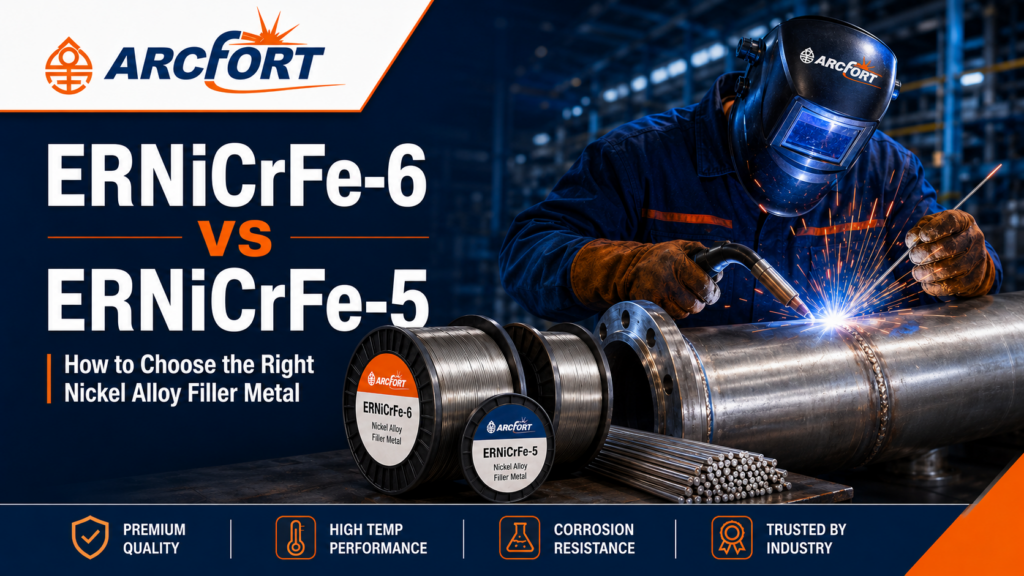
ERNiCrFe-6 vs ERNiCrFe-5: How to Choose the Right Nickel Alloy Filler Metal
Choosing the right nickel alloy filler metal is an important decision in industrial welding. In many fabrication, repair and maintenance projects, engineers may compare ERNiCrFe-6 and ERNiCrFe-5 because both are used in demanding welding applications involving nickel alloys, steels and dissimilar metal joints.
Although the two filler metals may appear similar at first glance, they are not always interchangeable. The correct choice depends on the base material, service environment, welding process, joint design and project requirements. For buyers, distributors and welding professionals, understanding the practical differences between ERNiCrFe-6 and ERNiCrFe-5 can help reduce welding risk and improve project reliability.
What Is ERNiCrFe-6?
ERNiCrFe-6 is a nickel-based welding filler metal used for specialized welding applications where compatibility with nickel alloy materials is required. It is often selected for industrial projects involving heat-resistant materials, dissimilar metal welding and applications where standard filler metals may not be suitable.
In many welding projects, ERNiCrFe-6 is considered when the joint needs a filler metal that can support stable weldability and reliable performance in demanding service conditions. It is commonly used in industries such as power generation, petrochemical processing, thermal equipment manufacturing, pressure system repair and industrial maintenance.
For SEO and product search purposes, ERNiCrFe-6 is often searched by engineers, buyers and distributors who need a specific nickel alloy welding consumable for project-based applications.
What Is ERNiCrFe-5?
ERNiCrFe-5 is also a nickel-based filler metal used in demanding welding environments. It is commonly applied in industrial welding projects where nickel alloy compatibility, dissimilar metal joining and repair welding are required.
ERNiCrFe-5 is often selected for fabrication involving petrochemical equipment, power industry components, industrial piping, pressure-related systems and maintenance welding. Like ERNiCrFe-6, it is used when general-purpose welding consumables cannot meet the demands of the application.
The key point is that ERNiCrFe-5 has its own application range and should be chosen according to welding procedure requirements rather than treated as a universal substitute.
ERNiCrFe-6 vs ERNiCrFe-5: Main Application Difference
The main difference between ERNiCrFe-6 and ERNiCrFe-5 is not simply the name or classification. The real difference is how each filler metal fits specific base materials, welding procedures and service conditions.
ERNiCrFe-6 is often chosen when the welding project specifically calls for this classification and when the base material or service requirement matches its intended use. It is suitable for applications where nickel alloy welding compatibility is the priority.
ERNiCrFe-5 is commonly used in similar industrial sectors but may be selected for different material combinations or welding procedure requirements. It can be suitable for dissimilar metal welding, repair work and fabrication involving demanding service environments.
In practice, welding engineers should not choose between ERNiCrFe-6 and ERNiCrFe-5 based only on availability or price. The decision should be based on the base metal, welding code, service condition and qualified welding procedure.
When to Choose ERNiCrFe-6
ERNiCrFe-6 may be the better choice when the project specification clearly requires ERNiCrFe-6 or when the base metal combination has been qualified with this filler metal.
It may also be considered for:
Nickel alloy welding projects
Dissimilar metal joints
Power generation components
Thermal equipment fabrication
Industrial repair applications
Pressure system maintenance
Welding procedures already qualified with ERNiCrFe-6
For purchasing teams, ERNiCrFe-6 should be sourced with clear product identification, stable packaging and traceable documentation. Since it is often used in technical projects, buyers should confirm the required form, diameter and certification before placing orders.
When to Choose ERNiCrFe-5
ERNiCrFe-5 may be suitable when the welding procedure, base material or project standard calls for this filler metal. It is often used in industries where weld reliability is important, especially for petrochemical, energy and maintenance applications.
It may be selected for:
Dissimilar metal welding
Petrochemical equipment repair
Energy industry welding
Industrial piping projects
Nickel alloy fabrication
Weld overlay applications
Maintenance of critical components
For distributors and industrial suppliers, ERNiCrFe-5 can be a valuable product because it serves customers who require technical welding consumables rather than basic welding wires.
Can ERNiCrFe-6 Replace ERNiCrFe-5?
In professional welding, one filler metal should not be used as a direct replacement for another unless the welding procedure, project standard and engineering team allow it. Even if ERNiCrFe-6 and ERNiCrFe-5 are both nickel-based filler metals, they may be intended for different base materials and different service requirements.
Before replacing ERNiCrFe-5 with ERNiCrFe-6, or replacing ERNiCrFe-6 with ERNiCrFe-5, the following should be reviewed:
Base material grade
Welding procedure specification
Applicable welding code
Service temperature
Corrosion or process environment
Inspection requirements
Customer or project approval
Required certificates and traceability
For critical equipment, substitution without approval may create quality risks. The safest approach is to follow the project specification and consult the responsible welding engineer.
Welding Process Considerations
Both ERNiCrFe-6 and ERNiCrFe-5 may be used with common arc welding processes depending on product form and application requirements. The welding process should be selected based on joint design, production efficiency, weld quality requirements and accessibility.
Common considerations include:
TIG welding
Often used for root passes, repair welding, precision work and controlled weld quality.
MIG welding
Suitable for higher productivity, shop fabrication and larger welding workloads.
Submerged arc welding
May be used for heavy sections or long seams when project conditions support it.
The correct filler metal is only one part of a successful weld. Welding parameters, shielding, cleanliness, heat control and welder qualification are also important.
Best Practices for ERNiCrFe-6 and ERNiCrFe-5
For both ERNiCrFe-6 and ERNiCrFe-5, good welding practice is essential. Nickel alloy welding consumables are commonly used in demanding applications, so poor preparation can lead to defects, rework or inconsistent weld quality.
Before welding, clean the base materials carefully. Remove oil, moisture, rust, scale, paint and other contamination. Joint preparation should be accurate, and fit-up should be controlled.
During welding, use qualified parameters and avoid unnecessary variation. Poor shielding gas coverage, excessive heat input, unstable arc control or incorrect travel speed may affect weld quality.
Consumables should be stored in a dry and clean environment. Packaging should remain protected before use. For project-based welding, batch numbers and certificates should be recorded to support traceability.
After welding, inspection should follow project requirements. For critical equipment, visual inspection may not be enough; additional testing may be required by the welding specification.
Buying ERNiCrFe-6 and ERNiCrFe-5: What Importers Should Check
For importers, distributors and industrial suppliers, ERNiCrFe-6 and ERNiCrFe-5 are not ordinary welding consumables. Customers buying these products often need technical confidence, reliable documentation and consistent delivery.
Before purchasing, check:
Correct AWS classification
Product form: TIG rod, MIG wire or other form
Diameter and packaging
Batch traceability
Quality certificate availability
Export packaging condition
Supplier production capability
OEM or private label options
Delivery schedule
Technical support
For B2B customers, stable supply is important. Delayed delivery of specialty nickel alloy welding consumables can affect project timelines, especially in petrochemical, energy and repair projects.
Which One Is Better?
There is no universal answer. ERNiCrFe-6 is better when the project requires ERNiCrFe-6. ERNiCrFe-5 is better when the project requires ERNiCrFe-5.
The better choice depends on the application, base material and approved welding procedure. In professional welding, the goal is not to choose the “stronger” or “more expensive” filler metal. The goal is to choose the most suitable filler metal for the joint and service condition.
For engineers, the decision should be technical. For buyers, the decision should be based on confirmed specifications. For distributors, the best strategy is to stock or source both products when serving customers in petrochemical, power generation, pressure equipment and industrial maintenance sectors.
Conclusion
ERNiCrFe-6 and ERNiCrFe-5 are both important nickel alloy filler metals for industrial welding applications. They are used in demanding environments where joint reliability, material compatibility and welding quality are important.
The comparison between ERNiCrFe-6 vs ERNiCrFe-5 should always focus on application suitability, base metal compatibility, welding procedure requirements and project approval. They should not be treated as simple substitutes without technical confirmation.
For industrial buyers and welding distributors, understanding the difference helps support better product recommendations, fewer purchasing mistakes and stronger customer trust. For fabricators and engineers, the right filler metal choice can improve weld consistency and support long-term equipment reliability.