
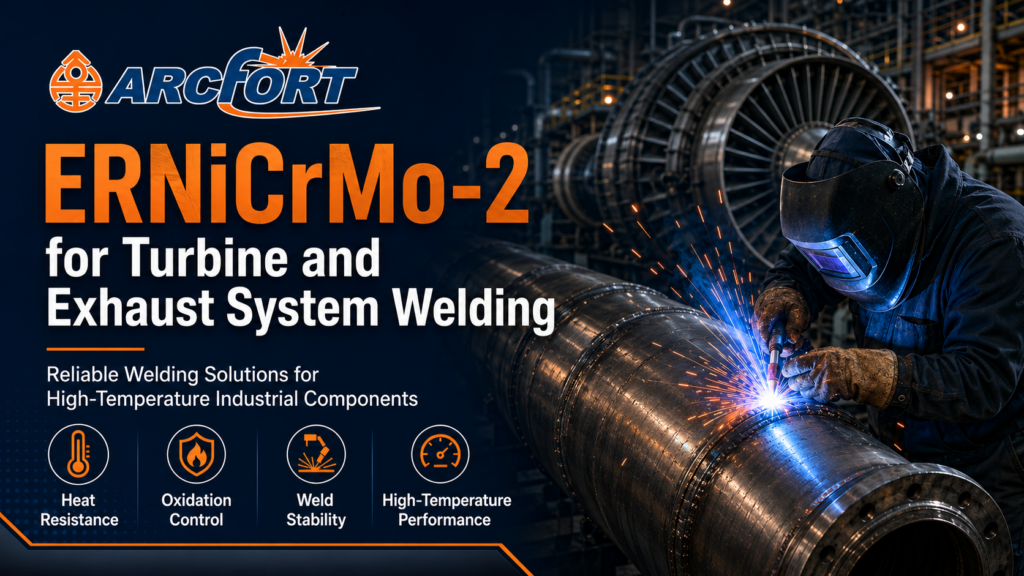
ERNiCrMo-2 for Turbine and Exhaust System Welding
Turbine and exhaust system welding is not ordinary fabrication. These components often work under high temperature, thermal cycling, vibration, oxidation, and demanding service conditions. When the wrong filler metal is selected, the welded joint may suffer from cracking, distortion, premature oxidation, or poor long-term reliability.ERNiCrMo-2
For nickel alloy and heat-resistant alloy welding applications, ERNiCrMo-2 is commonly considered where weld stability, heat resistance, and alloy compatibility are important. It is used in demanding industrial applications where welded components must perform under elevated temperatures and repeated service stress.
In turbine parts, exhaust systems, hot gas components, and high-temperature industrial equipment, filler metal selection plays a direct role in weld quality and service life.
Why Turbine and Exhaust Welding Is Challenging
Turbine and exhaust systems are exposed to operating conditions that can quickly reveal weaknesses in the weld metal. These systems may face repeated heating and cooling cycles, high-velocity gas flow, vibration, and oxidation at elevated temperatures.
Common welding challenges include:
Weld cracking during or after welding
Heat-affected zone sensitivity
Oxidation near welded areas
Distortion caused by heat input
Loss of weld strength during service
Thermal fatigue from repeated temperature changes
Poor compatibility between filler metal and base alloy
Because of these challenges, ordinary welding wire may not provide reliable results. A suitable nickel alloy filler metal is often required for high-temperature applications.
What Is ERNiCrMo-2?
ERNiCrMo-2 is a nickel-chromium-molybdenum welding wire designed for welding compatible nickel-based and heat-resistant alloys. It is used in applications where the welded joint must withstand heat, oxidation, and demanding industrial service conditions.
The nickel base provides stability in high-temperature environments. Chromium supports oxidation resistance. Molybdenum contributes to performance in aggressive and demanding conditions. Together, this alloy system makes ERNiCrMo-2 suitable for selected turbine, exhaust, and high-heat welding applications.
ERNiCrMo-2 in Turbine Component Welding
Turbine components require welds that can tolerate heat, stress, and repeated operating cycles. In many cases, the weld is exposed to extreme temperature gradients, especially during start-up and shutdown.
ERNiCrMo-2 may be used for welding or repairing compatible nickel alloy turbine components, including:
Hot gas path components
Turbine housings
Transition sections
Combustion-related components
High-temperature alloy parts
Repair areas exposed to thermal cycling
In turbine welding, the goal is not only to create a strong joint. The weld must also remain stable after repeated exposure to heat and stress.
ERNiCrMo-2 for Exhaust System Welding
Industrial exhaust systems often operate at elevated temperatures and may be exposed to oxidizing gases, vibration, and thermal expansion. These conditions can create problems such as cracking, joint fatigue, and oxidation around the weld zone.
ERNiCrMo-2 can be considered for exhaust system welding where compatible high-temperature alloys are used. Typical applications may include:
Industrial exhaust ducts
High-temperature exhaust manifolds
Gas turbine exhaust sections
Heat-resistant pipe assemblies
Expansion joint areas
Components exposed to hot gas flow
For exhaust system fabrication and repair, filler metal compatibility is especially important because these systems expand and contract during operation.
Problems ERNiCrMo-2 Can Help Address
1. High-Temperature Weld Degradation
In hot service environments, weld metal can lose performance if it is not designed for elevated temperature exposure. ERNiCrMo-2 supports more reliable weld performance in suitable high-temperature alloy systems.
2. Thermal Fatigue
Turbine and exhaust systems often experience repeated heating and cooling. This thermal cycling can create fatigue stress in the welded joint. A properly selected filler metal helps reduce the risk of premature weld failure.
3. Oxidation Around Welded Areas
Oxidation is a common concern in exhaust and turbine applications. The chromium content in nickel-chromium alloy systems helps support oxidation resistance in high-heat service environments.
4. Weld Cracking Risk
Nickel alloy welding requires careful control of heat input, joint preparation, and welding procedure. ERNiCrMo-2 can help support stable welding performance when used with the correct procedure and compatible base materials.
5. Repair Welding on Aged Components
Turbine and exhaust components may be repaired after long service exposure. The base material can be affected by heat, stress, and oxidation. Using a suitable filler metal is important for restoring the welded area without creating new failure points.
Key Welding Considerations
Using ERNiCrMo-2 correctly requires more than choosing the right wire. Welding procedure control is essential, especially for high-temperature components.
Important factors include:
Confirming base material compatibility
Cleaning the joint area before welding
Controlling heat input
Avoiding excessive interpass temperature
Using suitable shielding gas
Maintaining proper welding parameters
Preventing contamination from oil, moisture, or oxide layers
Following qualified welding procedures
Inspecting welds according to project requirements
For turbine and exhaust system welding, small process errors can lead to serious service problems later.
Common Welding Processes
ERNiCrMo-2 may be used in welding processes selected according to the application, joint design, and production conditions. Common processes for nickel alloy welding may include TIG welding and MIG welding, depending on component thickness, accessibility, and quality requirements.
TIG welding is often selected for precision work, repair welding, and critical components. MIG welding may be used where higher deposition efficiency is required. The final process should always match the welding procedure specification and service requirements.
Why Filler Metal Selection Matters
In turbine and exhaust system welding, filler metal selection affects more than weld appearance. It influences long-term performance, resistance to cracking, oxidation behavior, and service reliability.
A low-cost or poorly matched filler metal may create hidden risks, including:
Early weld failure
Increased repair frequency
Equipment downtime
Safety concerns
Higher maintenance costs
Rejection during inspection
For critical high-temperature applications, procurement teams should consider not only price, but also material traceability, quality consistency, packaging, technical documentation, and batch control.
Quality Control for ERNiCrMo-2 Welding Wire
When sourcing ERNiCrMo-2 welding wire, buyers and engineers should pay attention to:
Clear product classification
Stable chemical composition
Batch traceability
Reliable packaging protection
Material certificates
Consistent wire feeding performance
Technical support for welding applications
Compliance with project specifications
For turbine and exhaust system projects, quality control starts before the arc begins. A stable welding consumable helps reduce rework, improve inspection results, and support long-term equipment reliability.
Conclusion
ERNiCrMo-2 is a practical filler metal option for selected turbine and exhaust system welding applications where heat resistance, oxidation resistance, and weld stability are important. It is especially relevant for compatible nickel alloy and high-temperature alloy components used in hot gas, exhaust, and industrial thermal service environments.
For engineers, fabricators, and procurement teams, the key is not only choosing ERNiCrMo-2, but using it correctly with proper base material confirmation, welding procedure control, inspection, and quality documentation.
In high-temperature welding, the right filler metal helps protect the reliability of the entire system.