

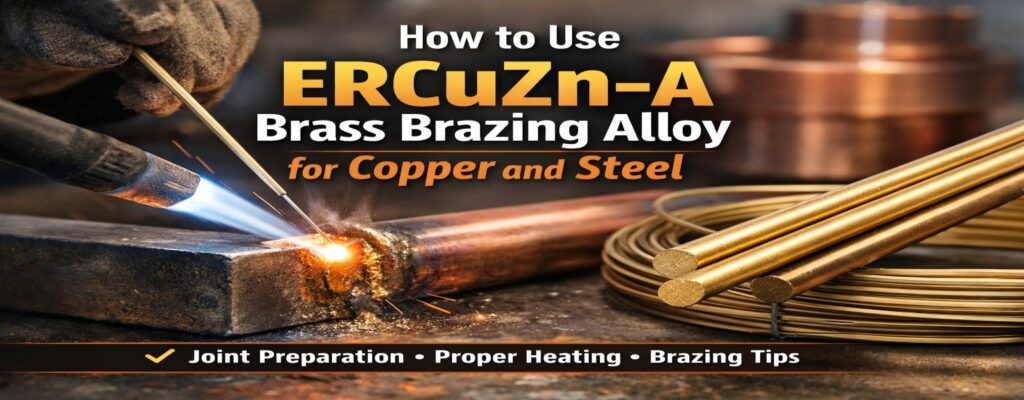
How to Use ERCuZn-A Brass Brazing Alloy for Copper and Steel
ERCuZn-A brass brazing alloy is widely used for joining copper and steel in repair, fabrication, and industrial maintenance. It offers good flow characteristics, reliable bonding strength, and strong adaptability for dissimilar metal joining. When used correctly, ERCuZn-A can help create durable joints with smooth bead appearance and solid mechanical performance.
In this guide, you will learn how to use ERCuZn-A brass brazing alloy for copper and steel, including surface preparation, heating method, brazing steps, and practical tips to improve joint quality.
What Is ERCuZn-A Brass Brazing Alloy?
ERCuZn-A is a brass-based filler metal commonly used for brazing and welding applications involving copper alloys, steel, and some cast iron repair work. It is valued for its good wettability, ease of use, and versatility in maintenance and manufacturing environments.
For copper-to-steel joining, ERCuZn-A is often selected because it can bridge the different properties of the two base metals. Copper has high thermal conductivity, while steel heats more slowly and behaves differently under temperature. A suitable brazing alloy such as ERCuZn-A helps reduce joining difficulty and improve bond consistency.
Why Use ERCuZn-A for Copper and Steel?
Using ERCuZn-A brass brazing alloy for copper and steel offers several practical advantages:
Good compatibility with dissimilar metals
Smooth flow into properly prepared joints
Lower working temperature than fusion welding
Reduced distortion compared with full welding methods
Suitable for repair, fabrication, and industrial joining applications
Because copper and steel expand and conduct heat differently, selecting the right filler metal is essential. ERCuZn-A helps create a reliable joint while making the process easier to control.
ERCuZn-A Surface Preparation Before Brazing
Proper preparation is one of the most important steps in successful brazing.
1. Clean the Copper and Steel Surfaces
Both surfaces must be free from oil, grease, oxide film, rust, paint, and dirt. Contaminants can prevent the filler metal from wetting the base metal properly.
You can clean the joint area by:
Grinding
Wire brushing
Sanding
Using a suitable degreasing solvent
2. Fit the Joint Correctly
A proper joint gap helps the molten filler flow evenly. If the gap is too tight, the alloy may not penetrate well. If it is too wide, the joint strength may decrease.
3. Use the Right Flux if Needed
Depending on the process and operating conditions, a suitable brazing flux may help improve wetting and reduce oxidation during heating. Make sure the flux matches the base metals and working temperature range.
ERCuZn-A Recommended Heating Method
When brazing copper and steel with ERCuZn-A, heat control is critical.
Copper absorbs and dissipates heat very quickly, while steel tends to hold heat more easily. For that reason, the heat input should be balanced carefully across both materials.
Common heating methods include:
Oxy-fuel torch brazing
TIG-based brazing applications
Other controlled heating processes depending on production requirements
In many cases, indirect heating works better than pointing the flame or heat source directly at the filler rod. The base metals should be brought to the right temperature first, then the ERCuZn-A filler should melt from the joint heat, not from excessive direct flame.
Step-by-Step: How to Use ERCuZn-A Brass Brazing Alloy for Copper and Steel
Step 1: Prepare the Joint
Clean both copper and steel thoroughly. Remove oxidation and ensure close, consistent fit-up.
Step 2: Secure the Workpieces
Clamp or position the parts firmly so they do not move during heating. Joint movement during brazing can weaken the bond.
Step 3: Preheat Evenly
Start heating the assembly gradually. Because copper pulls heat away fast, you may need to spend more time heating the copper side. Avoid overheating one side while the other side remains below brazing temperature.
Step 4: Apply Flux if Required
If your process requires flux, apply it evenly to the joint area before or during heating, based on the product instructions.
Step 5: Introduce the ERCuZn-A Filler Metal
Touch the filler rod to the heated joint area once the base metals reach the correct temperature. The alloy should begin to flow into the joint smoothly. Let capillary action help distribute the filler.
Do not melt large amounts of filler directly into a cold joint. Good brazing depends on base metal temperature and controlled alloy flow.
Step 6: Control the Bead and Heat Input
Keep the heat steady and move consistently. Too much heat can increase oxidation, burn off alloying elements, or cause poor appearance. Too little heat can create weak bonding and poor wetting.
Step 7: Cool Naturally
After brazing, allow the joint to cool naturally unless your procedure specifies otherwise. Rapid cooling may create stress in some applications.
Step 8: Clean the Joint After Brazing
Remove any flux residue and inspect the joint surface. A good brazed joint should appear even, well-bonded, and free from excessive porosity or cracking.
ERCuZn-A Best Tips for Better Brazing Results
Focus on Heat Balance
Copper and steel do not respond to heat the same way. Always manage heat with both materials in mind.
Avoid Overheating the Filler
If the filler melts only from direct flame instead of joint heat, bonding quality may suffer.
Keep the Joint Clean
Dirty surfaces are one of the most common causes of brazing defects.
Practice on Sample Pieces
Before full production or repair work, test the setup on scrap material with the same joint design.
Choose the Correct Rod Diameter
Using the right filler size improves feeding control and bead consistency.
Common Problems and Solutions
Poor Wetting
Cause: dirty base metal, low heat, or wrong flux
Solution: clean better, adjust heat, confirm process materials
Excessive Porosity
Cause: contamination, overheating, or unstable heating
Solution: improve cleaning and maintain more consistent heat control
Weak Joint Strength
Cause: poor fit-up, incorrect temperature, or insufficient filler flow
Solution: optimize joint clearance and ensure the base metals are heated properly
Oxidation on the Joint
Cause: too much heat or inadequate protection
Solution: reduce overheating and use proper flux or shielding where applicable
Applications of ERCuZn-A for Copper and Steel
ERCuZn-A brass brazing alloy is often used in:
Copper-to-steel joining
Industrial repair work
Maintenance of mechanical parts
Fabrication projects involving dissimilar metals
General brazing applications where smooth flow and reliable bonding are needed
Its versatility makes it a practical option for workshops, manufacturers, and repair professionals.
ERCuZn-A Conclusion
If you want to join copper and steel effectively, ERCuZn-A brass brazing alloy is a practical and reliable choice. The key to success lies in proper surface preparation, balanced heating, controlled filler application, and careful post-braze inspection.
By understanding how ERCuZn-A behaves with copper and steel, you can improve joint quality, reduce defects, and achieve more consistent brazing results in both repair and production work.