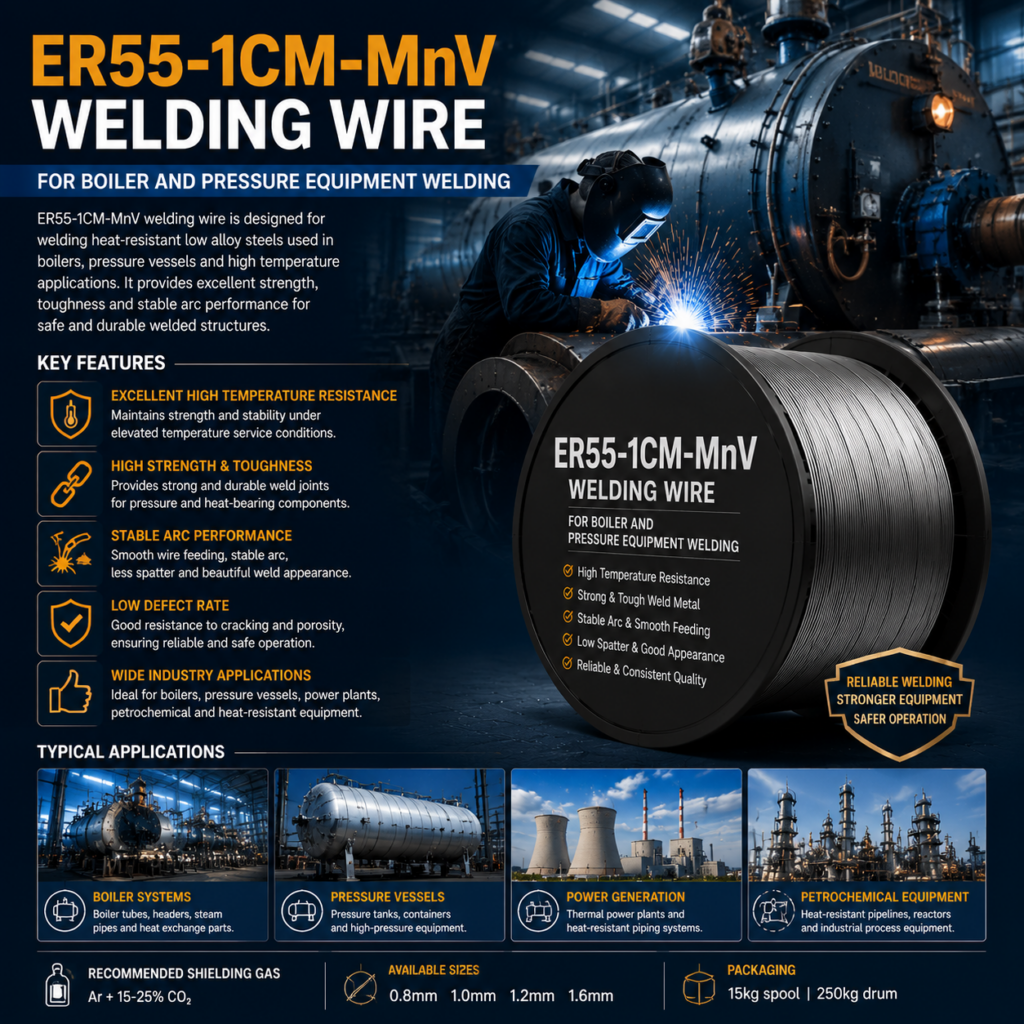
ER55-1CM-MnV Welding Wire for Boiler and Pressure Equipment Welding

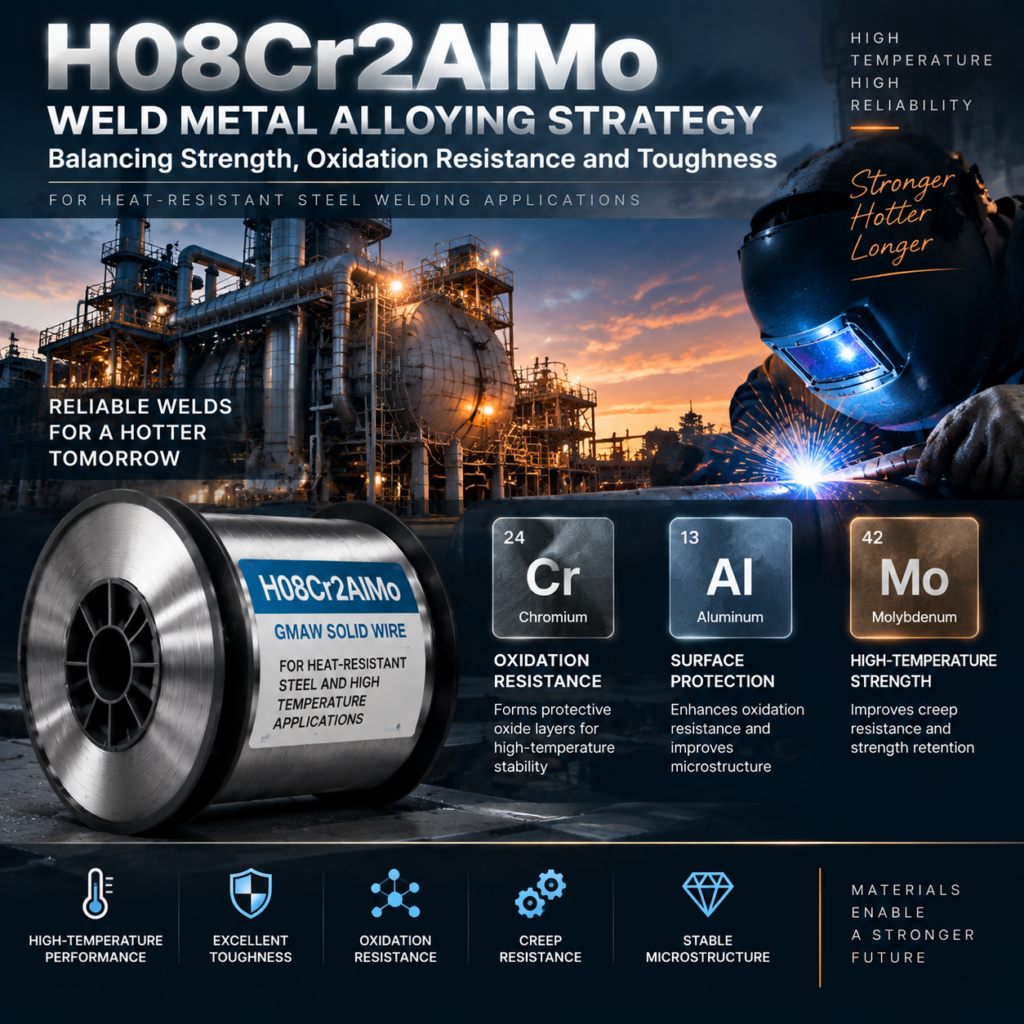
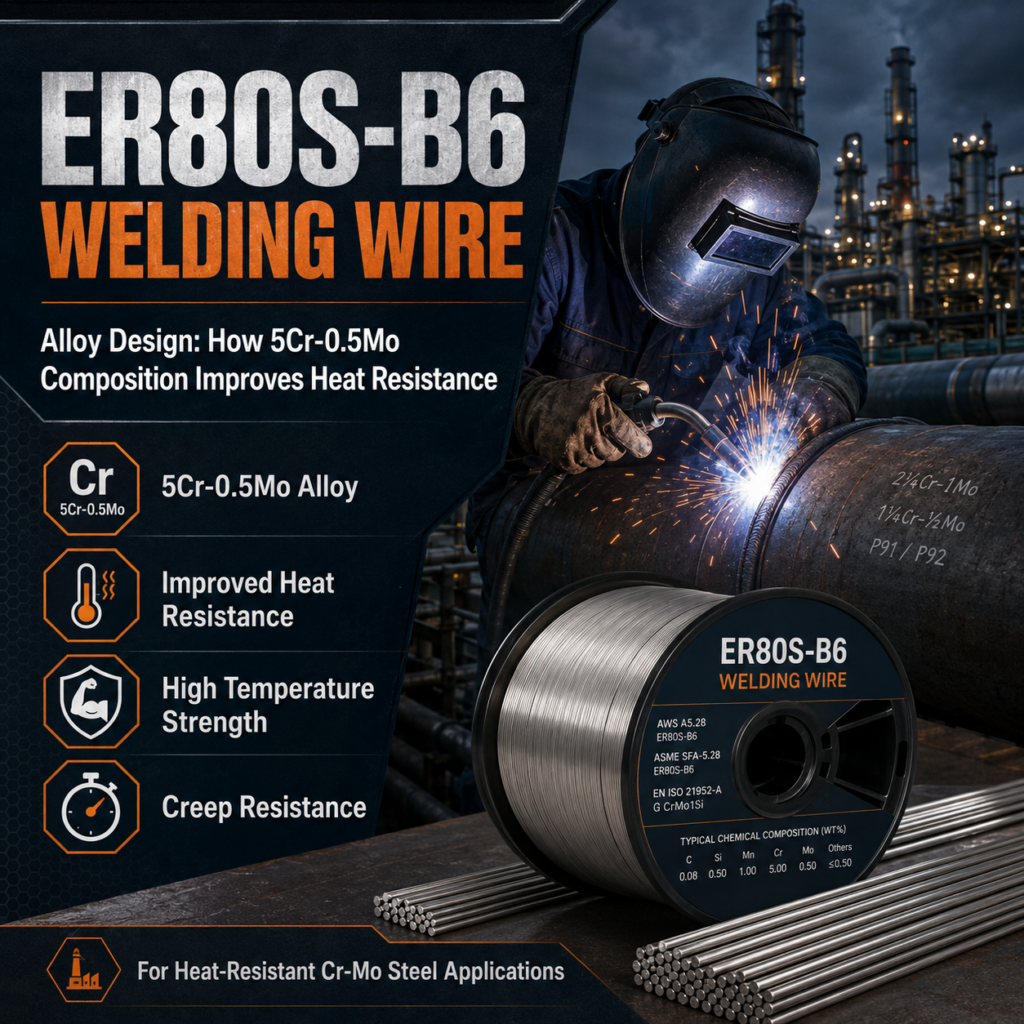
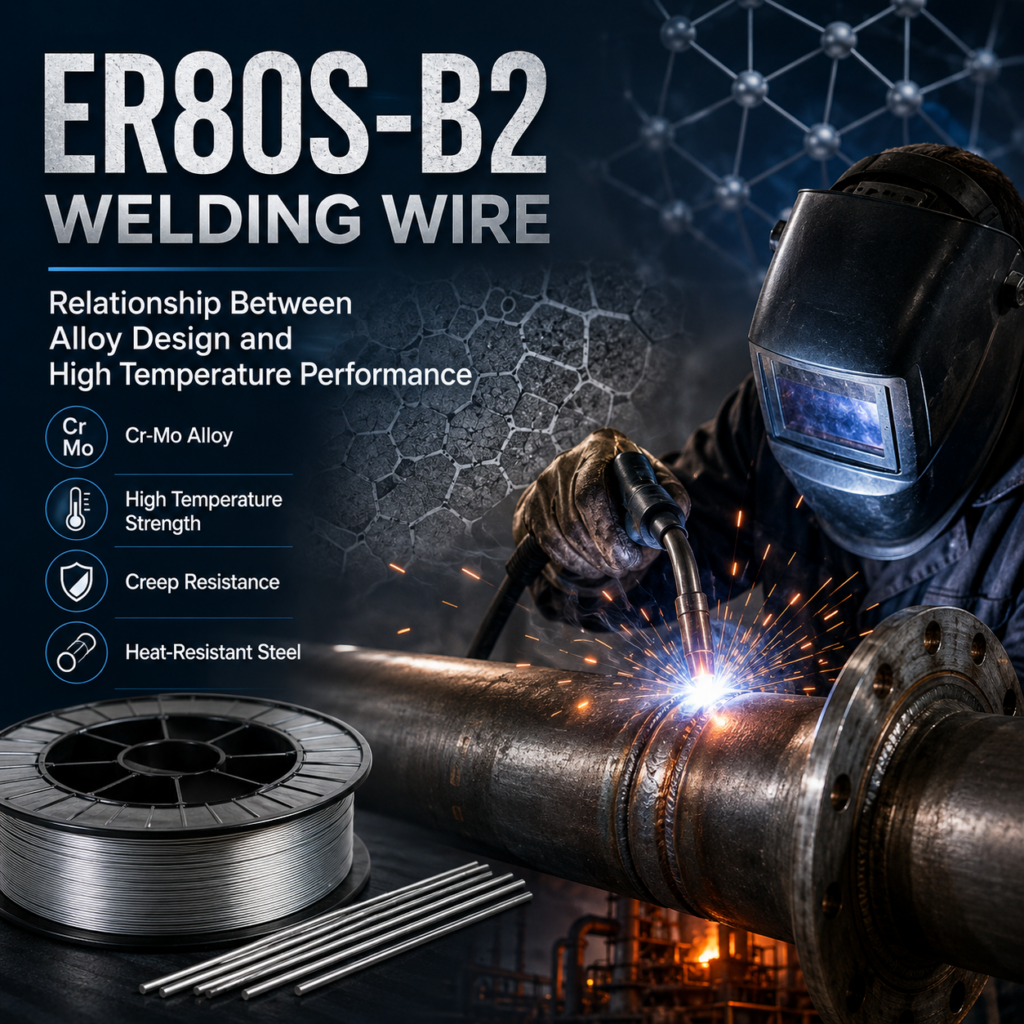
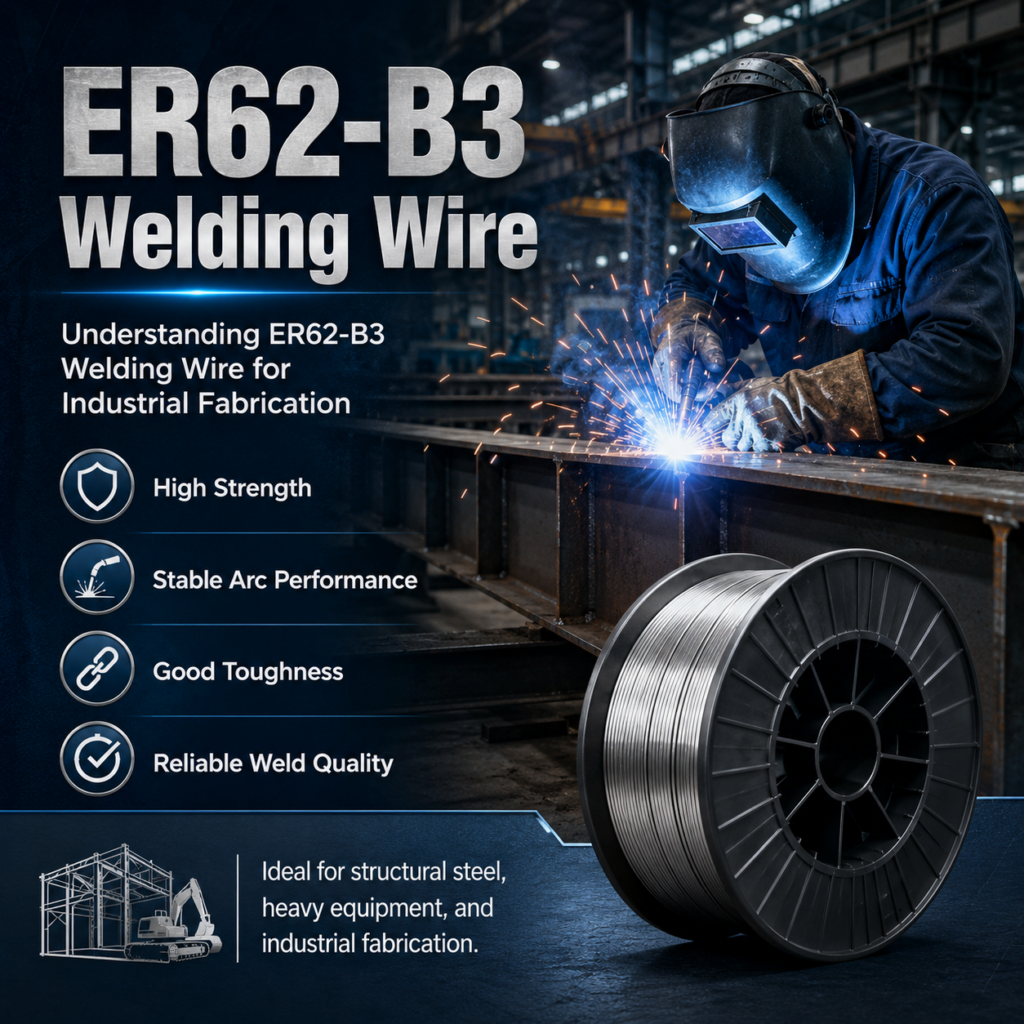
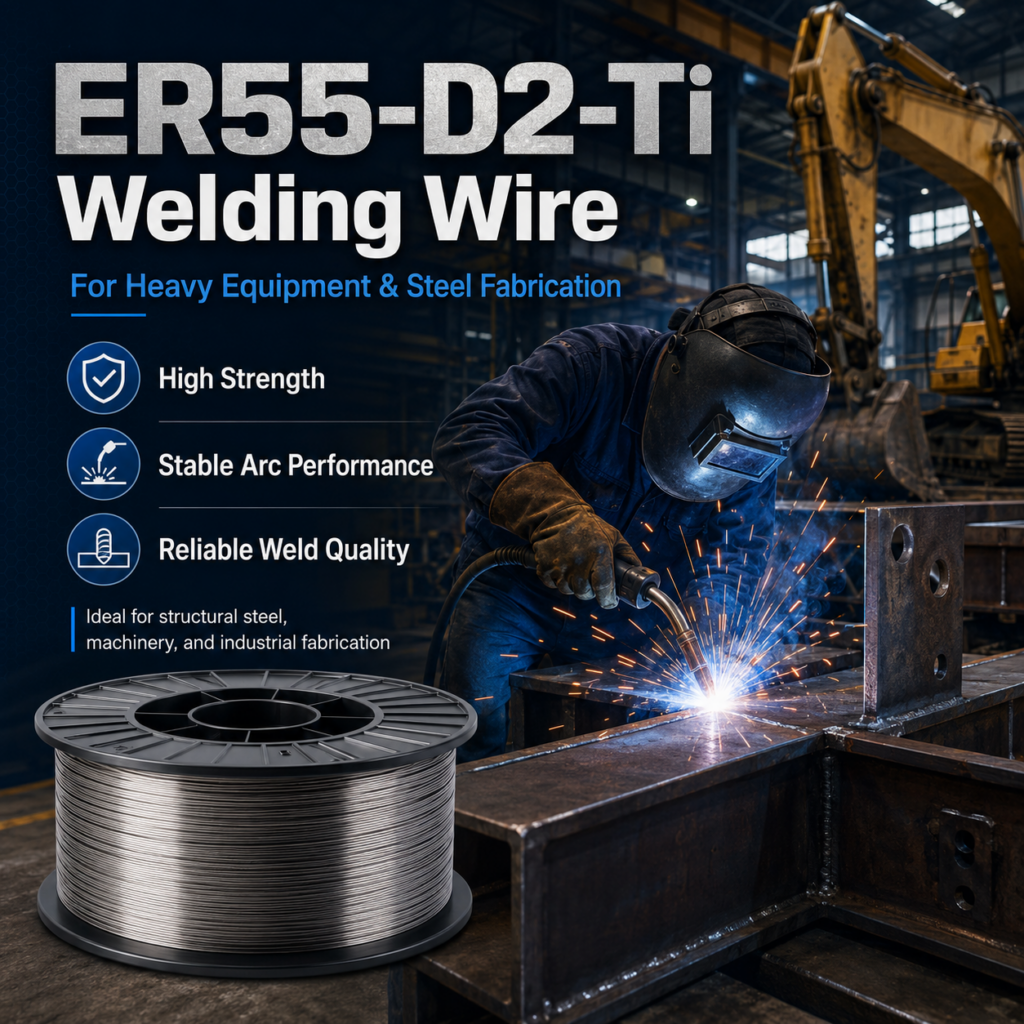
Boilers and pressure equipment operate under extreme conditions involving high temperature, pressure, and continuous mechanical stress. Selecting the right welding material is critical to ensuring structural safety, long service life, and stable operation.ER55-1CM-MnV welding wire is a specialized low alloy welding consumable designed for welding heat-resistant steels used in demanding industrial environments. With excellent mechanical properties, good thermal stability, and reliable weld quality, it is widely suitable for boiler components, pressure vessels, thermal equipment, and other high-temperature steel structures.

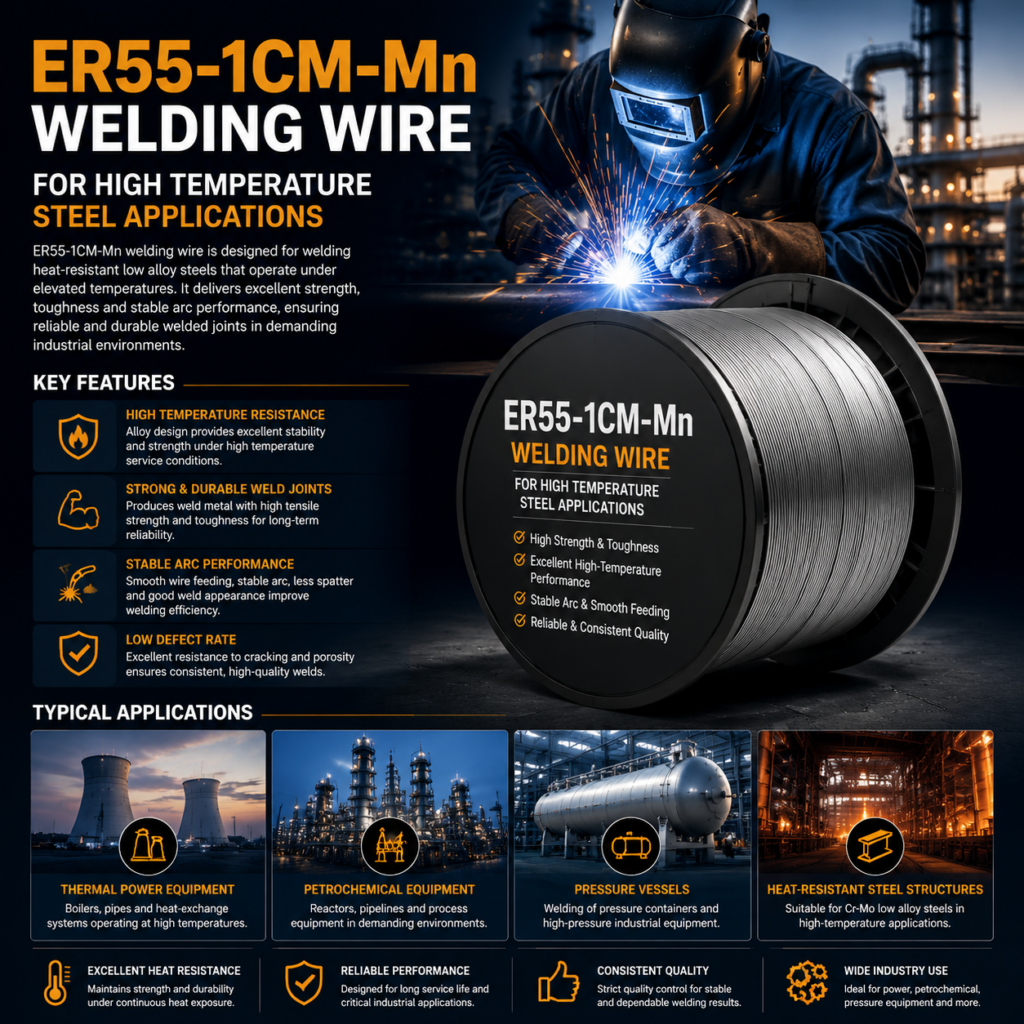
ER55-1CM-Mn Welding Wire for High Temperature Steel Applications

High-temperature industrial environments require welding materials that can maintain strength, stability, and reliability under continuous thermal stress. Selecting the correct welding wire is essential for ensuring the durability and safety of welded structures used in demanding applications.

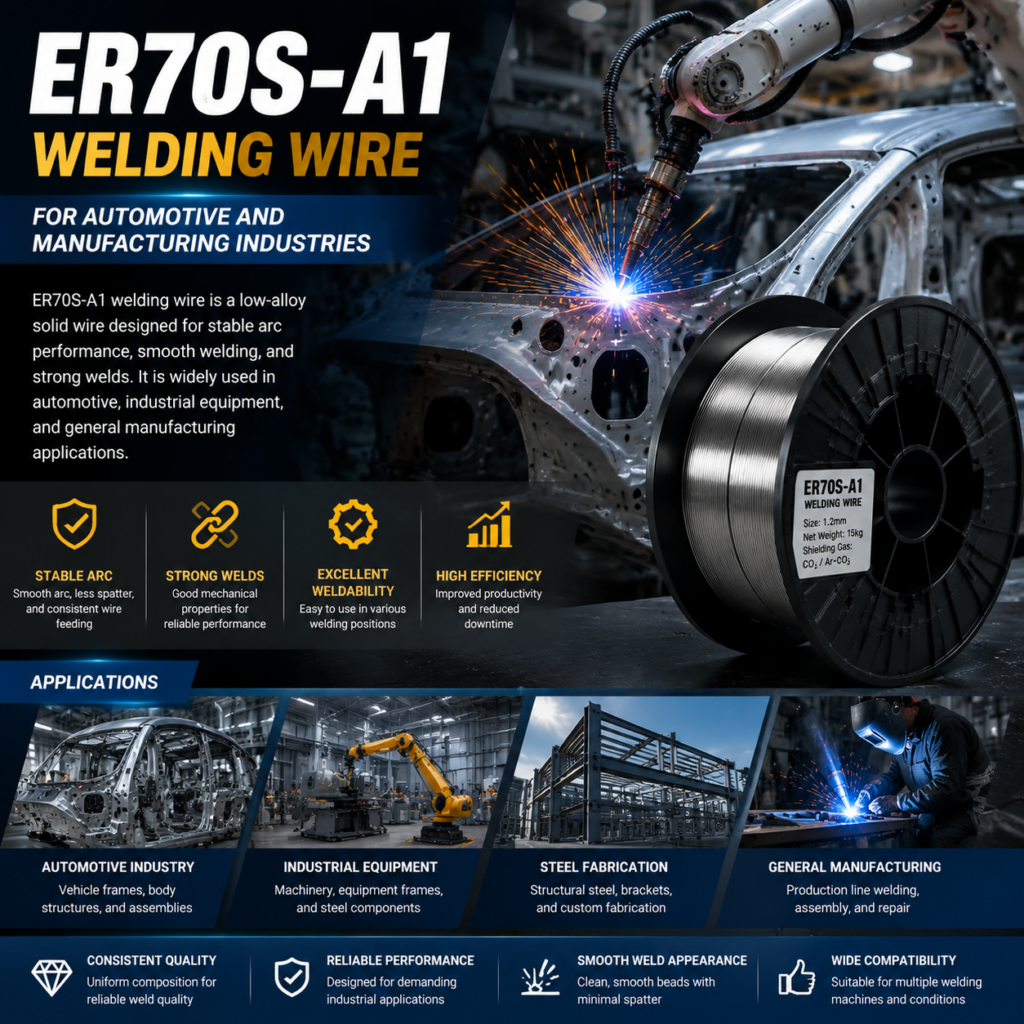
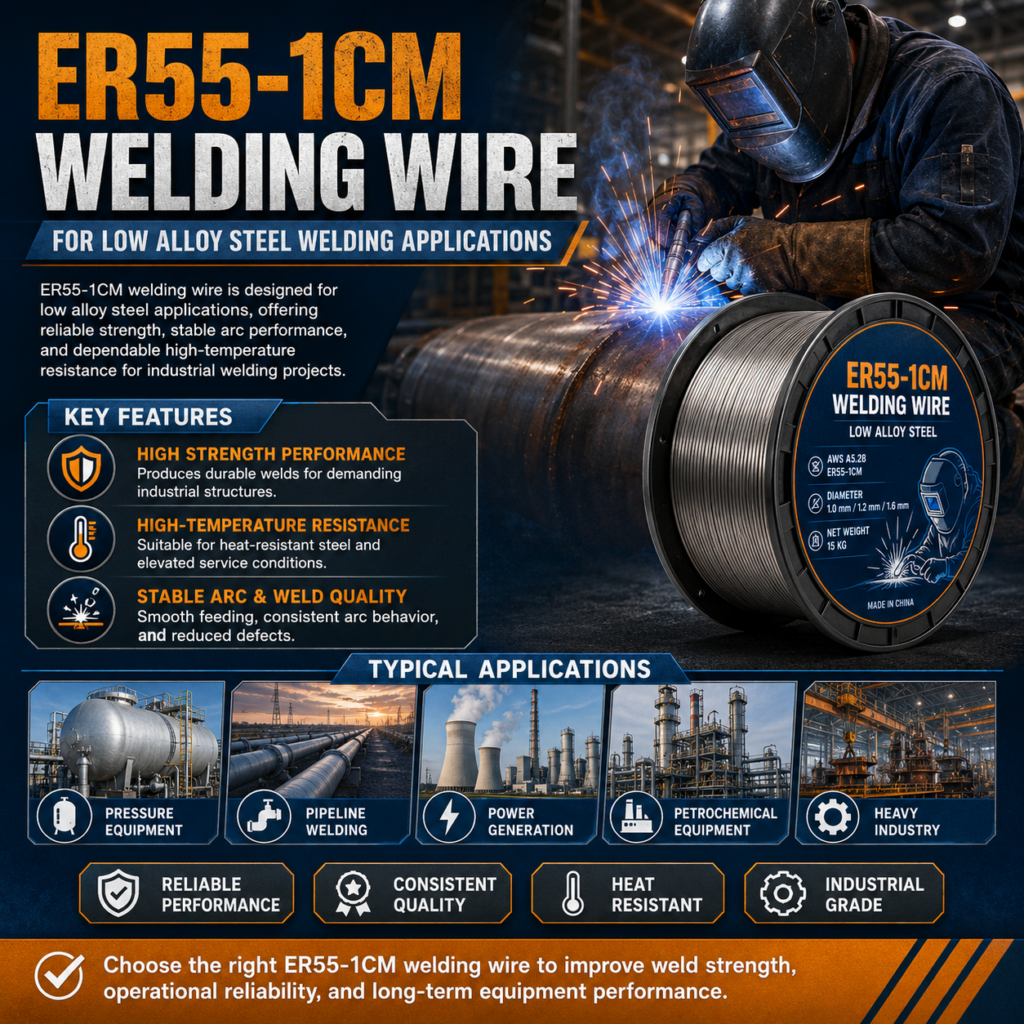
ER55-1CM Welding Wire for Low Alloy Steel Welding Applications

In modern industrial manufacturing, selecting the right welding wire is essential for ensuring strong, durable, and reliable welded structures. For low alloy steel welding applications, ER55-1CM welding wire is a commonly selected solution due to its excellent mechanical properties, stable welding performance, and suitability for demanding industrial environments.

.

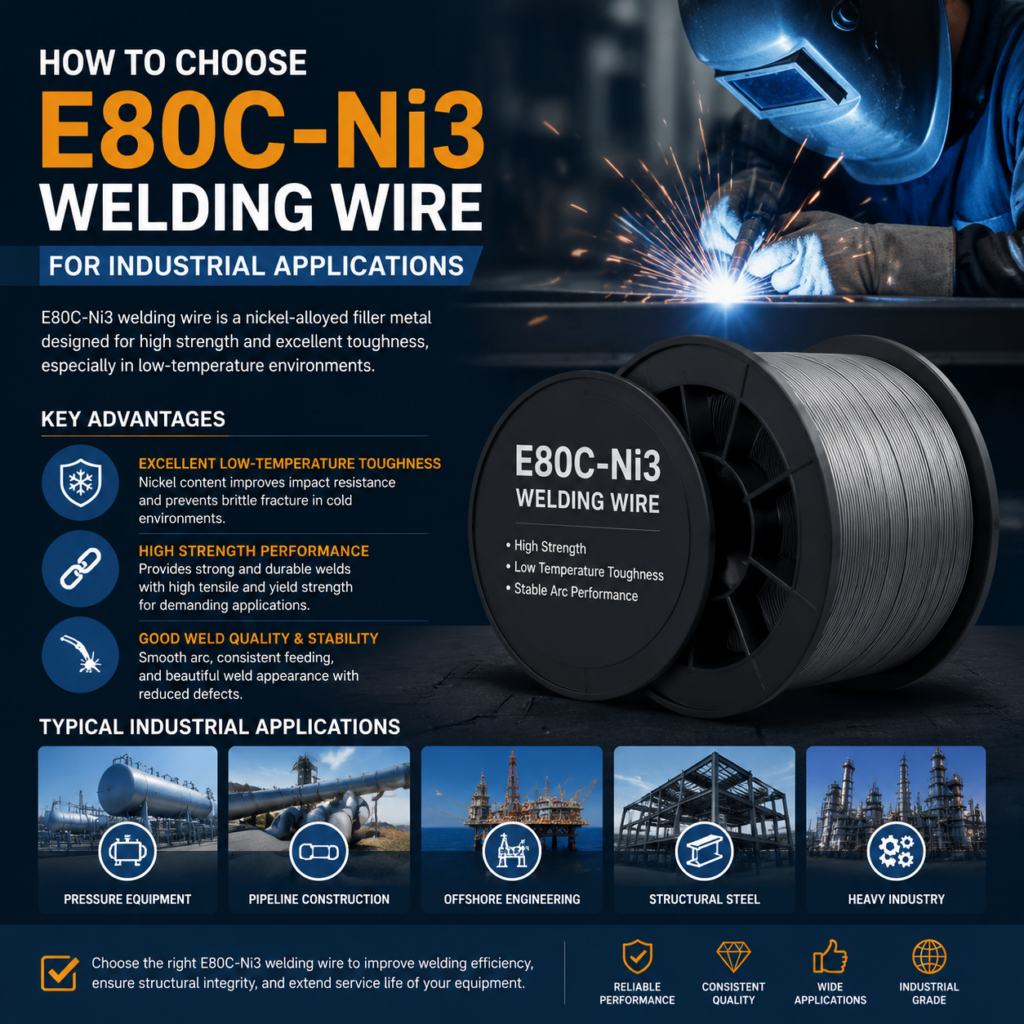
How to Choose E80C-Ni3 Welding Wire for Industrial Applications

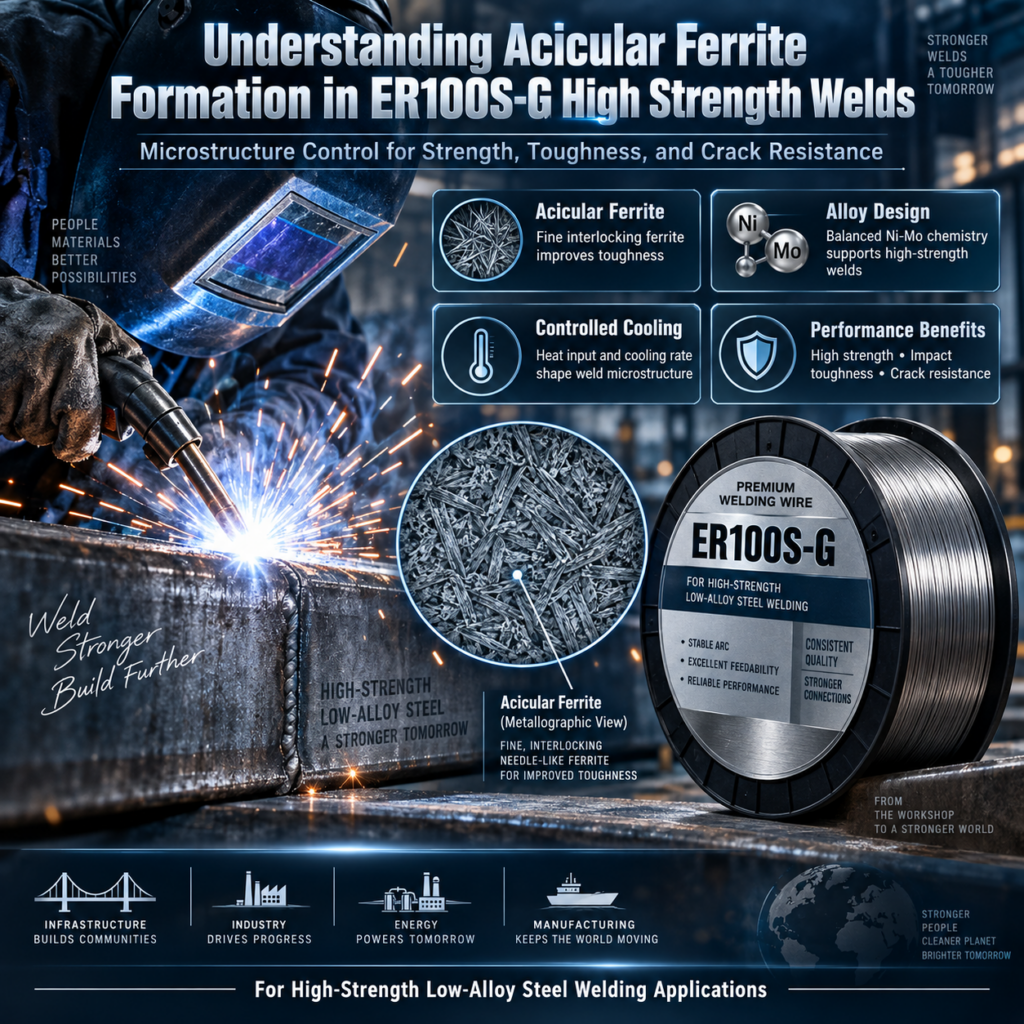
Selecting the right welding wire is essential for achieving strong, durable, and reliable welded joints in industrial applications. Among various high-strength welding materials, E80C-Ni3 welding wire is widely recognized for its excellent mechanical properties, low-temperature toughness, and suitability for demanding engineering environments.

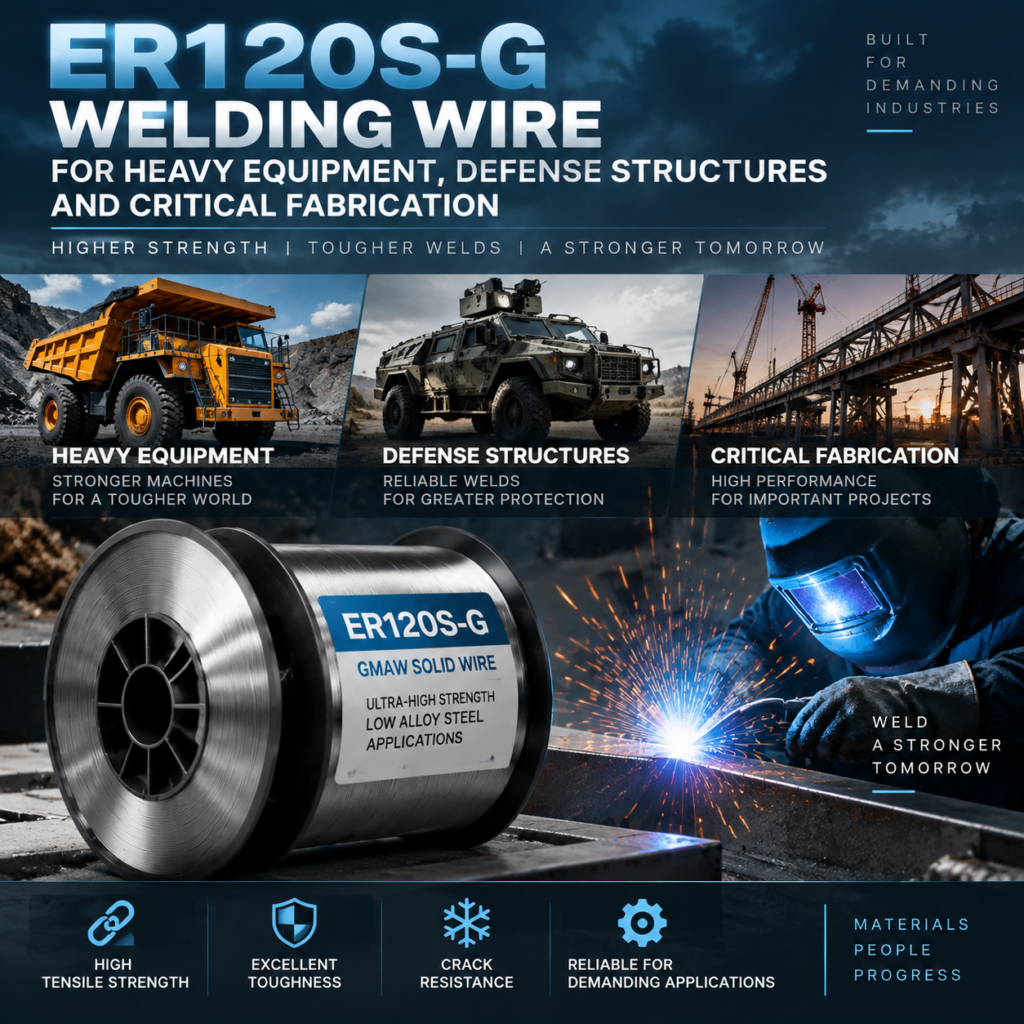
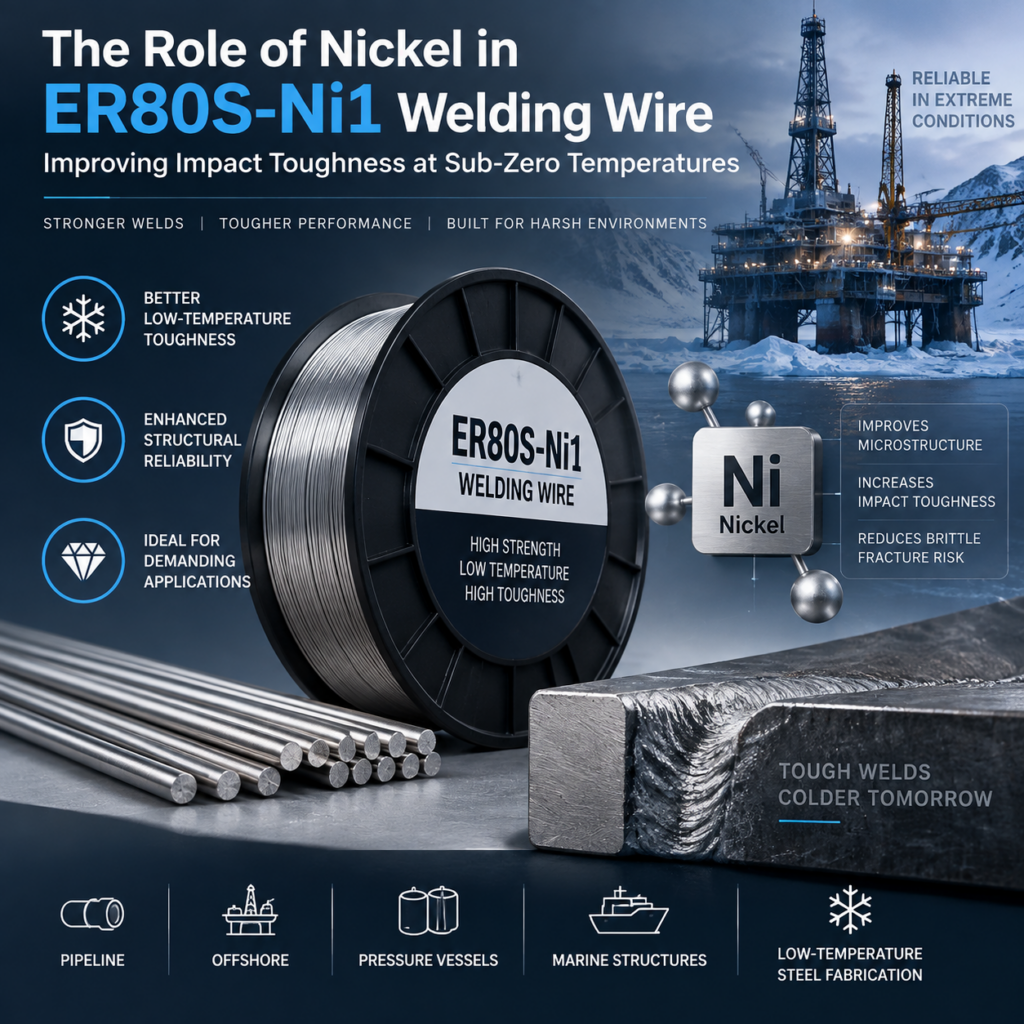
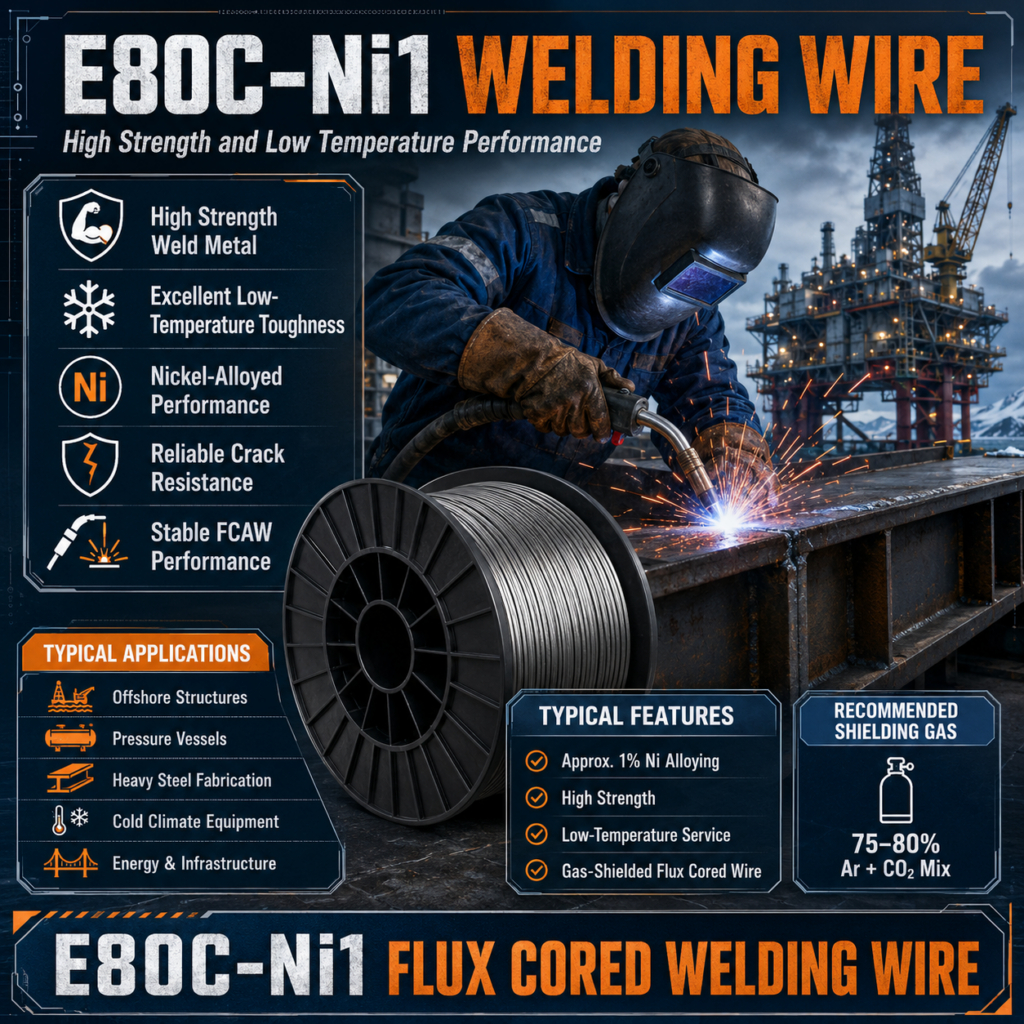
E80C-Ni1 Welding Wire: High Strength and Low Temperature Performance

In industries where steel structures operate under extreme conditions, welding consumables must provide more than basic joint strength. Heavy equipment, offshore structures, pressure vessels, pipelines, bridges, and low-temperature service components require weld metal with excellent mechanical properties, toughness, and crack resistance.

This is where E80C-Ni1 welding wire becomes an important solution.

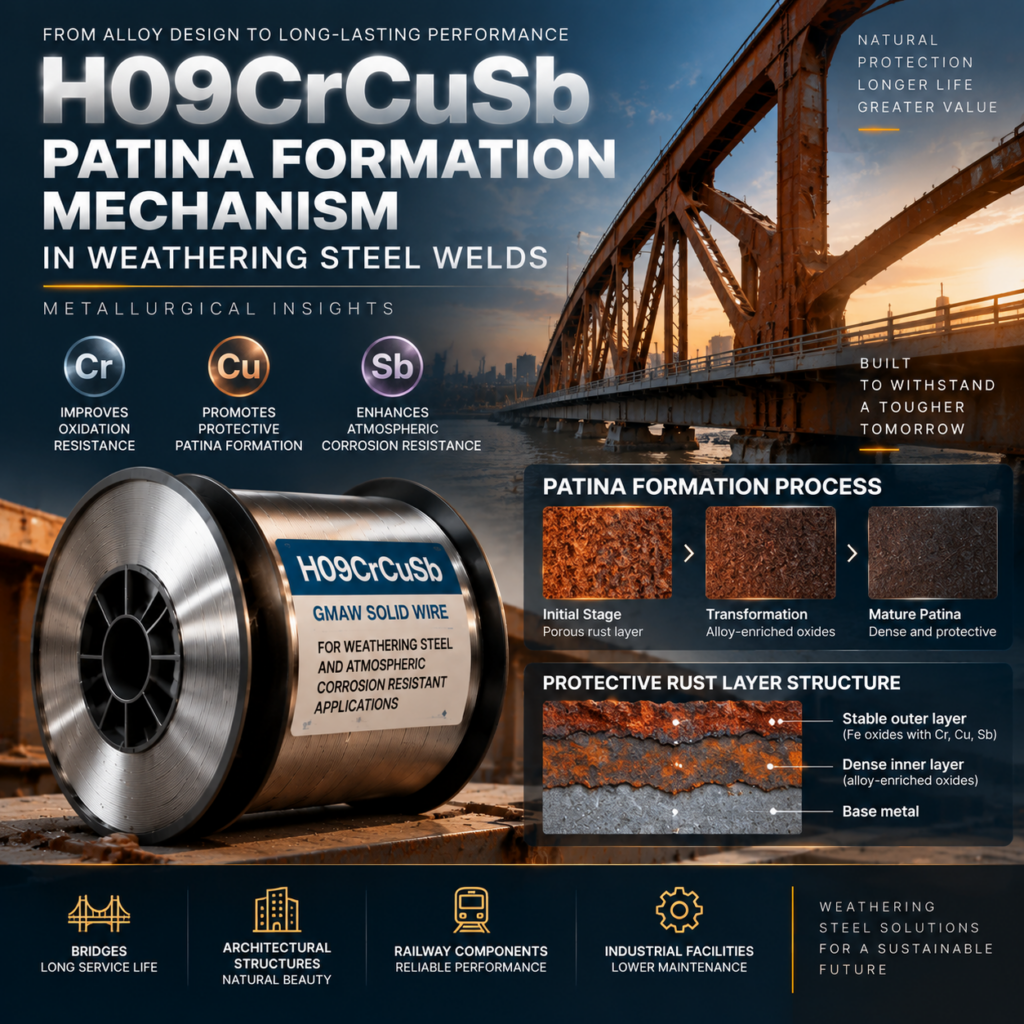
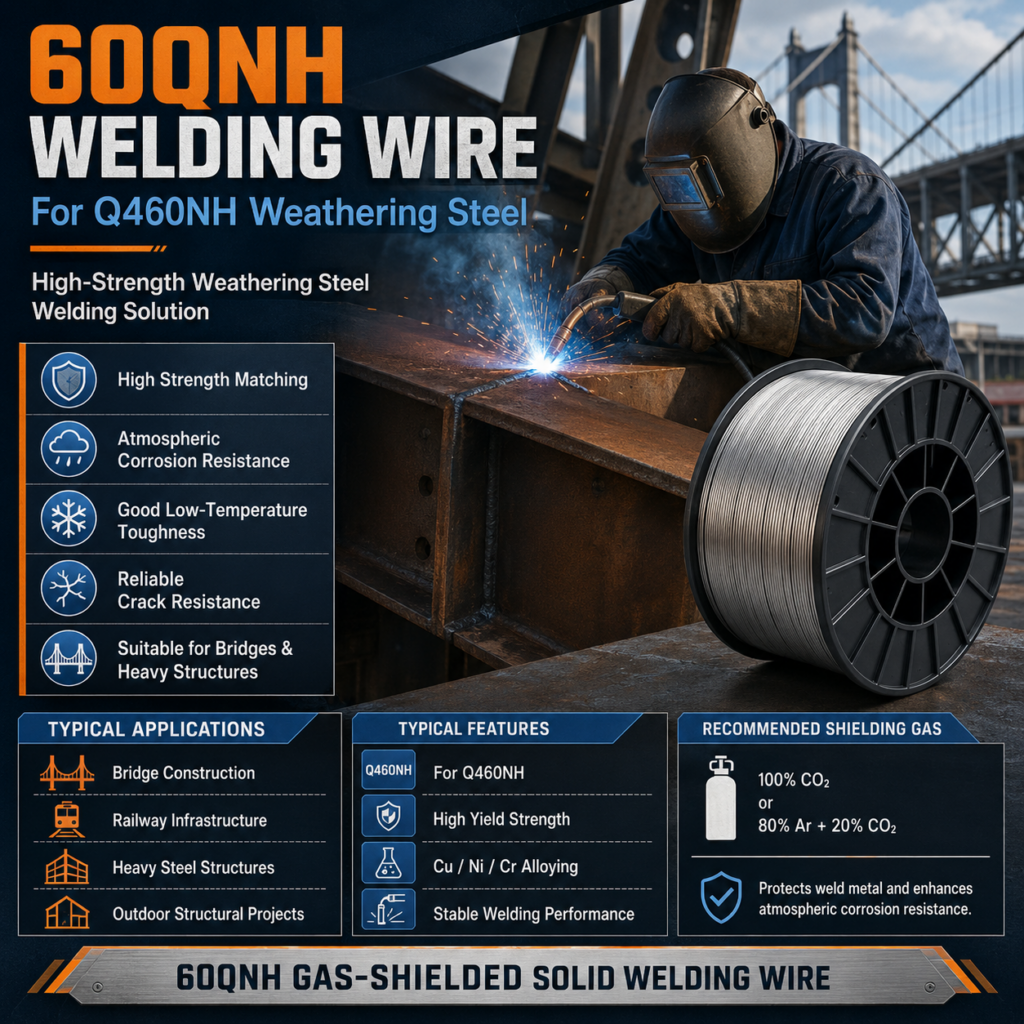
60QNH Welding Wire for Q460NH Weathering Steel: Properties, Applications and Welding Guide

Weathering steel has become an important material choice for bridges, heavy structures, railway equipment, and outdoor infrastructure because of its combination of strength, durability, and atmospheric corrosion resistance.

As structural requirements continue to increase, higher-strength weathering steels such as Q460NH are increasingly used in demanding applications where conventional structural steels may not provide sufficient load-bearing capability.

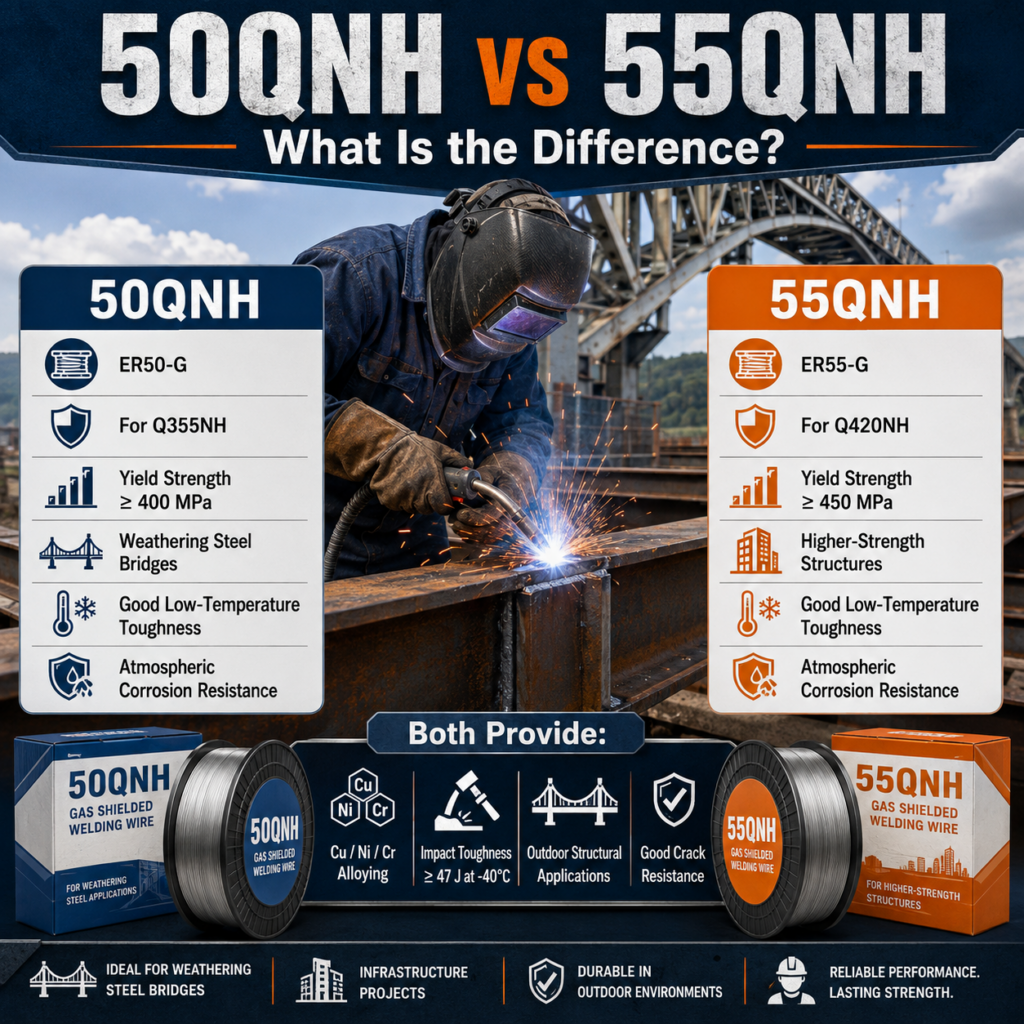
50QNH vs 55QNH Welding Wire: What Is the Difference?

When selecting welding wire for weathering steel, 50QNH and 55QNH are two commonly considered low-alloy gas-shielded solid wires.

Both are designed to provide weld metal with good atmospheric corrosion resistance, mechanical properties, toughness, and crack resistance. They are particularly relevant to bridges, railway structures, transportation equipment, towers, and other steel structures exposed to outdoor environments.

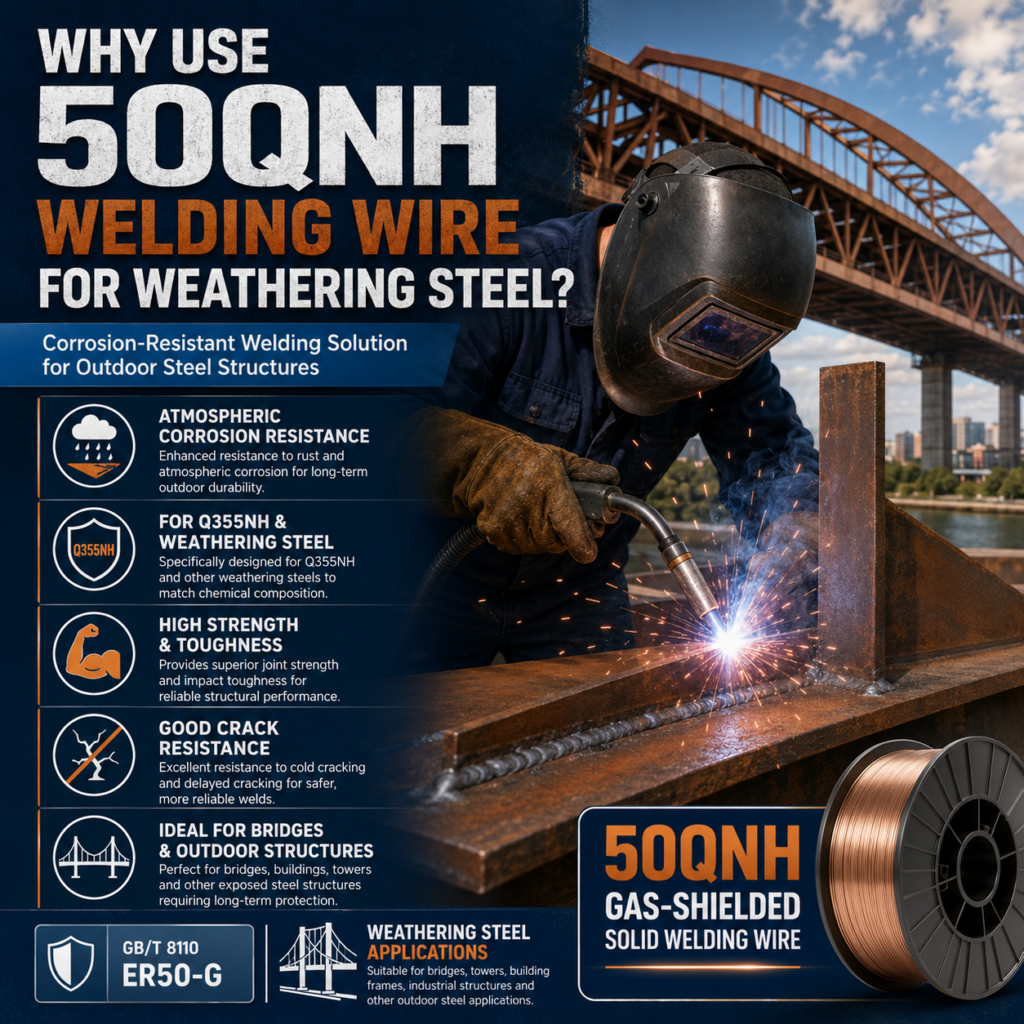
Why Use 50QNH Welding Wire for Weathering Steel?

Weathering steel is widely used in bridges, railway structures, towers, buildings, transportation equipment, and other outdoor steel structures exposed to the atmosphere for long periods.

Unlike conventional structural steel, weathering steel is designed to develop a stable protective oxide layer under suitable environmental conditions. This helps slow further atmospheric corrosion and can reduce the need for conventional protective coatings in appropriate applications.