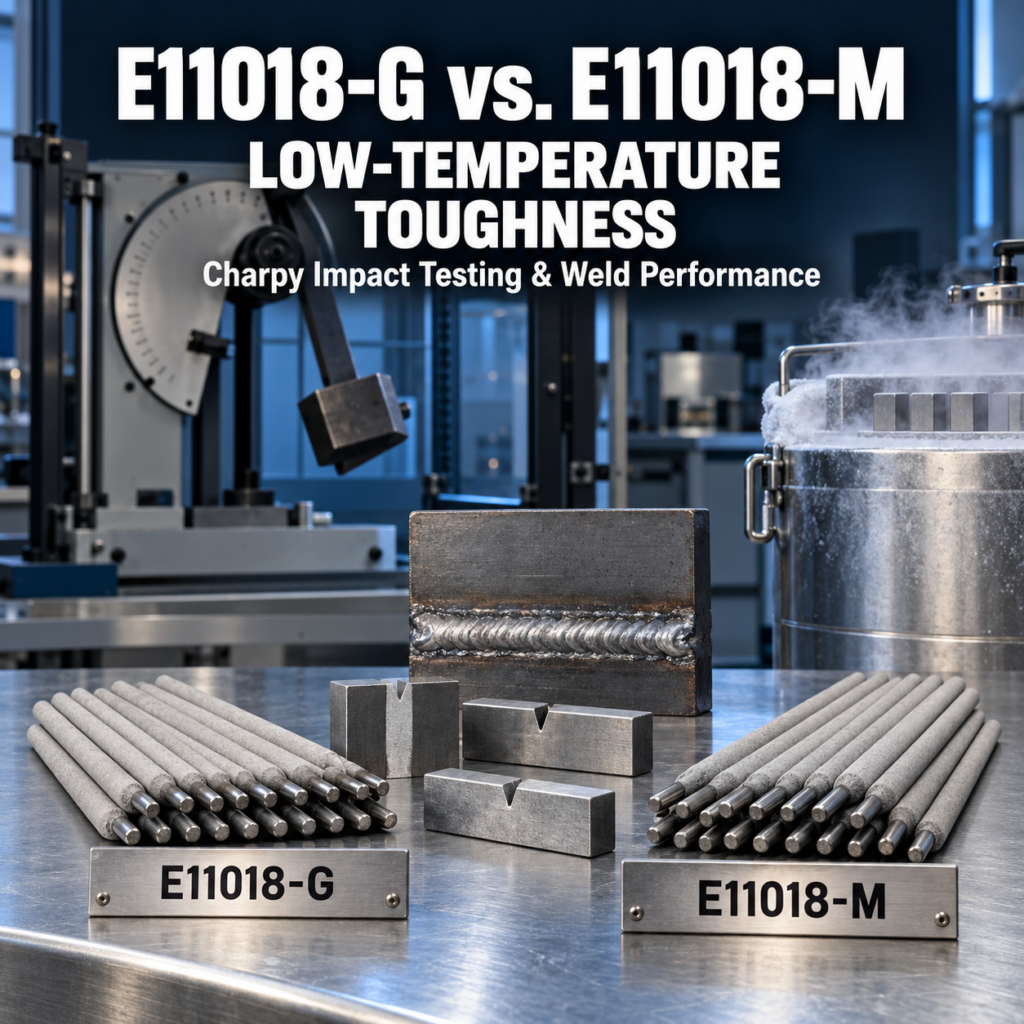
E11018-G vs. E11018-M: Evaluating Low-Temperature Toughness

Choosing between E11018-G and E11018-M for low-temperature service requires more than matching tensile strength. Both electrodes belong to the 110,000 psi strength class, but strength alone does not establish resistance to brittle fracture.

A reliable comparison considers Charpy V-notch impact results, test temperature, specimen size, heat treatment condition, and the qualified welding procedure. Neither designation automatically proves that an electrode is suitable for every cold-service application.

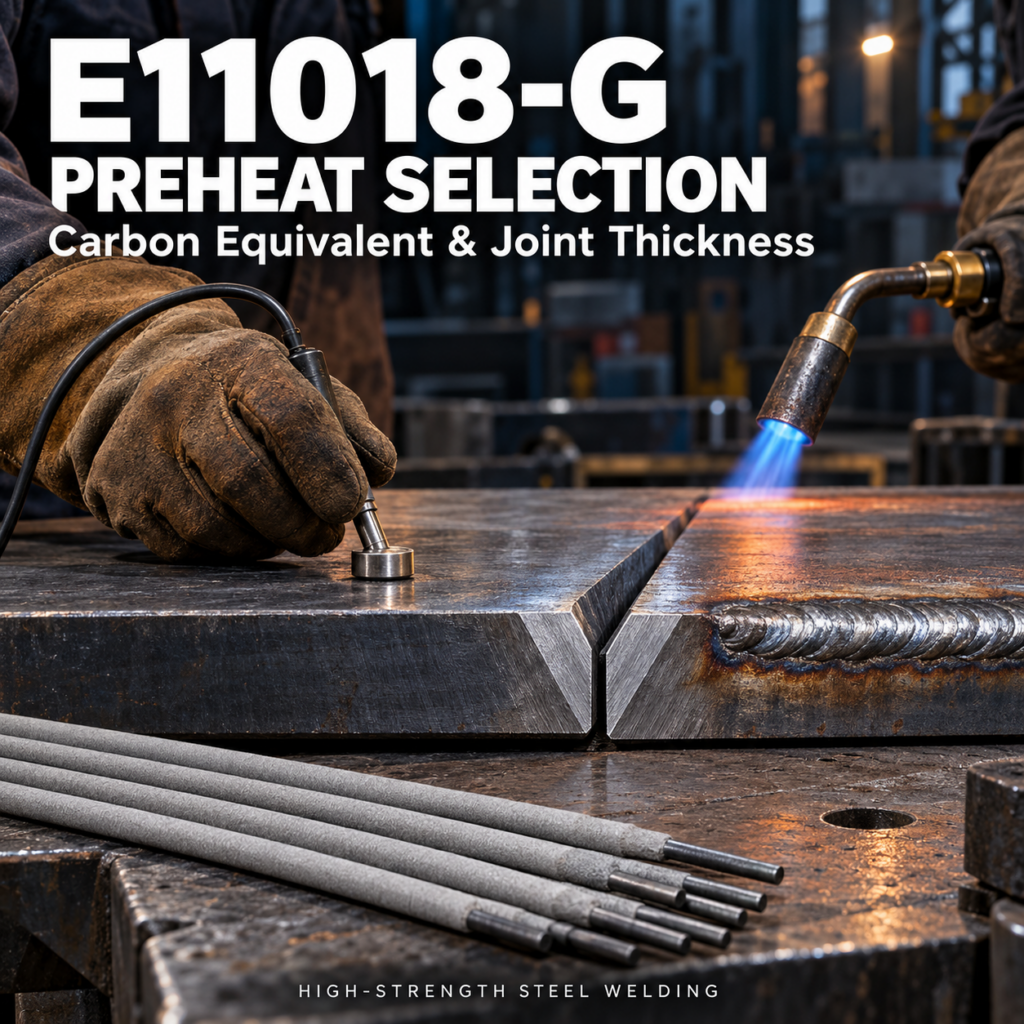
E11018-G Preheat Selection: Carbon Equivalent and Joint Thickness

Selecting the correct preheat for E11018-G welding helps control hydrogen-assisted cracking while preserving the required joint properties. The electrode’s low-hydrogen classification is useful, but it does not establish a universal preheat temperature.

E11018-G preheat selection depends on base metal chemistry, joint thickness, diffusible hydrogen, restraint, and heat input. These factors must be evaluated together and translated into a suitable welding procedure.

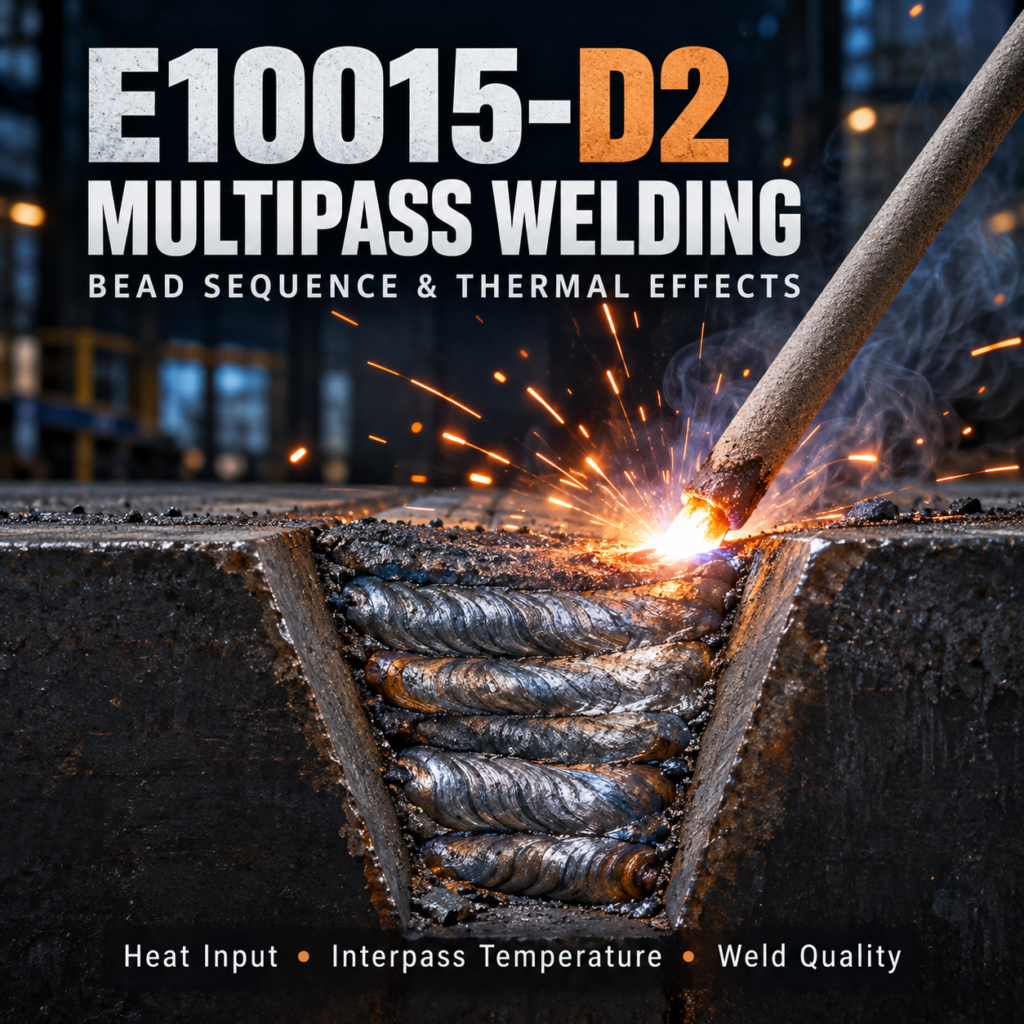
E10015-D2 Multipass Welding: Bead Sequence and Thermal Effects

In E10015-D2 multipass welding, bead sequence determines more than how a groove is filled. It controls where heat enters the joint, how earlier deposits are reheated, and how weld shrinkage develops. Together with heat input and interpass temperature, bead placement influences fusion, microstructure, toughness, hardness, and cracking risk.The central challenge is consistency. A weld can have an acceptable surface appearance while its internal thermal history differs significantly from the conditions used during procedure qualification.

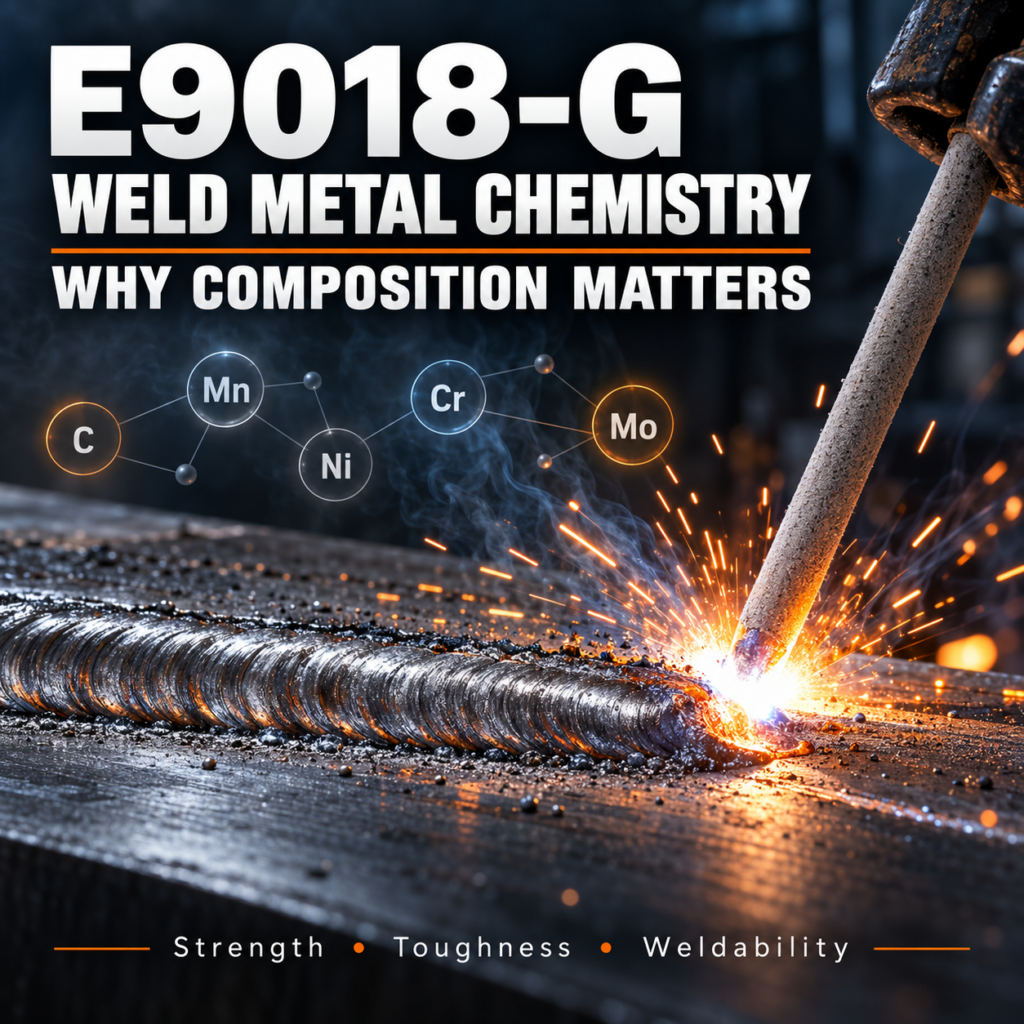
E9018-G Weld Metal Chemistry: Why Composition Matters

E9018-G weld metal chemistry influences strength, impact toughness, hardenability, and response to post-weld heat treatment. Two electrodes carrying the same E9018-G classification can have different alloy compositions, so they should not automatically be treated as interchangeable.For welding engineers, fabricators, and purchasing teams, understanding these differences is essential. Selecting an electrode requires more than matching a tensile strength designation: the deposited weld metal must satisfy the joint’s mechanical properties, fabrication conditions, and service requirements.

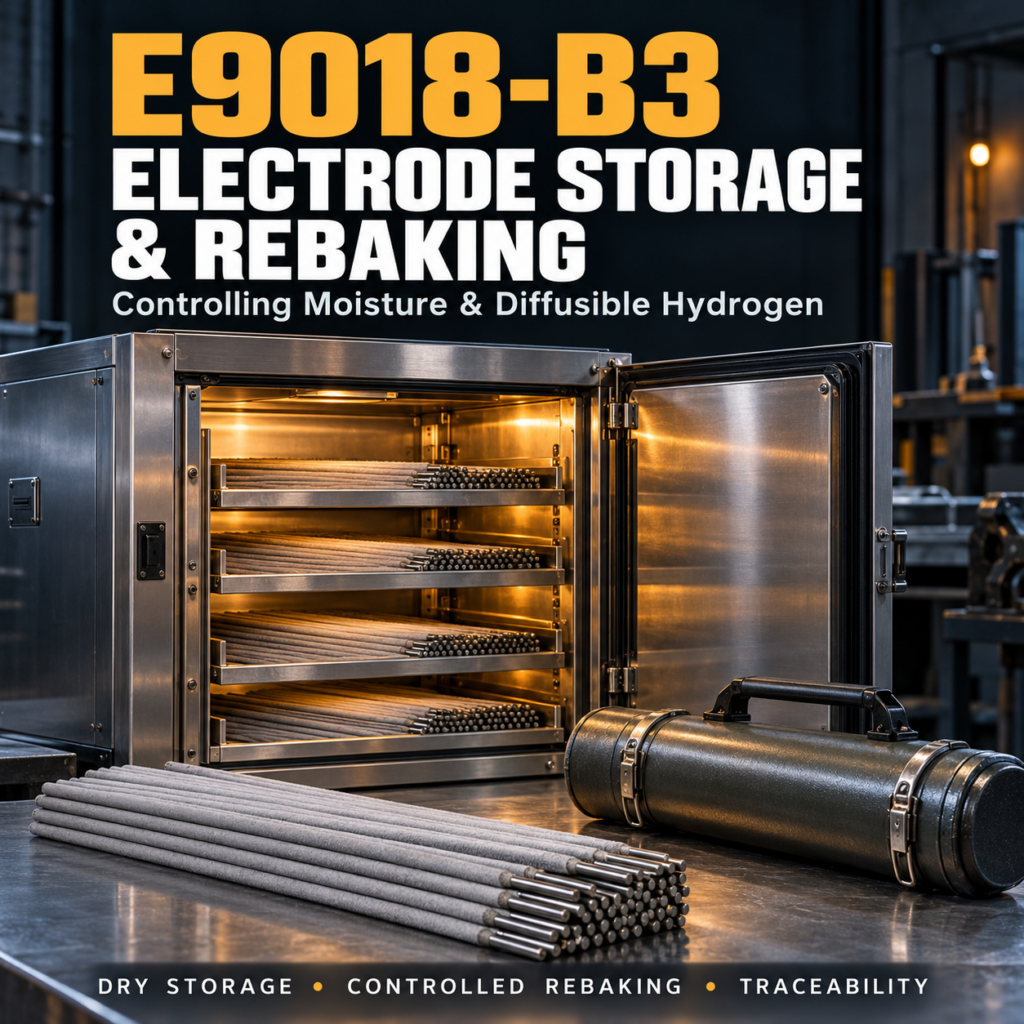
E9018-B3 Electrode Storage and Rebaking: Controlling Moisture and Diffusible Hydrogen

E9018-B3 electrodes are used for welding suitable 2.25Cr-1Mo steels in applications where weld integrity and elevated-temperature performance matter. Their low-hydrogen coating supports reliable welding, but its effectiveness depends on how the electrodes are stored and handled.Once packaging is opened, moisture exposure becomes a fabrication variable. An electrode can look dry while its coating contains enough absorbed moisture to affect hydrogen control.

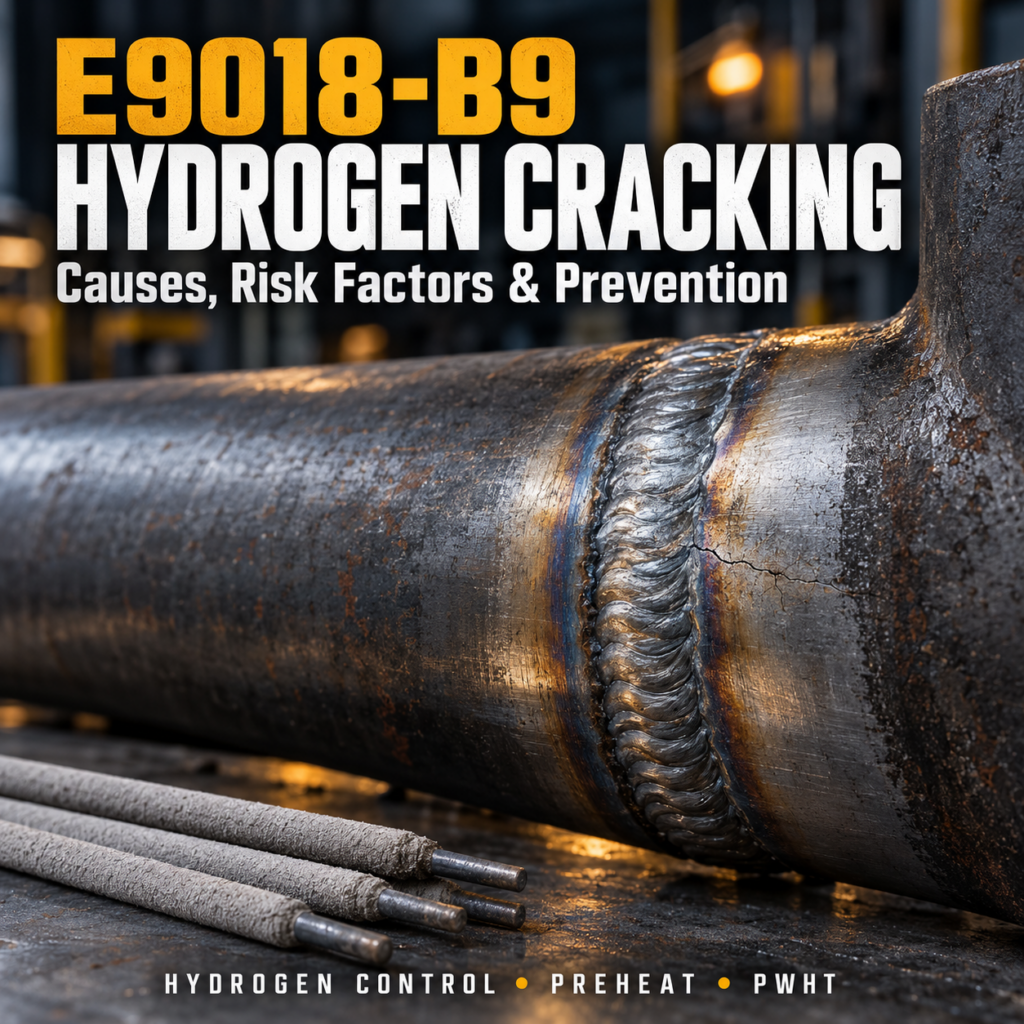
E9018-B9 Hydrogen Cracking: Causes, Risk Factors, and Prevention

A weld can look sound immediately after completion and still develop cracks during cooling. When welding P91 steel with E9018-B9 electrodes, this delayed behavior makes hydrogen control an essential part of fabrication.

E9018-B9 is a low-hydrogen covered electrode used for shielded metal arc welding of suitable Grade 91 materials. However, “low hydrogen” does not mean hydrogen-free, and the electrode classification alone cannot guarantee a crack-free joint.

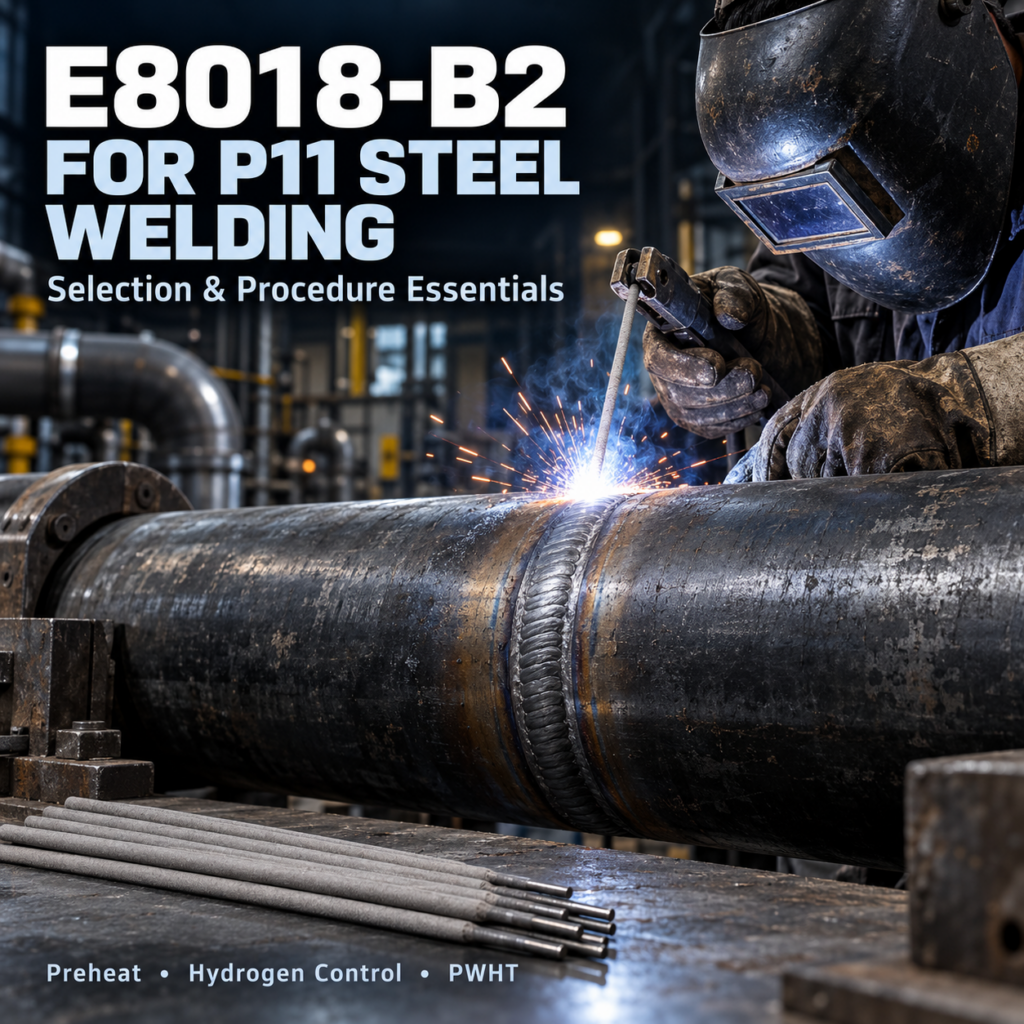
E8018-B2 for P11 Steel Welding: Selection and Procedure Essentials

E8018-B2 is a common low-hydrogen stick electrode choice for welding P11 chromium-molybdenum steel. Its nominal 1.25% chromium and 0.5% molybdenum weld deposit makes it suitable for many matching-alloy applications involving elevated-temperature piping.However, selecting the correct electrode is only the beginning. Reliable P11 steel welding also depends on moisture control, joint preparation, preheat, interpass temperature, welding technique, and the required post-weld heat treatment.

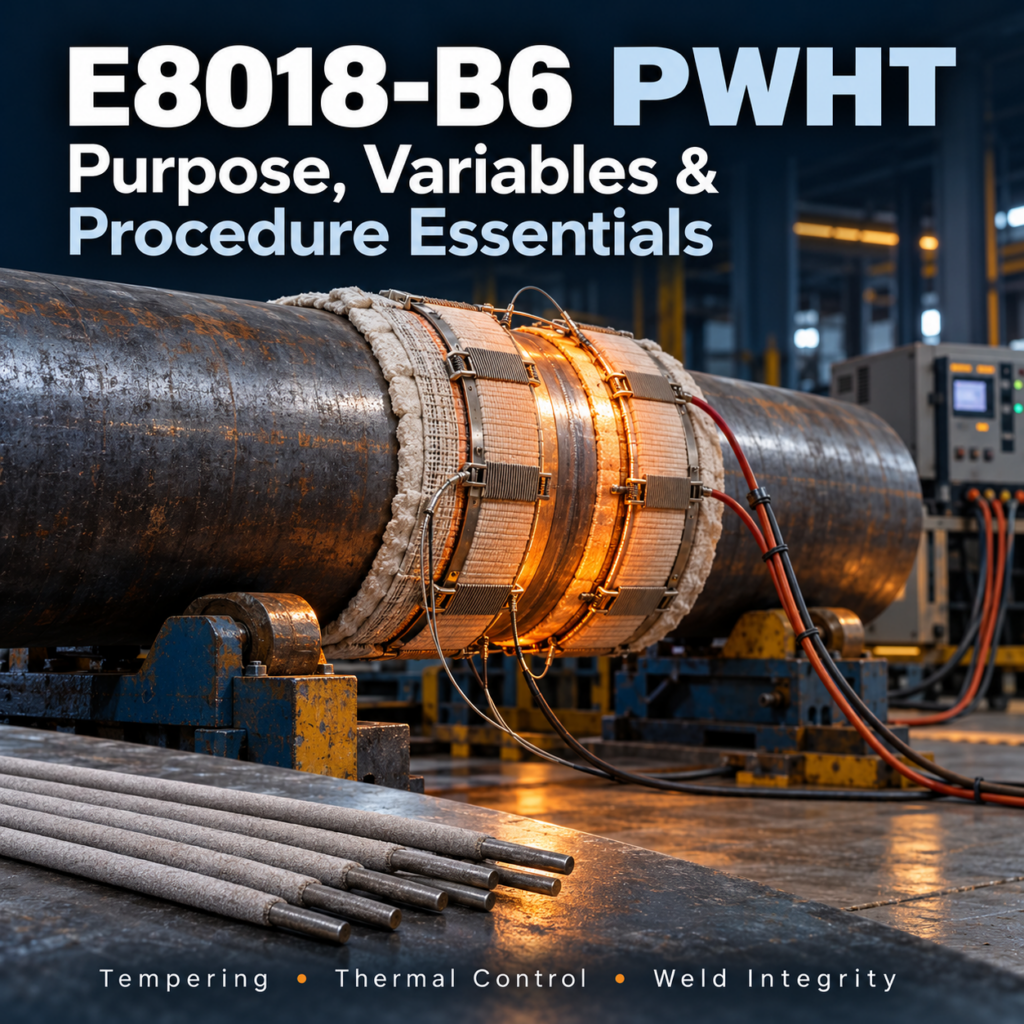
E8018-B6 PWHT: Purpose, Variables, and Procedure Essentials

Post-weld heat treatment is a critical consideration when E8018-B6 electrodes are used to weld matching chromium-molybdenum steels. Selecting the correct filler metal establishes the intended weld chemistry, but the thermal cycle after welding strongly influences the final condition of the joint.E8018-B6 produces weld metal nominally containing 5% chromium and 0.5% molybdenum. It is commonly selected for matching-alloy applications involving P5 pipe, T5 tubing, and Grade 5 pressure vessel plate.

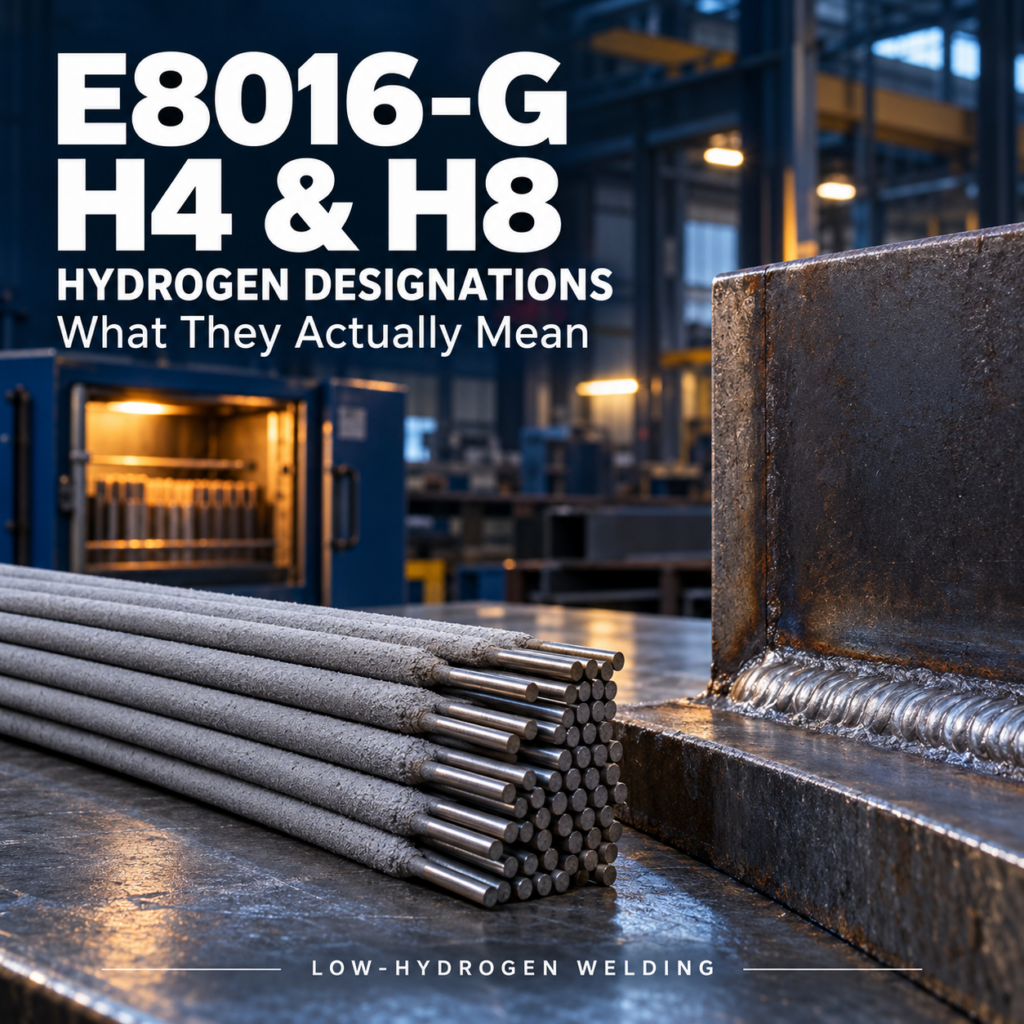
E8016-G Hydrogen Designations: What H4 and H8 Actually Mean

When selecting E8016-G welding electrodes, the hydrogen designation can be as important as the strength classification. H4 and H8 identify different limits for diffusible hydrogen in deposited weld metal under specified test conditions.

The basic distinction is straightforward: H4 specifies a maximum average diffusible hydrogen level of 4 mL per 100 g of deposited weld metal, while H8 specifies 8 mL per 100 g.

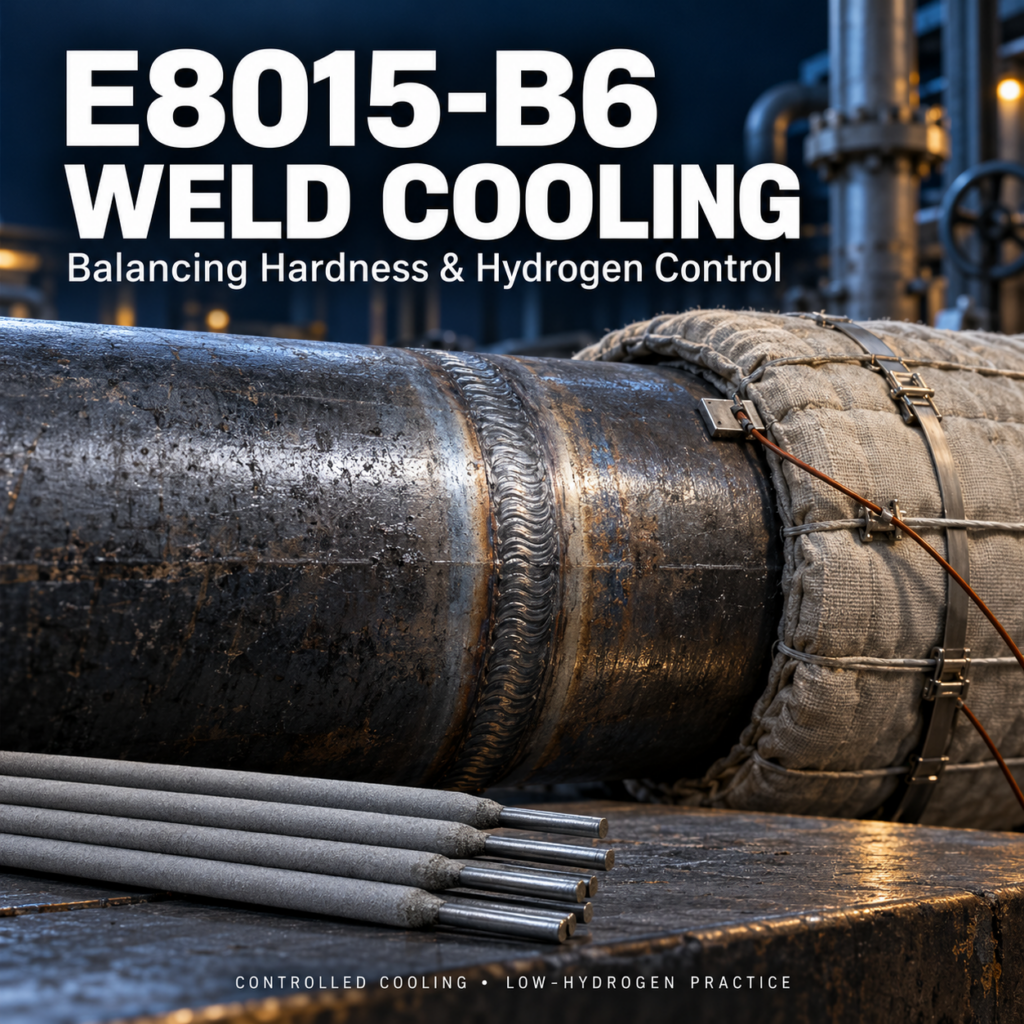
E8015-B6 Weld Cooling: Balancing Hardness and Hydrogen Control

Cooling an E8015-B6 weld is an active part of the welding procedure. The temperature history after each pass and after welding influences microstructure, hydrogen movement, and the stresses acting on the joint.Cooling too quickly can produce harder, more crack-sensitive regions. Keeping the joint warm can support hydrogen diffusion, but an uncontrolled warm hold does not replace the metallurgical treatment required for the weld. Reliable results depend on coordinating electrode handling, preheat, interpass temperature, cooling, and post-weld heat treatment.

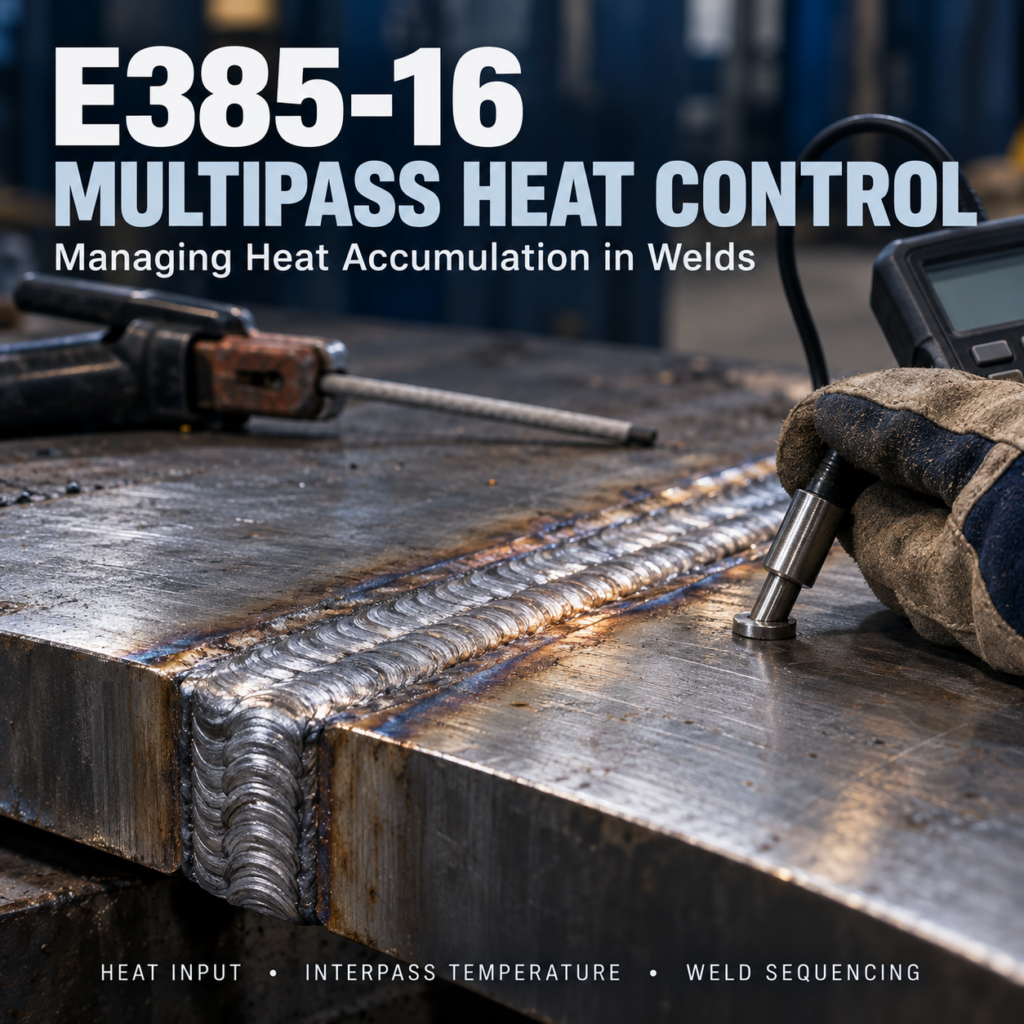
Managing Heat Accumulation in E385-16 Multipass Welds

Heat accumulation can turn an otherwise stable E385-16 welding procedure into a source of inconsistent bead shape, distortion, and weld defects. During multipass welding, each new bead introduces heat into a joint that may still be warm from earlier passes. If heat enters faster than the component can release it, the starting temperature rises progressively.

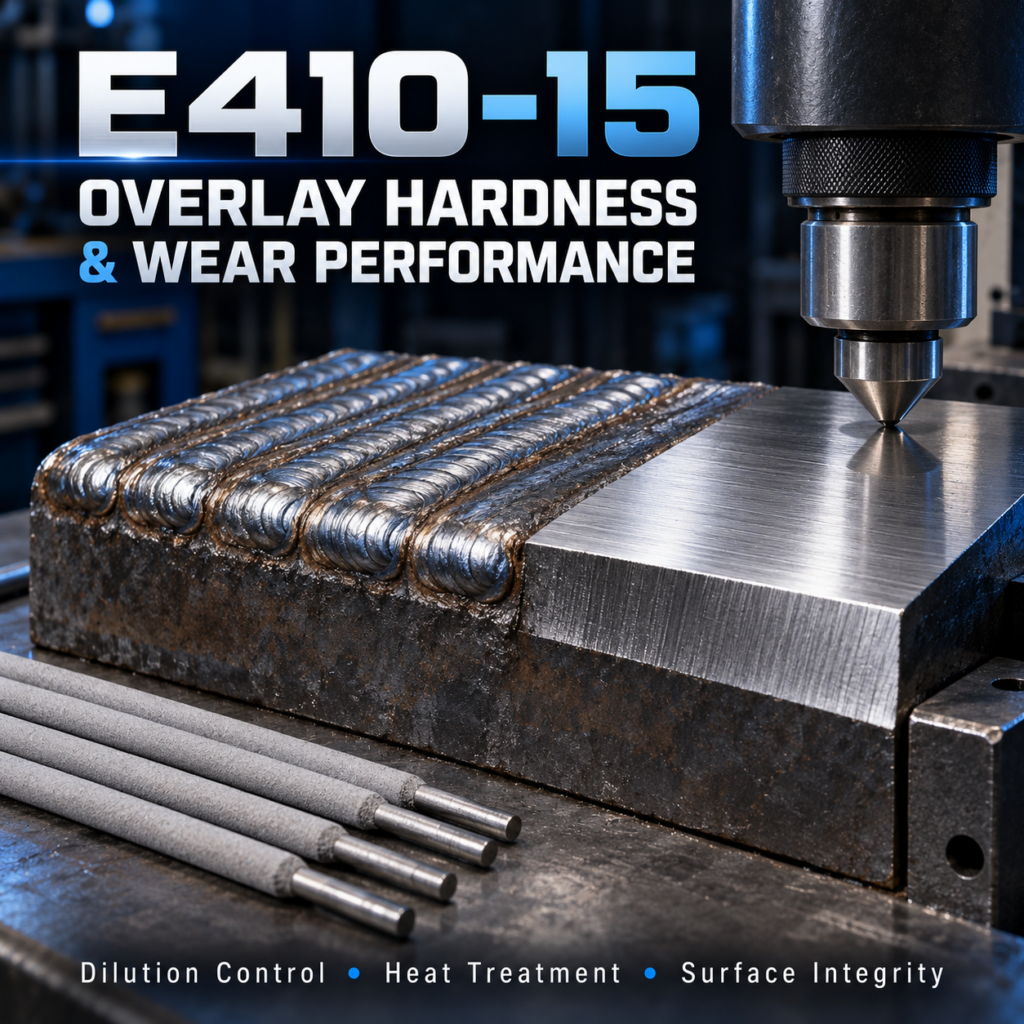
E410-15 Overlay Hardness and Wear Performance

E410-15 overlay hardness is influenced by weld metal chemistry, base metal dilution, cooling conditions, and post-weld heat treatment. Understanding these factors is essential when selecting a welding electrode for rebuilding worn surfaces or restoring components exposed to mechanical wear.

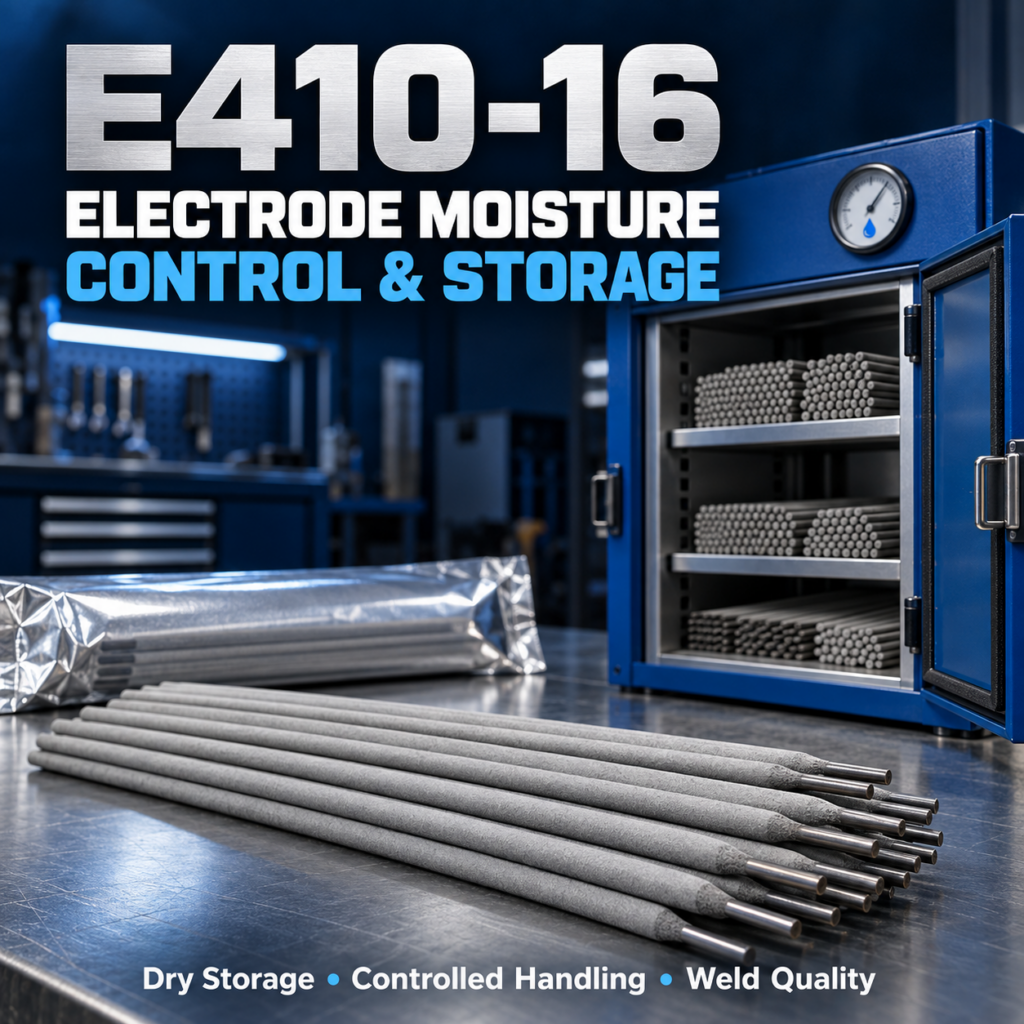
E410-16 Electrode Moisture Control and Storage

Proper E410-16 electrode moisture control and storage help maintain consistent welding performance from the warehouse to the job site. Protecting the electrode coating from humidity, condensation, and contamination is an important part of producing sound stainless steel welds.

Moisture exposure can contribute to porosity and changes in electrode operating behavior. Stainless steel electrode handling guidance also distinguishes between recoverable moisture exposure and severe contamination that requires rejection.

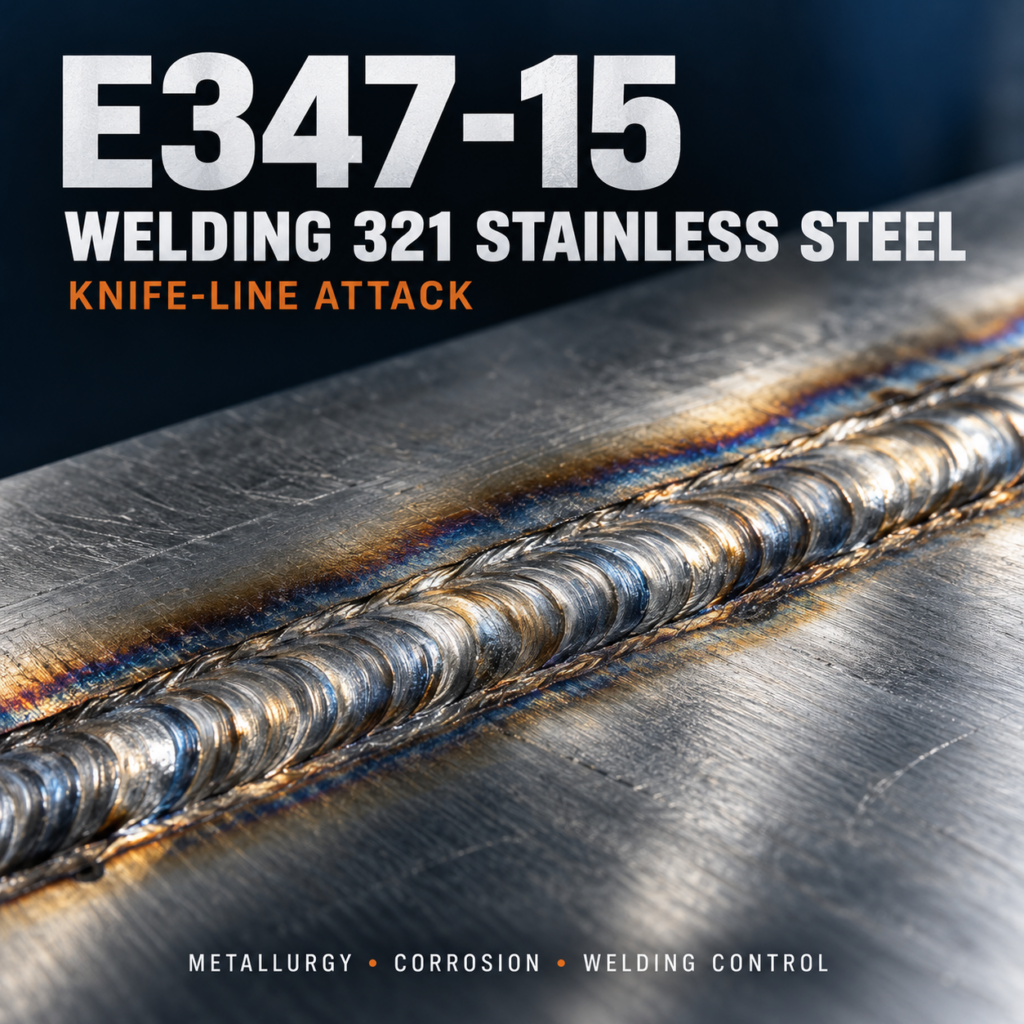
E347-15 Welding of 321 Stainless Steel: Knife-Line Attack

E347-15 is a commonly selected welding electrode for joining 321 stainless steel. Its niobium-stabilized weld metal makes it suitable for this titanium-stabilized base material. However, selecting a stabilized electrode does not automatically protect every part of the welded joint against intergranular corrosion.One particular concern is knife-line attack, a localized form of corrosion that can develop immediately beside the fusion boundary. Understanding this mechanism is essential when welded components face thermal exposure and aggressive corrosive environments.

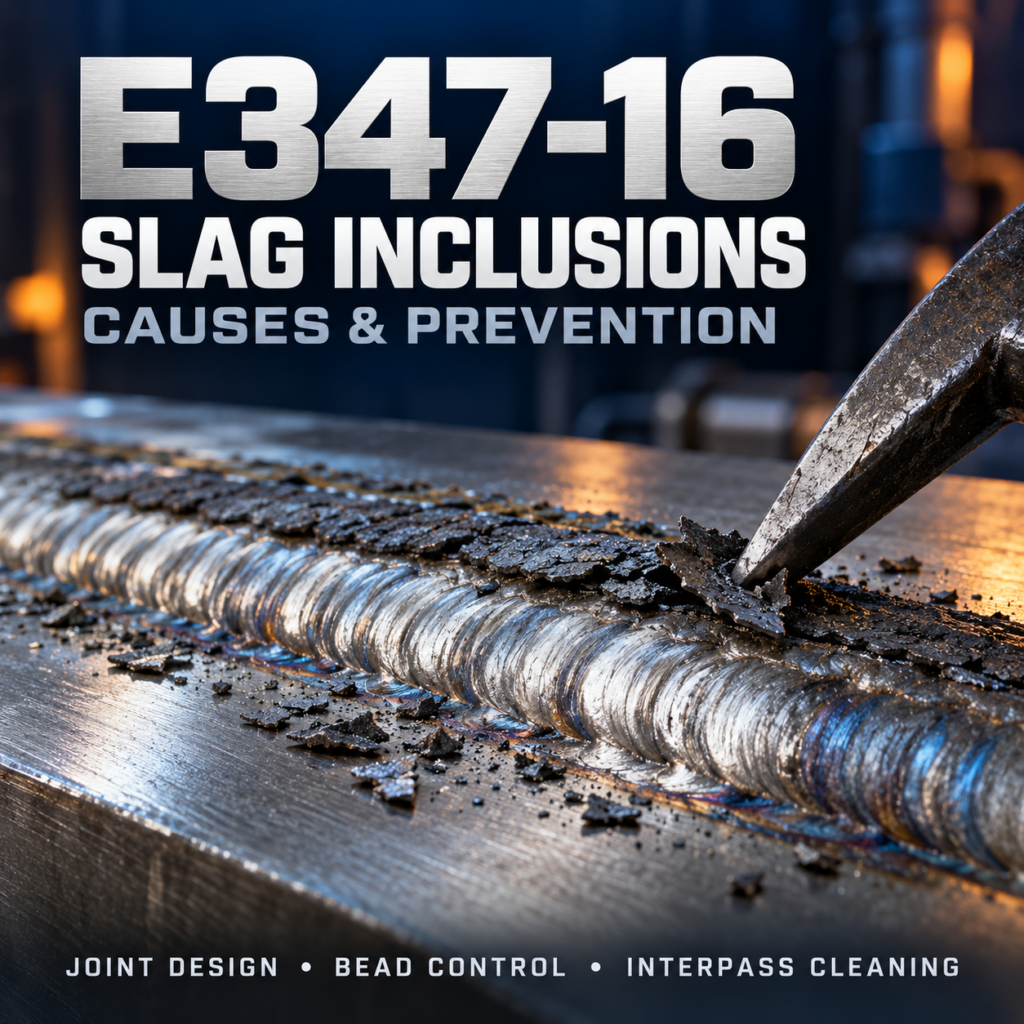
Slag Inclusions in E347-16 Welds: Why They Occur

Slag inclusions in E347-16 welds develop when nonmetallic material becomes trapped inside the weld instead of separating from the molten metal or being removed between passes. The problem often involves a combination of restricted joint access, unfavorable bead shape, incomplete cleaning and poor control of the weld pool.E347-16 is a niobium-stabilized stainless steel electrode commonly used for welding suitable 321 and 347 stainless steels. Its coating produces a protective slag layer during shielded metal arc welding, or SMAW. 

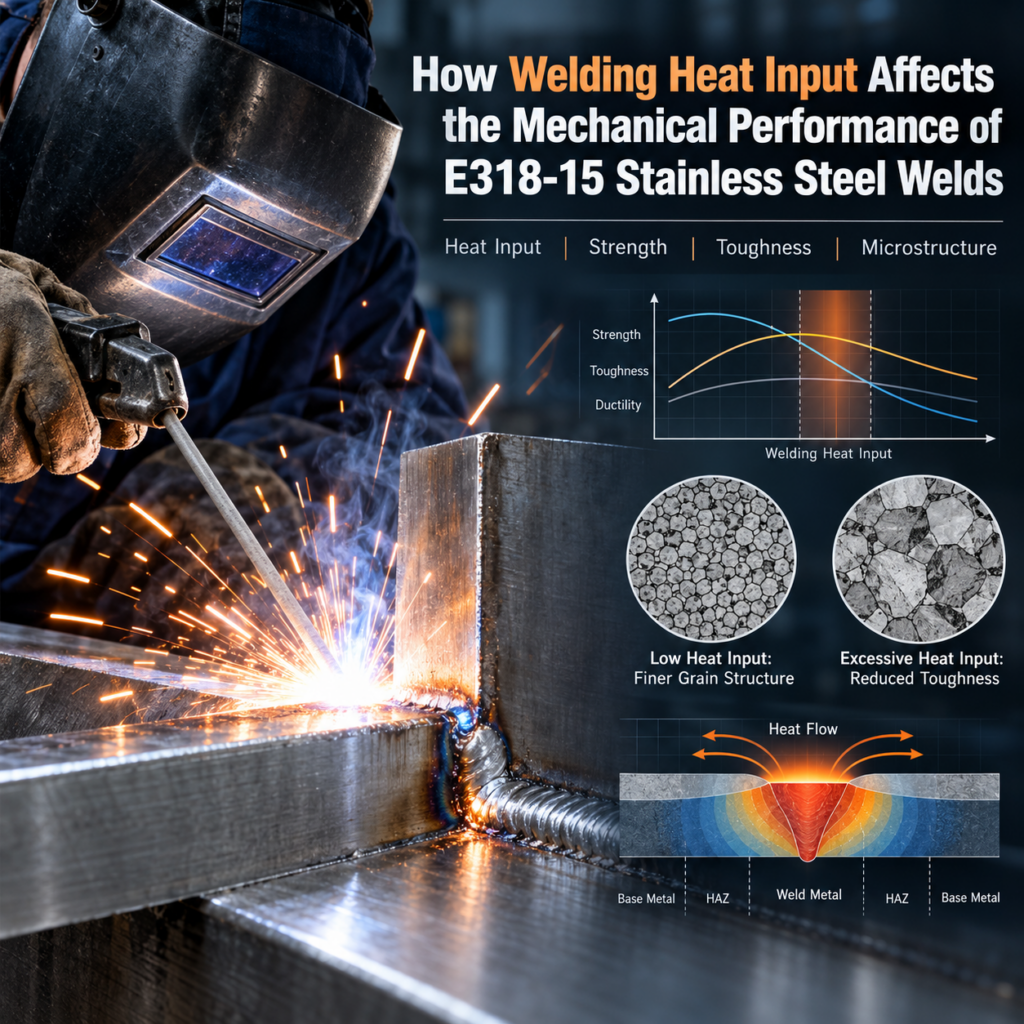
How Welding Heat Input Affects the Mechanical Performance of E318-15 Stainless Steel Welds

Introduction

E318-15 stainless steel welding electrodes are widely used for joining stabilized austenitic stainless steels where mechanical reliability and corrosion resistance are critical. As a niobium-stabilized Cr-Ni-Mo electrode, E318-15 provides excellent resistance against sensitization and maintains stable weld performance under demanding service conditions.

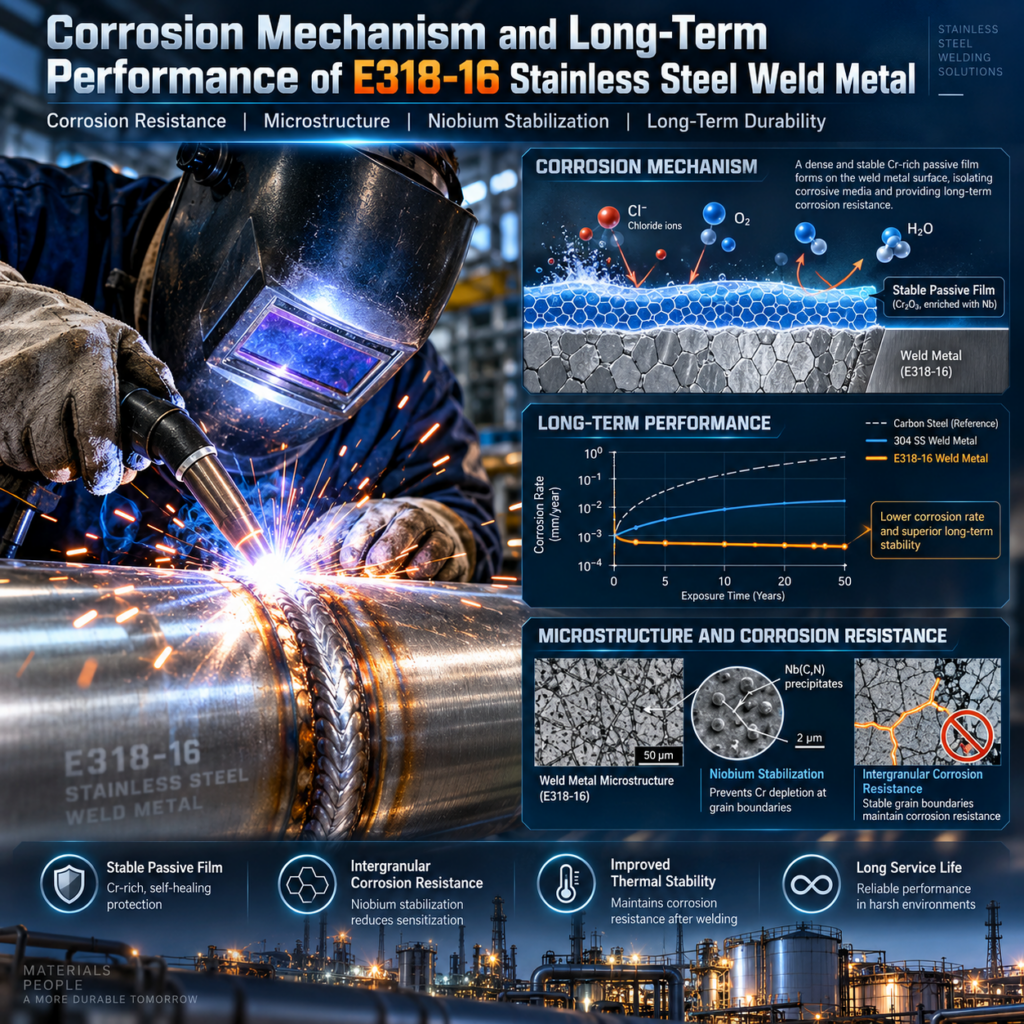
Corrosion Mechanism and Long-Term Performance of E318-16 Stainless Steel Weld Metal

Introduction

E318-16 stainless steel welding electrodes are widely recognized for producing reliable weld joints in applications where corrosion resistance, mechanical stability, and long-term durability are essential. As a niobium-stabilized austenitic stainless steel electrode, E318-16 is designed to maintain stable weld performance under thermal cycling and corrosive service conditions.

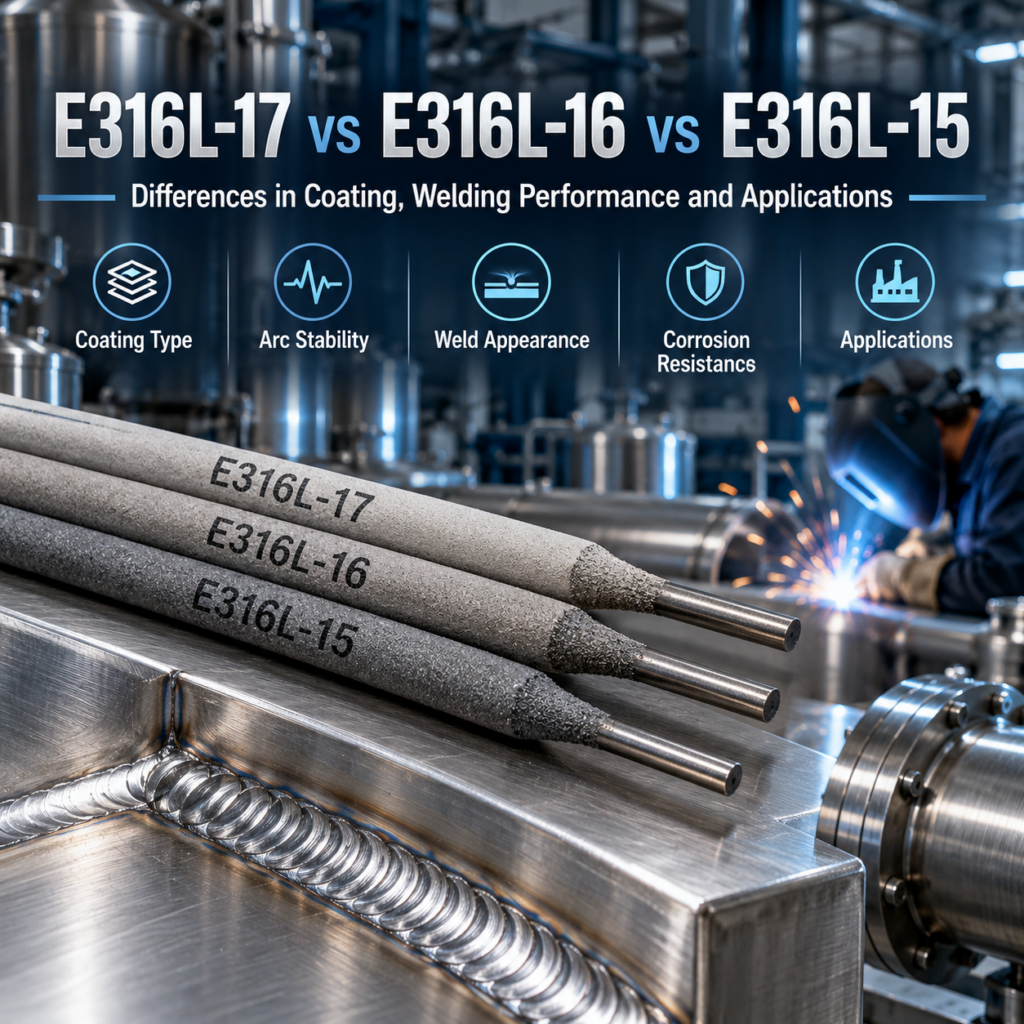
E316L-17 vs E316L-16 vs E316L-15: Differences in Coating, Welding Performance and Applications

Introduction

E316L stainless steel electrodes are widely used for welding low-carbon Cr-Ni-Mo austenitic stainless steels where excellent corrosion resistance, weld integrity, and long-term service stability are required. Although E316L-15, E316L-16, and E316L-17 electrodes share similar weld metal chemistry, their differences mainly come from flux coating composition, arc characteristics, slag behavior, welding position capability, and final weld appearance.

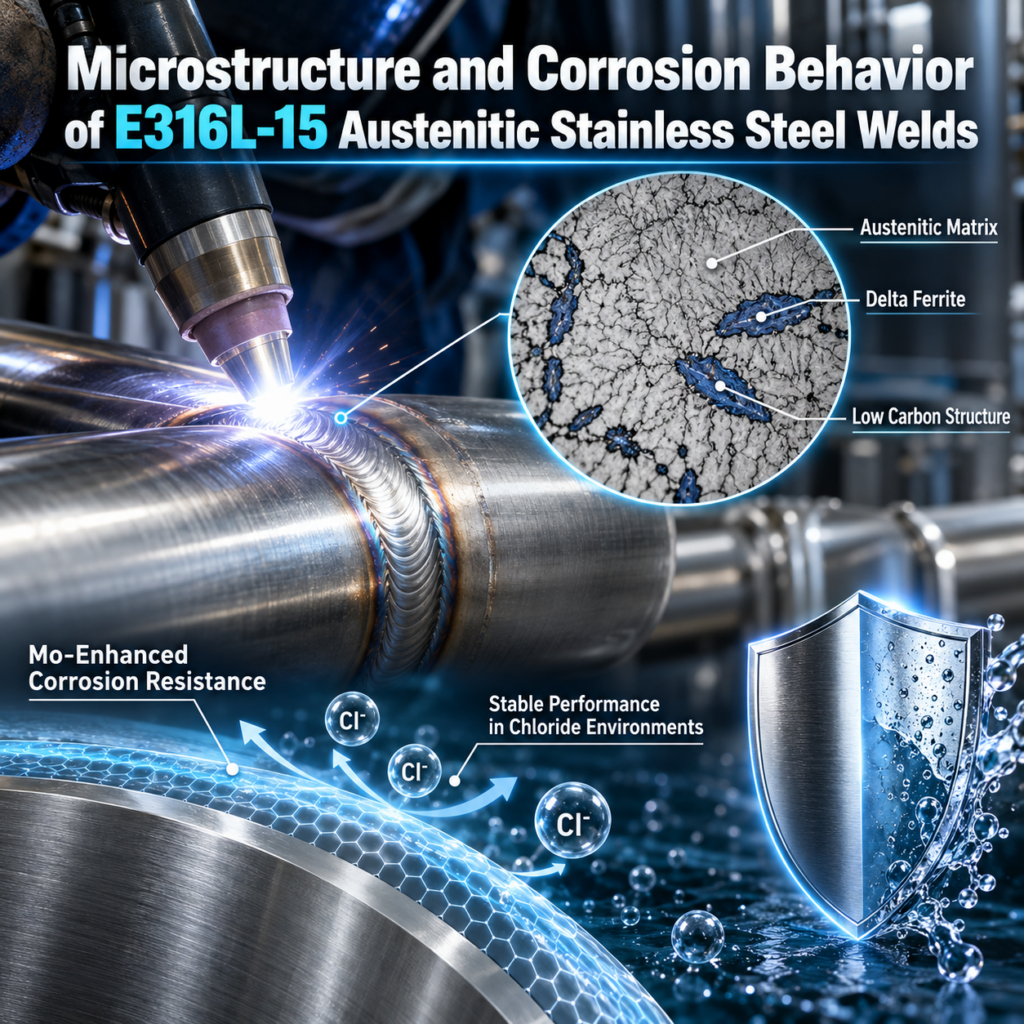
Microstructure and Corrosion Behavior of E316L-15 Austenitic Stainless Steel Welds

Introduction

E316L-15 stainless steel electrodes are widely used for welding corrosion-resistant austenitic stainless steels due to their excellent combination of mechanical performance, weldability, and resistance to aggressive environments. As a low-carbon Cr-Ni-Mo alloy welding material, E316L-15 is designed to provide stable weld metal properties while minimizing the risk of carbide precipitation and intergranular corrosion.

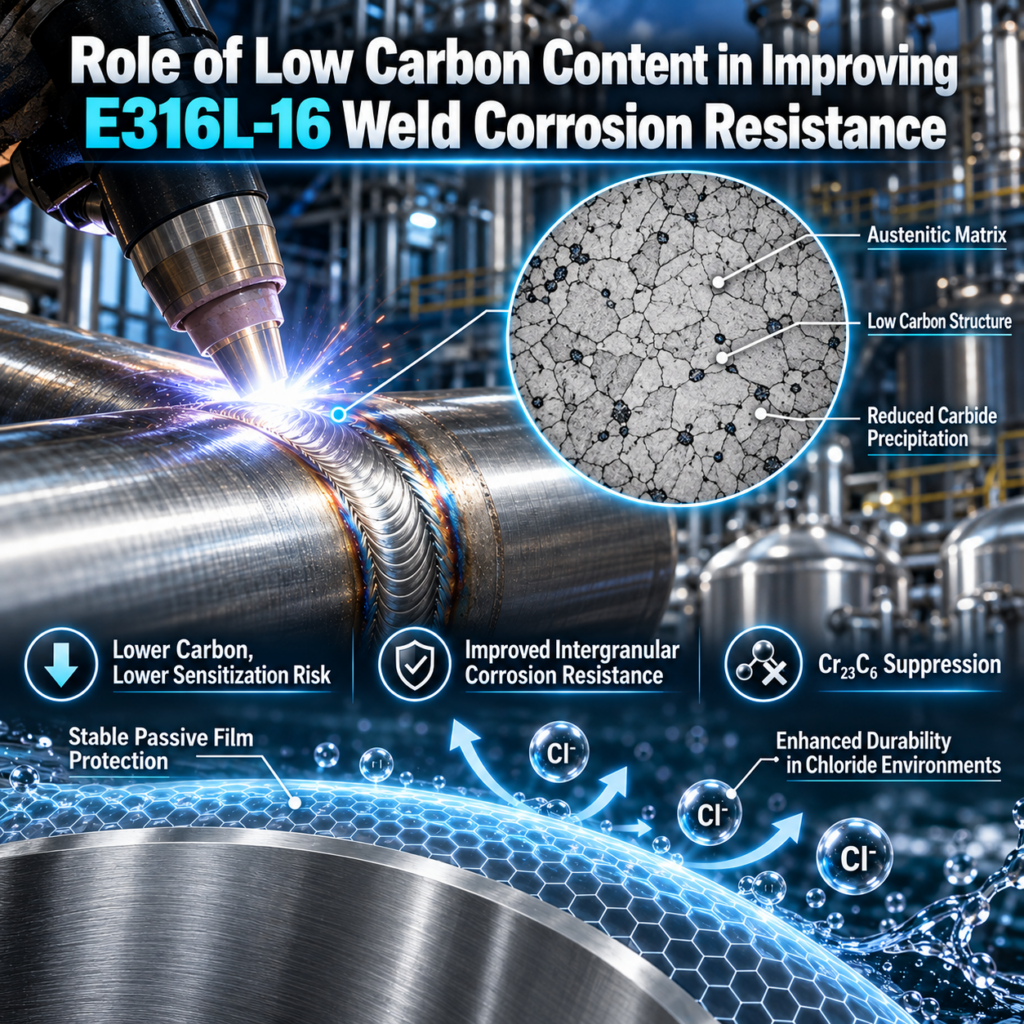
Role of Low Carbon Content in Improving E316L-16 Weld Corrosion Resistance

Introduction

E316L-16 stainless steel electrodes are widely used for welding corrosion-resistant austenitic stainless steels where long-term durability and metallurgical stability are required. The outstanding corrosion performance of E316L-16 welds is strongly associated with its controlled low-carbon composition, combined with a Cr-Ni-Mo alloy system.

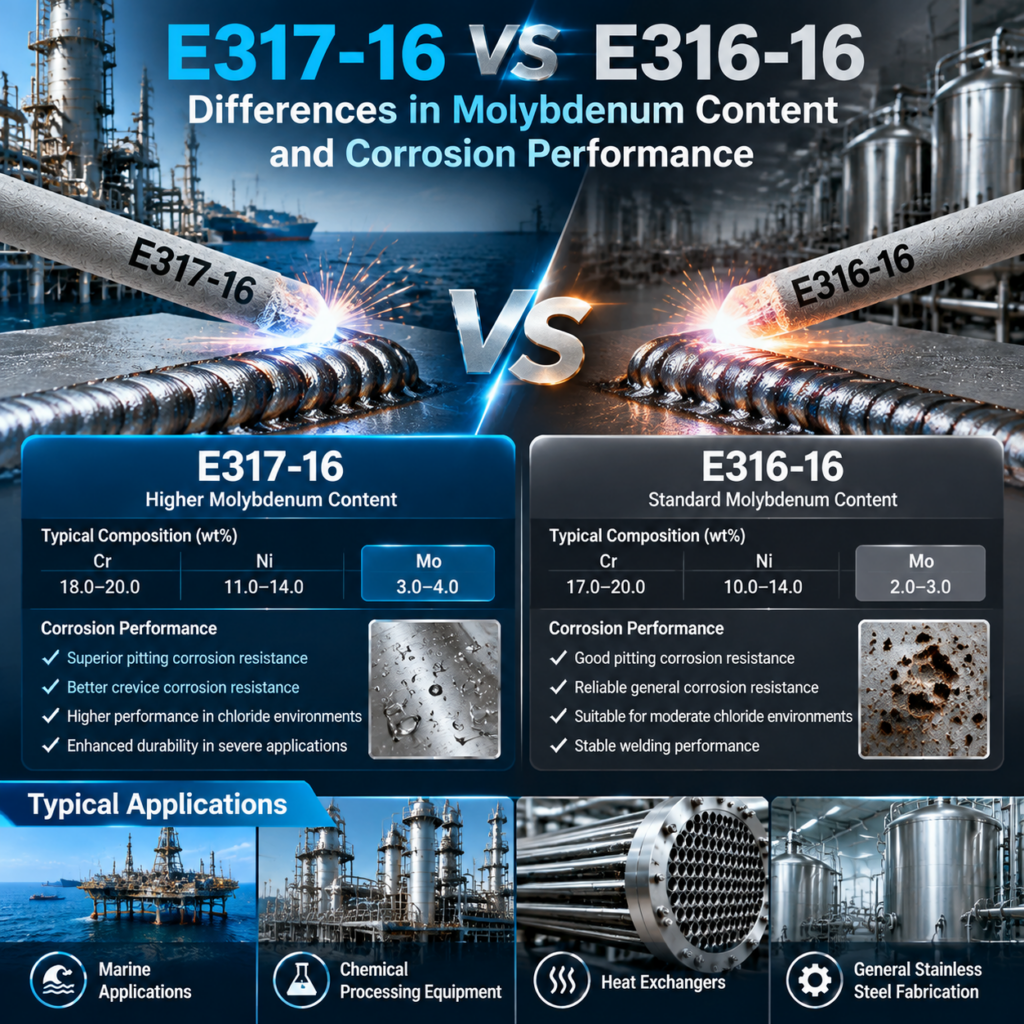
E317-16 vs E316-16: Differences in Molybdenum Content and Corrosion Performance

Introduction

Selecting the right stainless steel welding electrode is critical for achieving reliable corrosion resistance, mechanical stability, and long-term service performance. Among austenitic stainless steel electrodes, E316-16 and E317-16 are widely used for welding corrosion-resistant materials in demanding industrial environments.

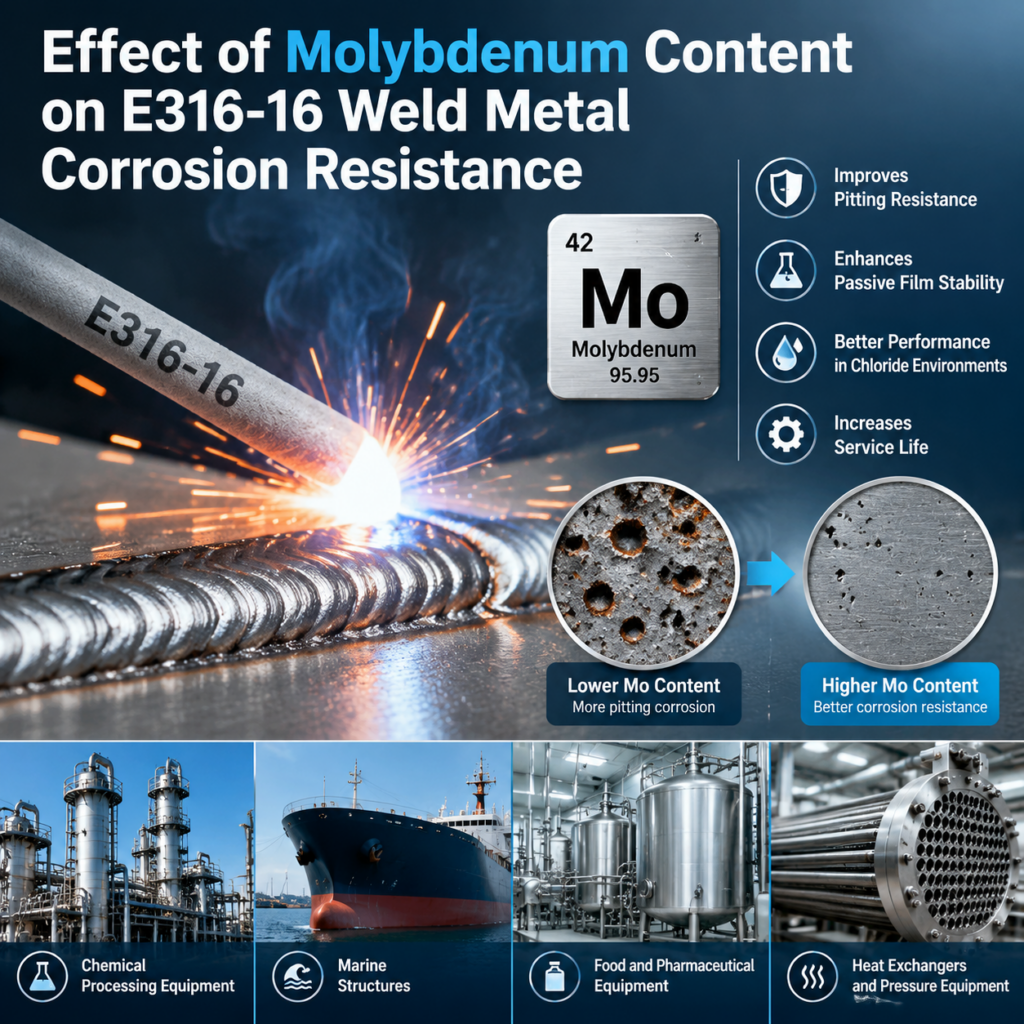
Effect of Molybdenum Content on E316-16 Weld Metal Corrosion Resistance

Introduction

E316-16 stainless steel welding electrodes are widely recognized for their excellent corrosion resistance, stable arc performance, and suitability for welding corrosion-resistant austenitic stainless steels. A key factor influencing the durability of E316-16 weld metal is the presence of molybdenum (Mo), an alloying element that significantly improves resistance against localized corrosion, especially pitting and crevice corrosion in aggressive environments.

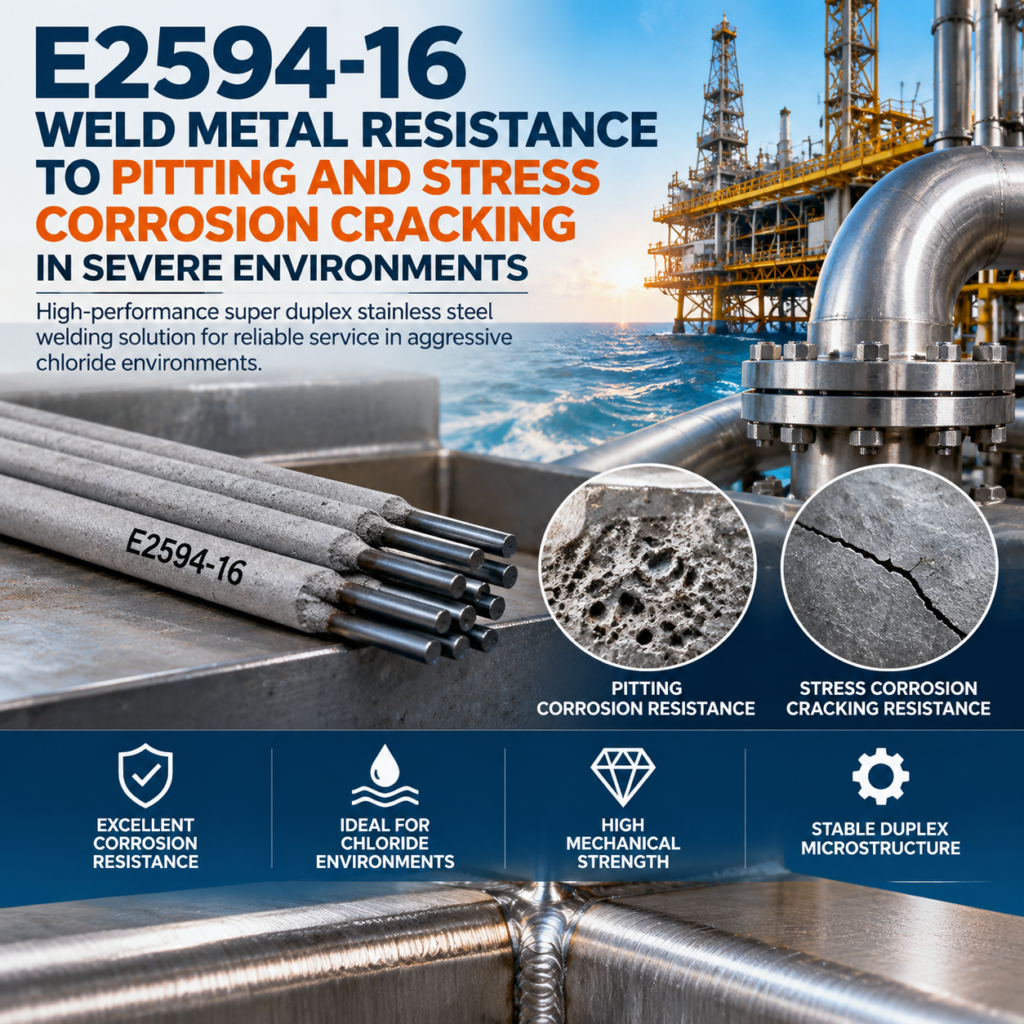
E2594-16 Weld Metal Resistance to Pitting and Stress Corrosion Cracking in Severe Environments

Introduction

In harsh industrial environments, welded components are often exposed to aggressive media containing chlorides, seawater, chemicals, and high temperatures. Under these conditions, conventional stainless steel weld metals may suffer from localized corrosion, including pitting corrosion and stress corrosion cracking (SCC).

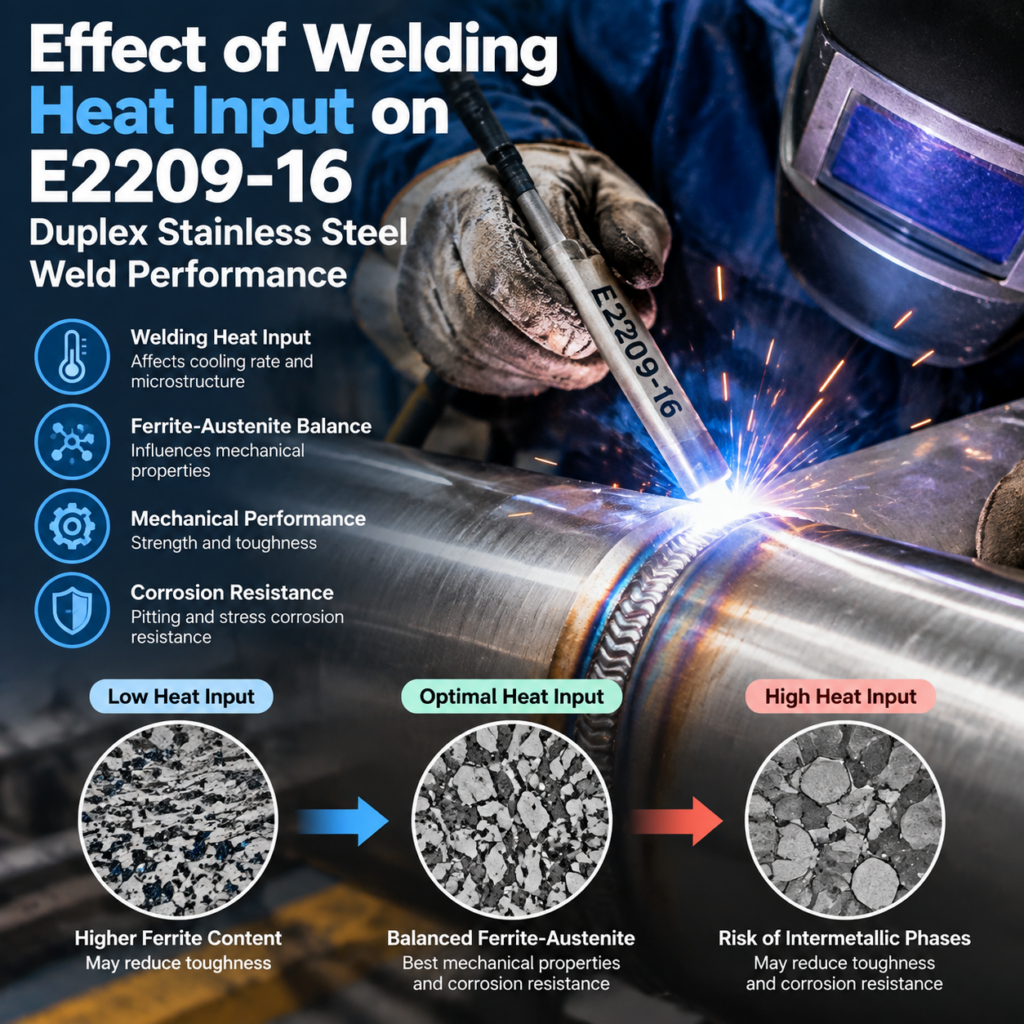
Effect of Welding Heat Input on E2209-16 Duplex Stainless Steel Weld Performance

Introduction

E2209-16 duplex stainless steel electrodes are widely used for welding duplex stainless steels due to their excellent combination of strength, toughness, and corrosion resistance. The weld performance of E2209-16 depends not only on electrode composition but also on welding parameters, especially welding heat input.

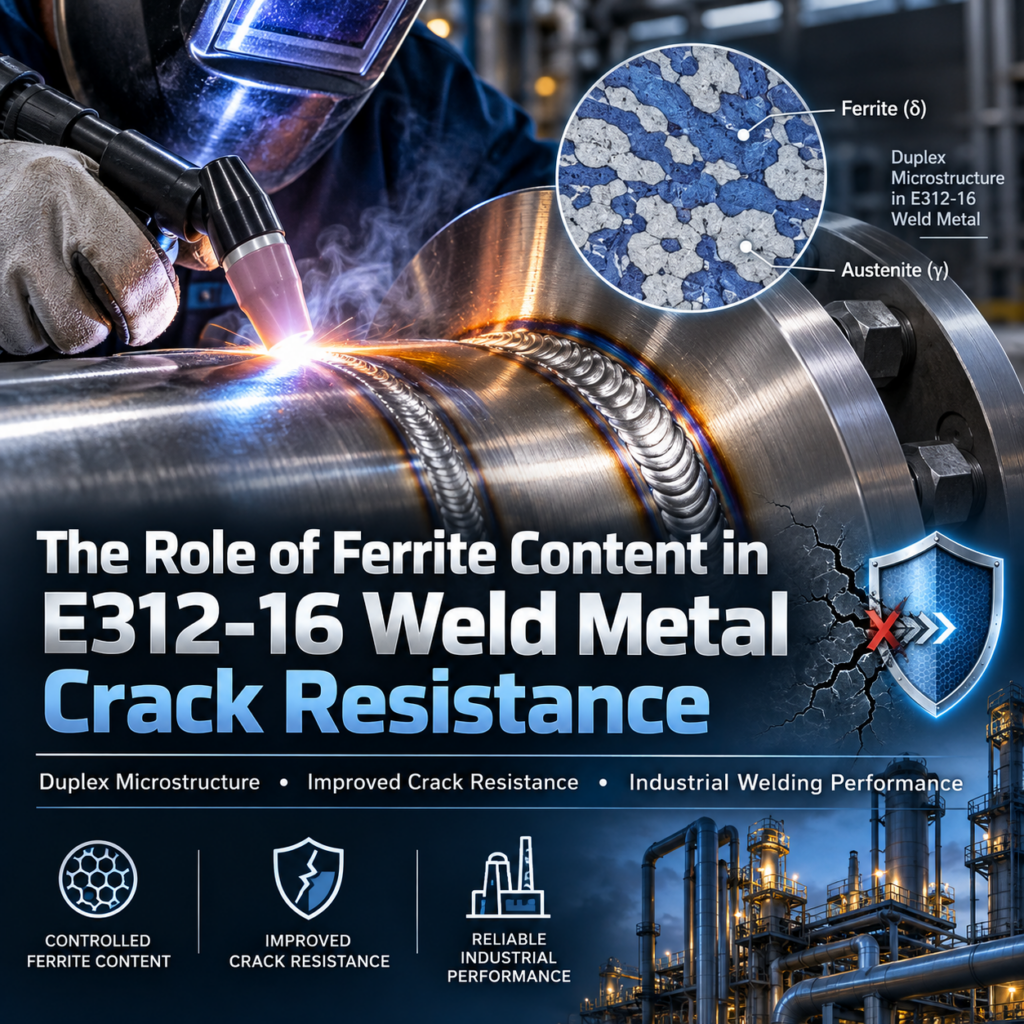
The Role of Ferrite Content in E312-16 Weld Metal Crack Resistance

Introduction

E312-16 stainless steel electrodes are widely recognized for their excellent resistance to weld cracking, especially in applications involving difficult-to-weld materials, high-strength steels, and dissimilar metal joints. One of the key factors behind this performance is the controlled ferrite content within the deposited weld metal.

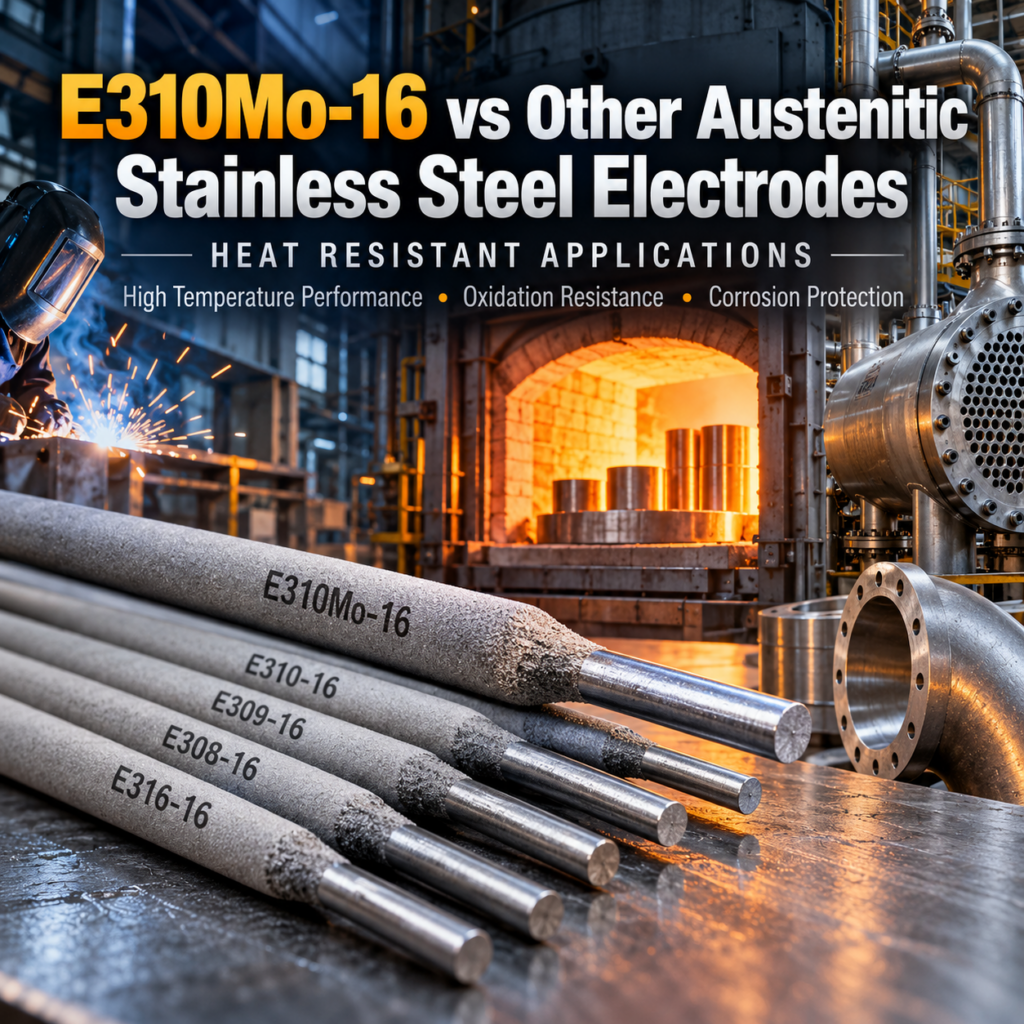
Comparing E310Mo-16 and Other Austenitic Stainless Steel Electrodes for Heat Resistant Applications

Introduction: Choosing the Right Electrode for High Temperature Welding

High-temperature welding applications require materials that can maintain strength, corrosion resistance, and structural stability under extreme operating conditions. Austenitic stainless steel electrodes are widely used in industries where components experience continuous heat exposure, thermal cycling, oxidation, and corrosive environments.

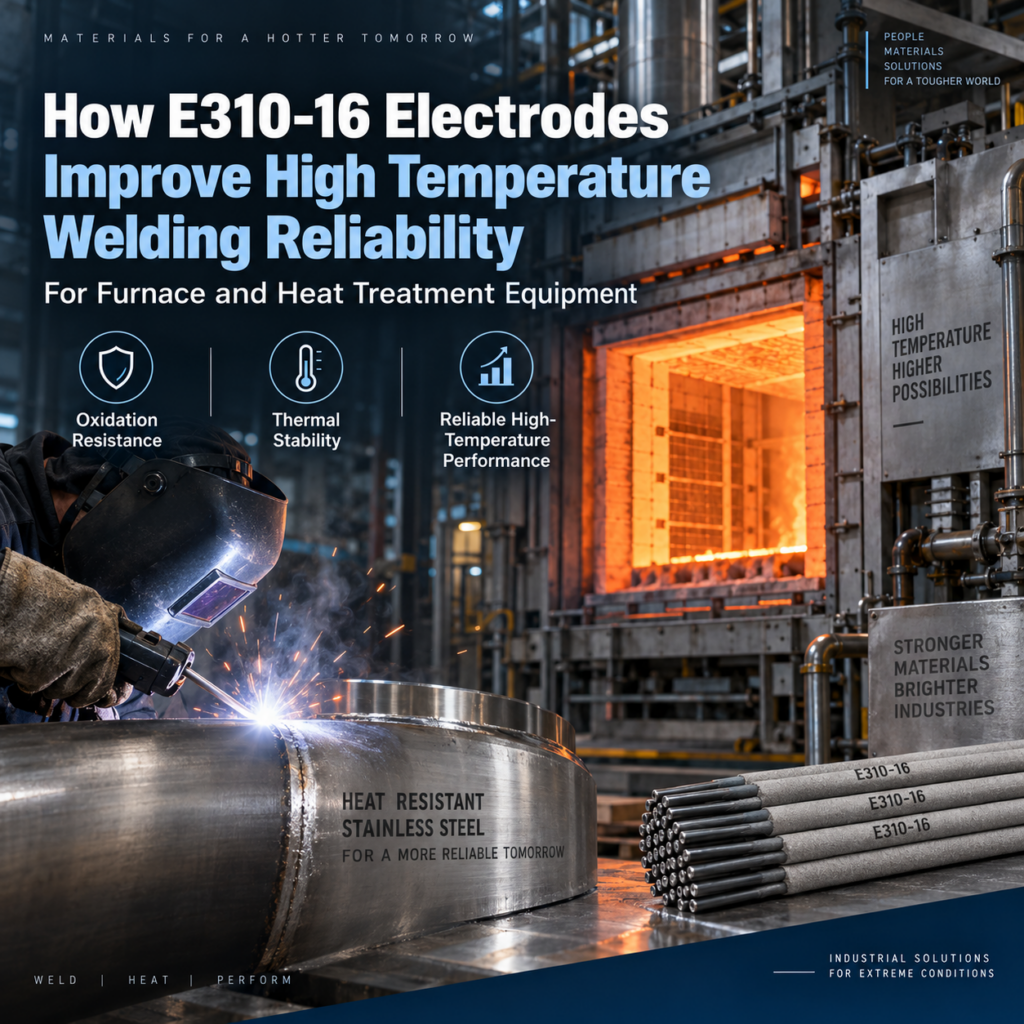
How E310-16 Electrodes Improve High Temperature Welding Reliability in Furnace and Heat Treatment Equipment

High temperature industrial equipment requires welding materials that can maintain strength, resist oxidation, and withstand continuous thermal exposure. In applications such as furnaces, heat treatment equipment, burners, and heat-resistant components, ordinary stainless steel welding electrodes may lose performance due to repeated heating cycles and extreme operating temperatures.

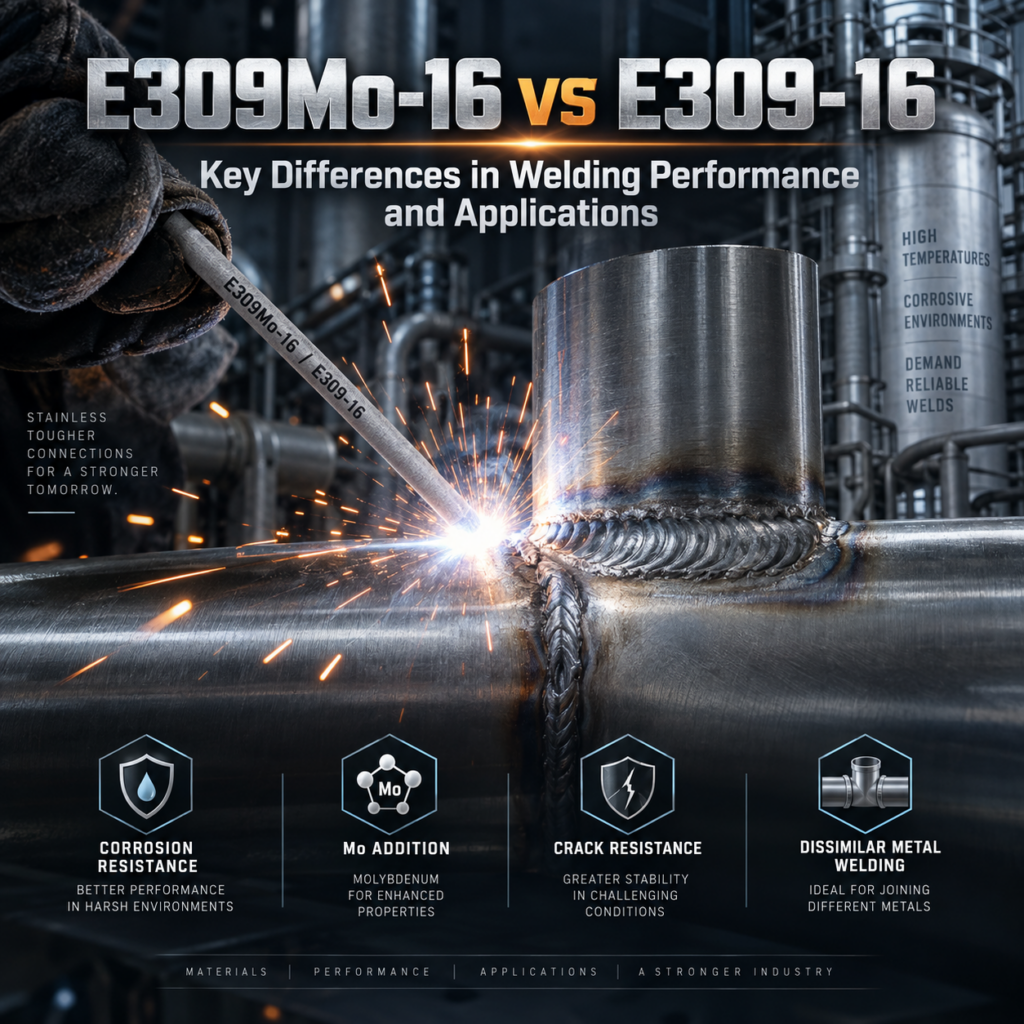
E309Mo-16 vs E309-16: Key Differences in Welding Performance and Applications

Selecting the right stainless steel welding electrode is critical for achieving strong, durable, and corrosion-resistant welds. Among commonly used austenitic stainless steel electrodes, E309Mo-16 and E309-16 are widely recognized for their excellent performance in dissimilar metal welding and stainless steel fabrication.

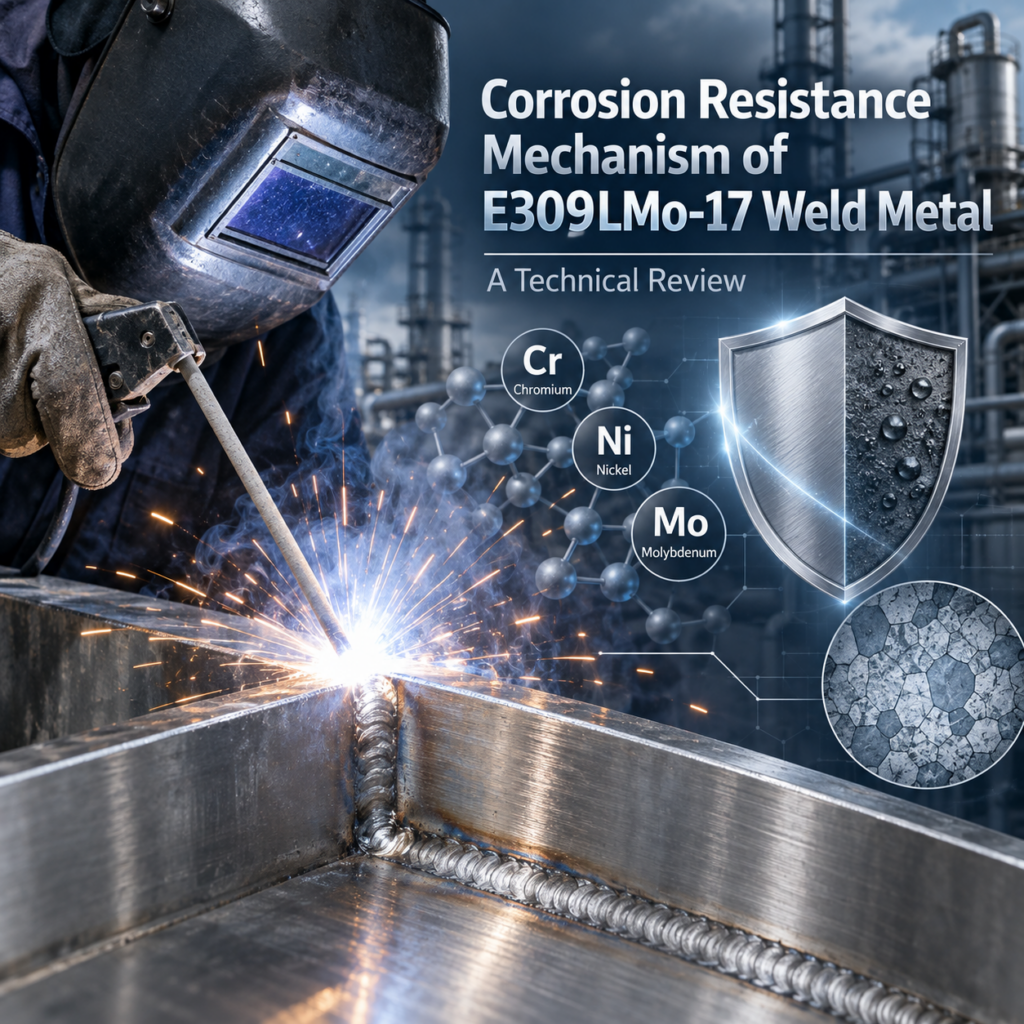
Corrosion Resistance Mechanism of E309LMo-17 Weld Metal: A Technical Review

E309LMo-17 is a specialized stainless steel electrode widely used for welding applications where corrosion resistance, metallurgical stability, and reliable weld performance are required. Its weld metal is designed with controlled chromium, nickel, and molybdenum contents to provide enhanced resistance against aggressive environments, especially in dissimilar metal welding conditions.

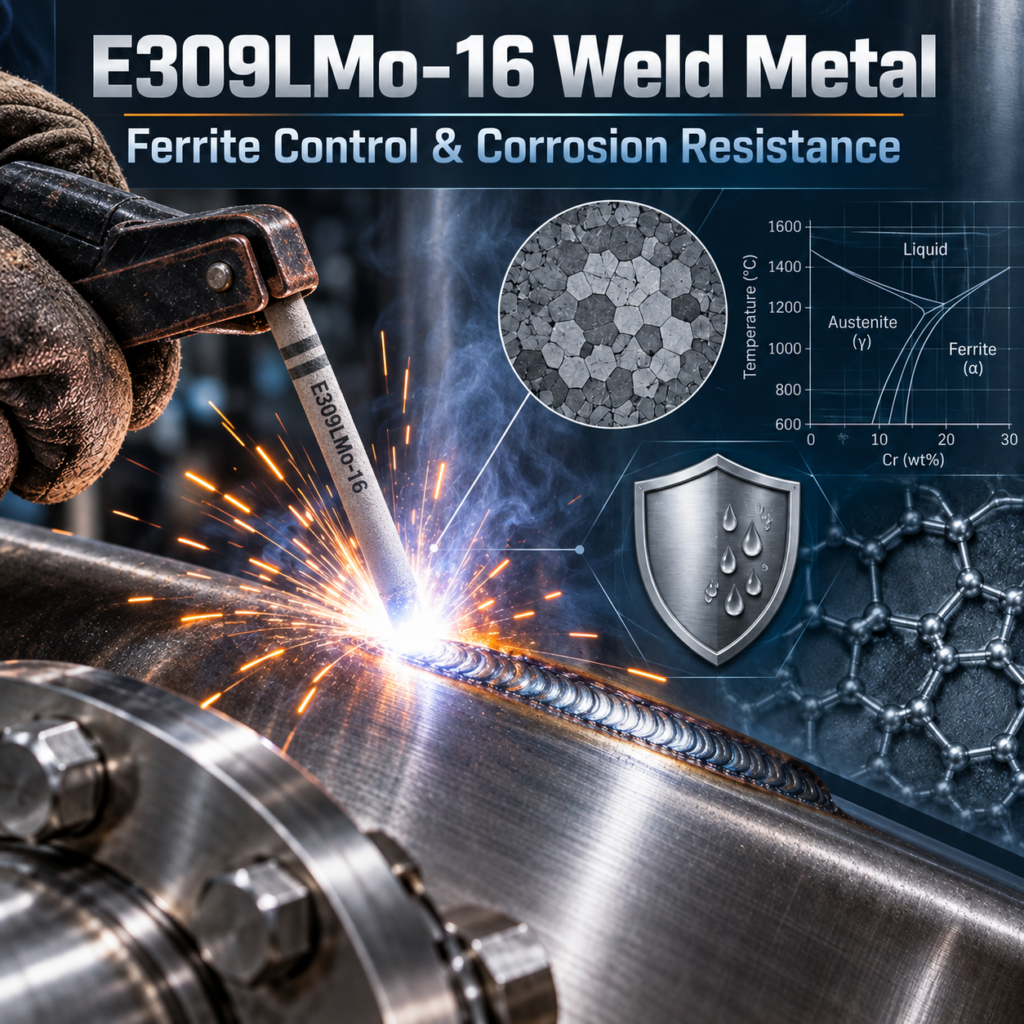
E309LMo-16 Weld Metal: Understanding Ferrite Control and Corrosion Resistance Mechanisms

E309LMo-16 is a low-carbon austenitic stainless steel welding electrode designed for demanding welding applications where corrosion resistance, weld stability, and metallurgical reliability are critical. With a balanced alloy composition containing chromium, nickel, and molybdenum, E309LMo-16 provides excellent performance when joining stainless steels to carbon steels, low-alloy steels, or other dissimilar metal combinations.

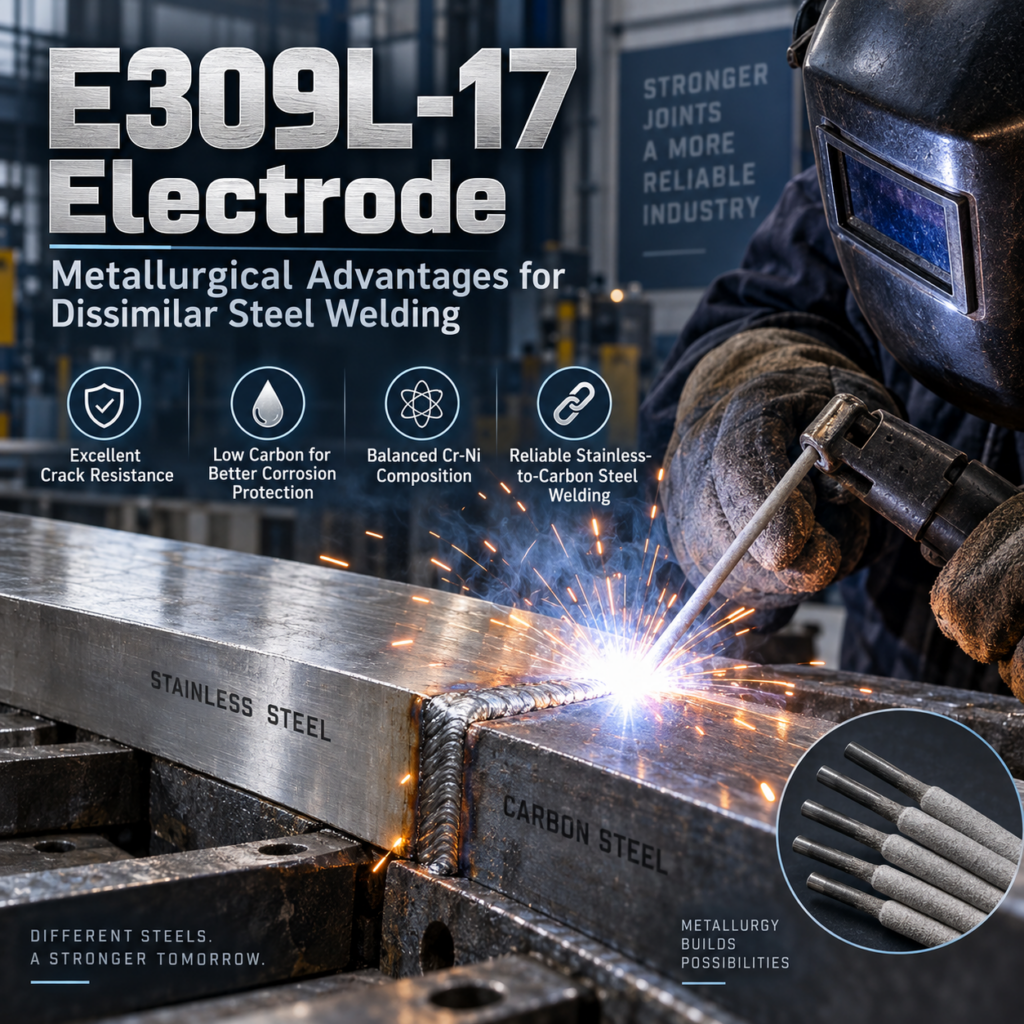
E309L-17 Electrode: Metallurgical Advantages for Dissimilar Steel Welding

Dissimilar steel welding presents significant metallurgical challenges because different base metals often have differences in chemical composition, thermal expansion behavior, microstructure, and corrosion resistance. When stainless steel is joined with carbon steel or low-alloy steel, selecting the correct welding electrode is essential to achieve a stable weld structure and prevent cracking during service.

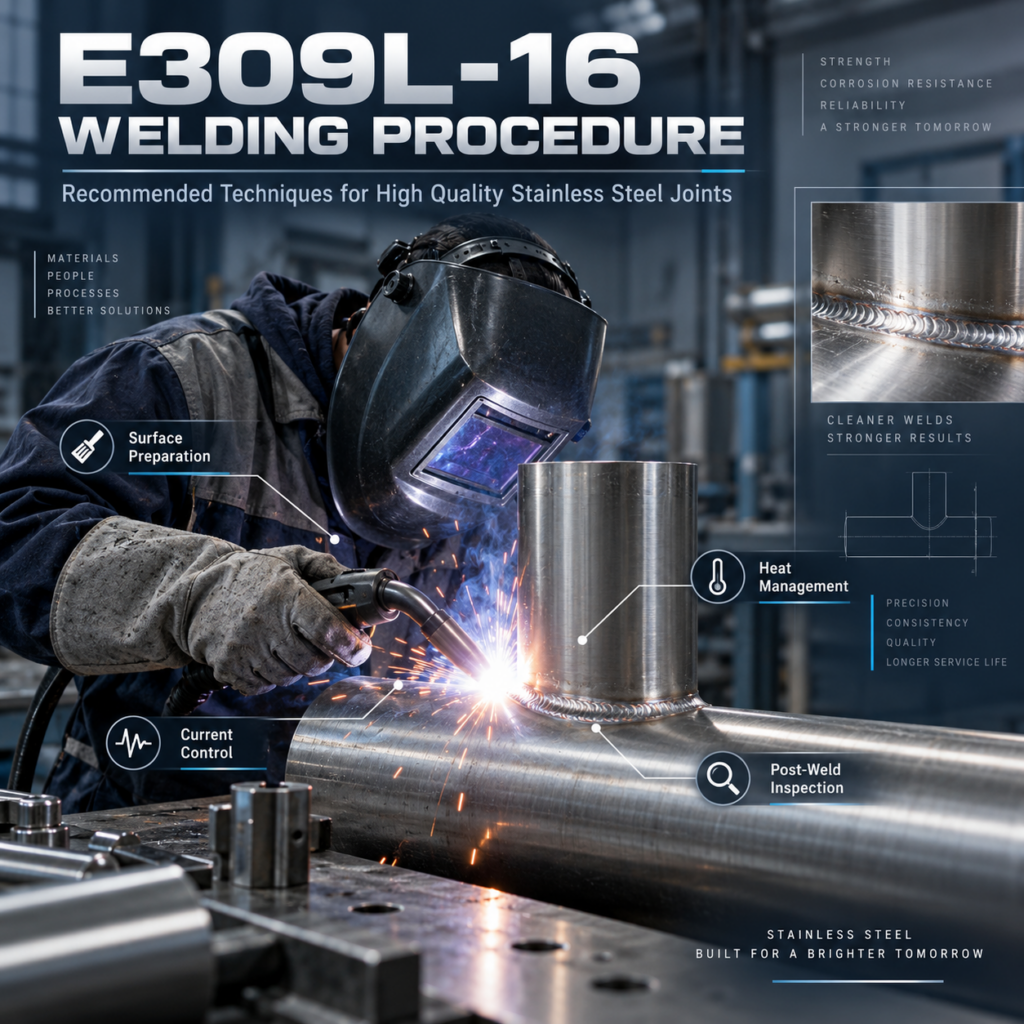
E309L-16 Welding Procedure: Recommended Techniques for High Quality Stainless Steel Joints

E309L-16 is a widely used stainless steel welding electrode designed for producing reliable weld joints where corrosion resistance, crack resistance, and mechanical stability are required. Due to its optimized alloy composition and low carbon content, E309L-16 is especially suitable for joining stainless steel with carbon steel, low alloy steel, and other dissimilar metal combinations.

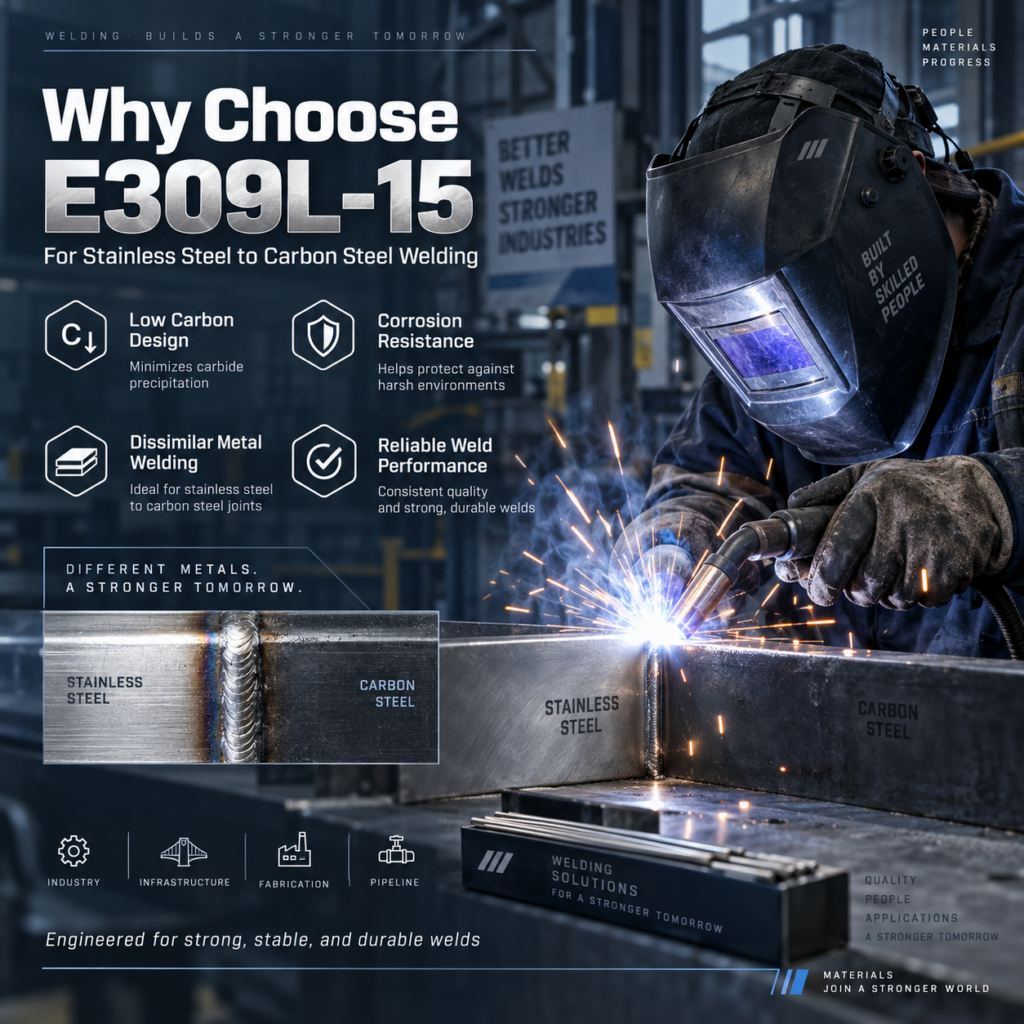
Why Choose E309L-15 for Stainless Steel to Carbon Steel Welding?

Introduction: The Challenge of Stainless Steel to Carbon Steel Welding

Joining stainless steel to carbon steel is one of the most common yet technically challenging welding applications in industrial manufacturing. These two materials have different chemical compositions, thermal expansion characteristics, and metallurgical behaviors, which can create difficulties during welding.

Without proper filler metal selection, stainless steel to carbon steel welding may experience problems such as:

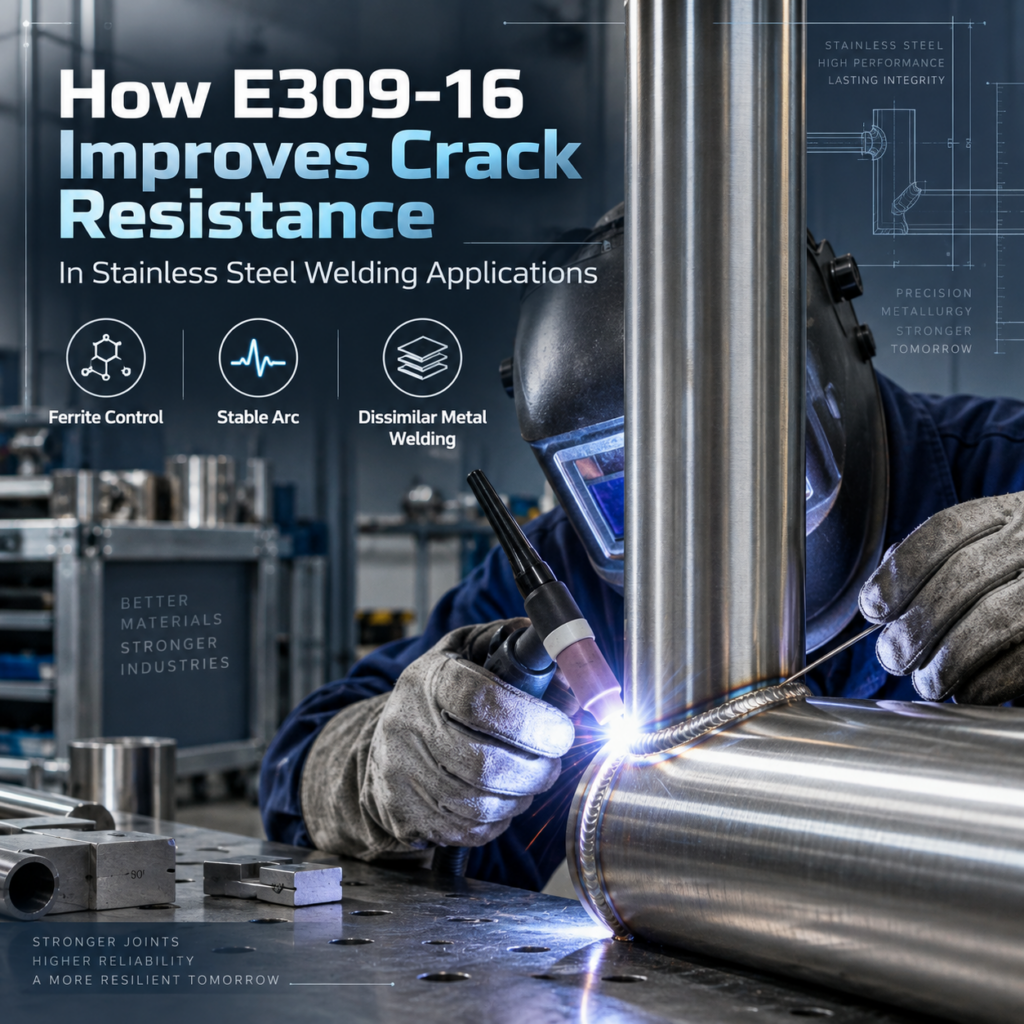
How E309-16 Improves Crack Resistance in Stainless Steel Welding Applications

Introduction: Why Crack Resistance Matters in Stainless Steel Welding

Cracking is one of the most critical challenges in stainless steel welding. Although stainless steels are widely used because of their corrosion resistance, strength, and durability, improper filler metal selection can lead to weld defects such as hot cracking, solidification cracking, and reduced joint reliability.

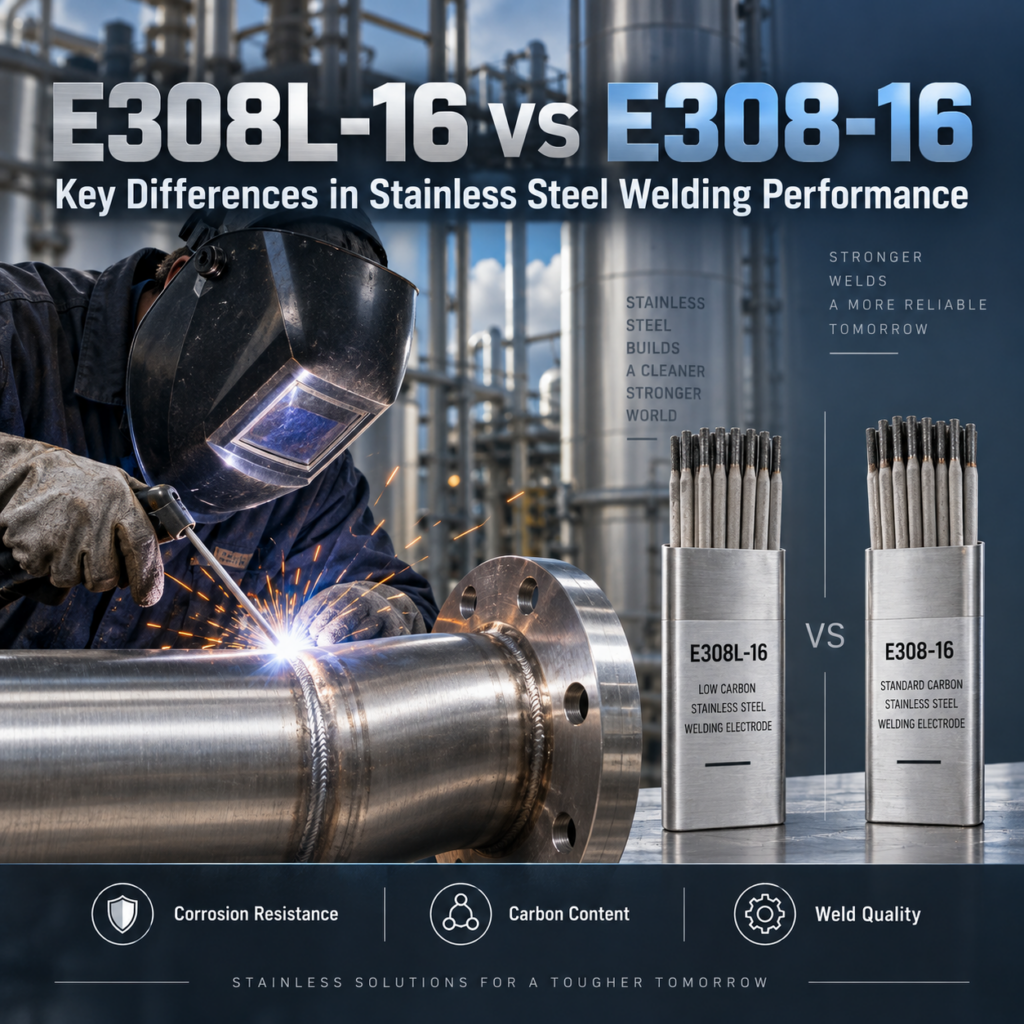
E308L-16 vs E308-16: Key Differences in Stainless Steel Welding Performance

Introduction: Understanding the Difference Between E308L-16 and E308-16

Selecting the correct stainless steel welding electrode is critical for achieving reliable weld strength, corrosion resistance, and long-term service performance. Among austenitic stainless steel electrodes, E308L-16 and E308-16 are two widely used options for welding chromium-nickel stainless steels, especially materials related to the 304 stainless steel family.

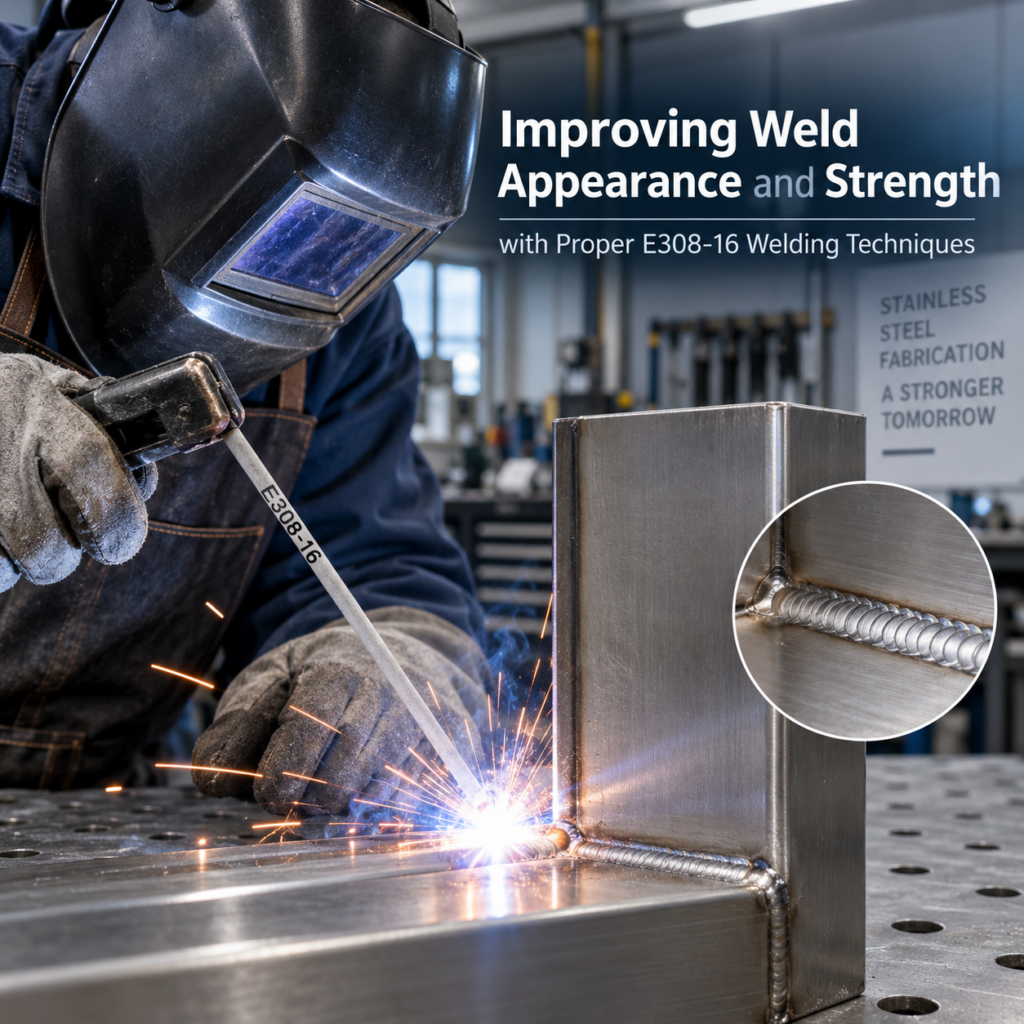
Improving Weld Appearance and Strength with Proper E308-16 Welding Techniques

High-quality stainless steel welding requires more than selecting the right electrode. The welding process, operating parameters, and technique all play important roles in determining weld appearance, mechanical strength, and long-term reliability.

E308-16 welding electrodes are widely used for joining austenitic stainless steels, especially materials with similar chromium-nickel compositions. However, achieving smooth weld beads, stable arc performance, and strong joints depends on understanding how to properly control the welding process.
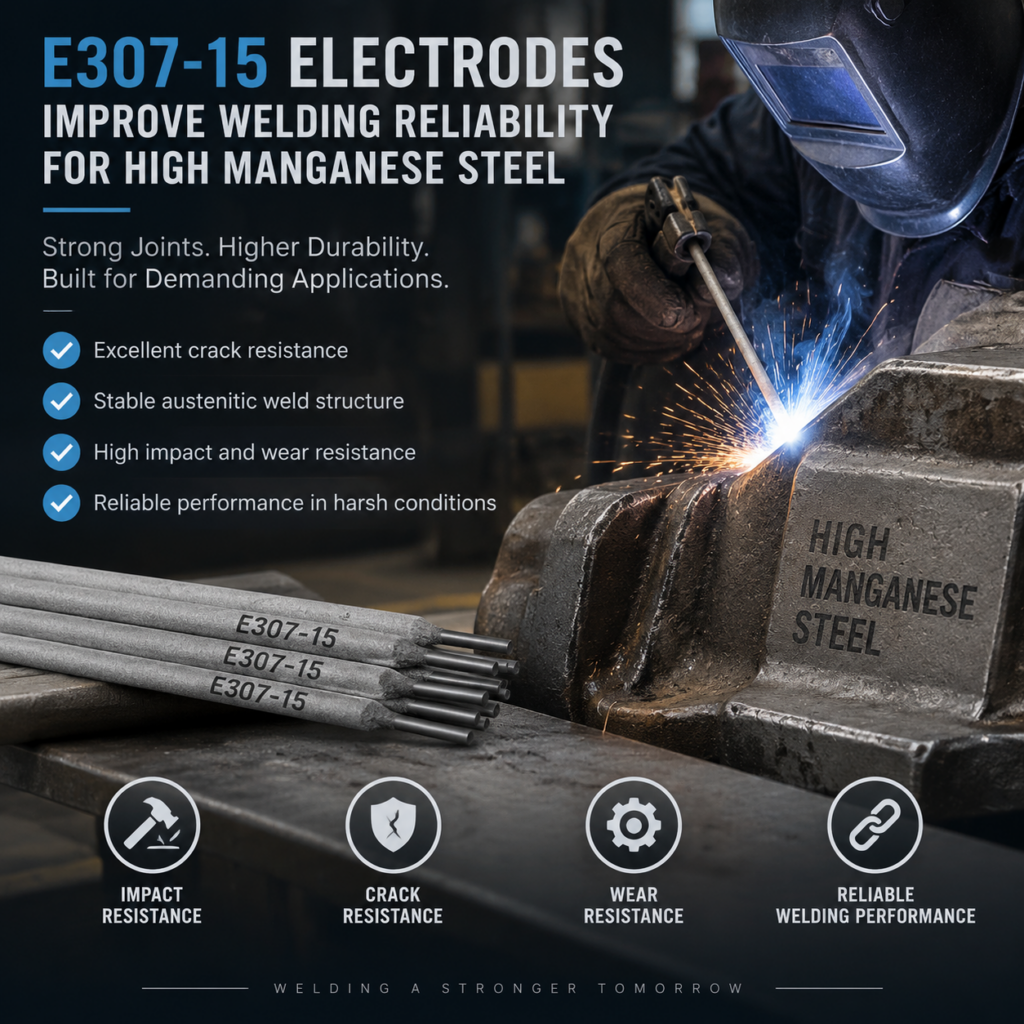
How E307-15 Electrodes Improve Welding Reliability for High Manganese Steel

Introduction: The Challenges of Welding High Manganese Steel

High manganese steel is widely used in demanding industrial environments where components require excellent impact resistance, wear resistance, and long service life. Applications such as mining equipment, crushing machinery, railway components, and heavy-duty structures often rely on the unique properties of manganese steel.

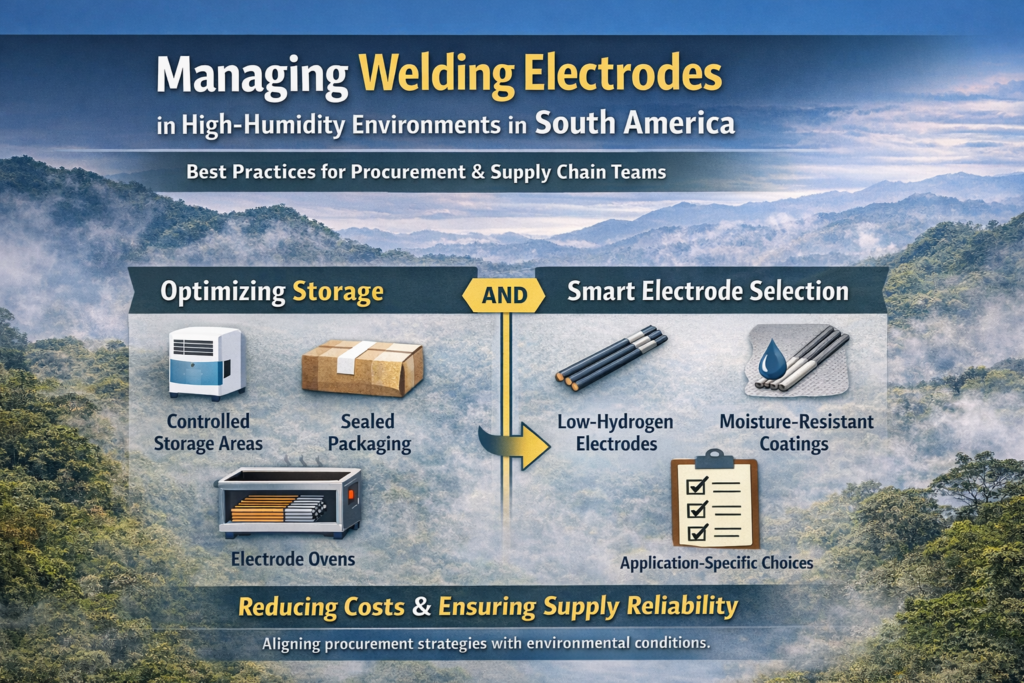
welding electrode storage and selection

In several manufacturing projects across South America, we often see companies focus heavily on welding machines and operators, but underestimate how welding electrode selection and storage affect weld quality……

Edited on December 17, 2025

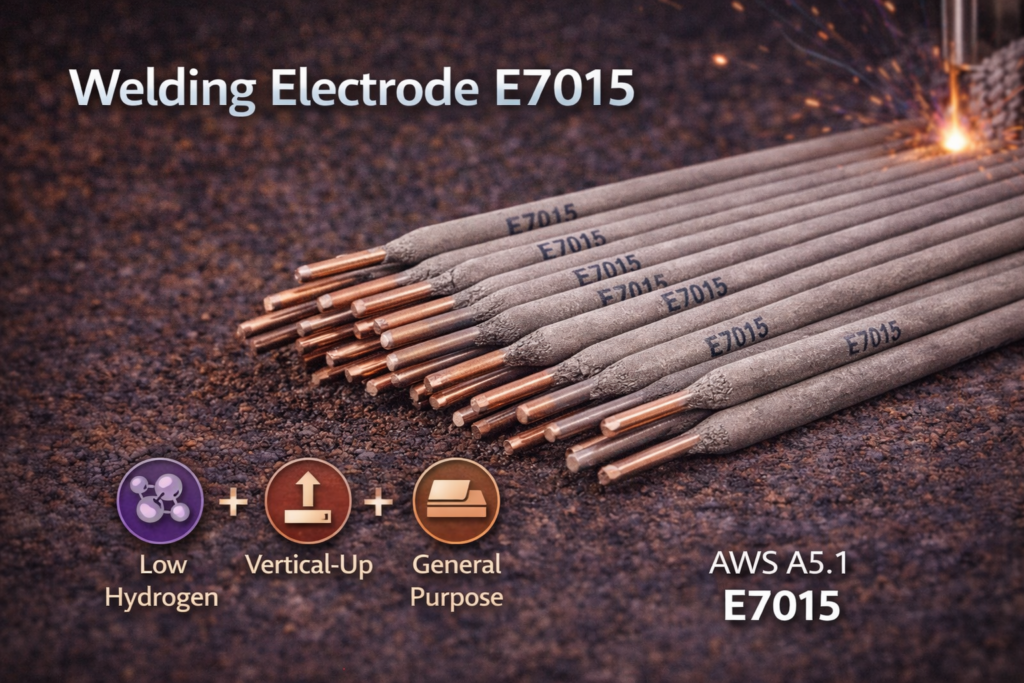
E7015 is a high-performance, low-hydrogen basic electrode known for its excellent crack resistance and superior weld mechanical properties. It is primarily used for welding carbon steel and low-alloy steel structures requiring extremely high quality. The key to its successful use lies in strict pre-welding drying and heat preservation measures, as well as the requirement for DC reverse power supply. If you are welding load-bearing structures, pressure vessels, or equipment working in harsh environments, E7015 is usually one of the preferred electrodes.